





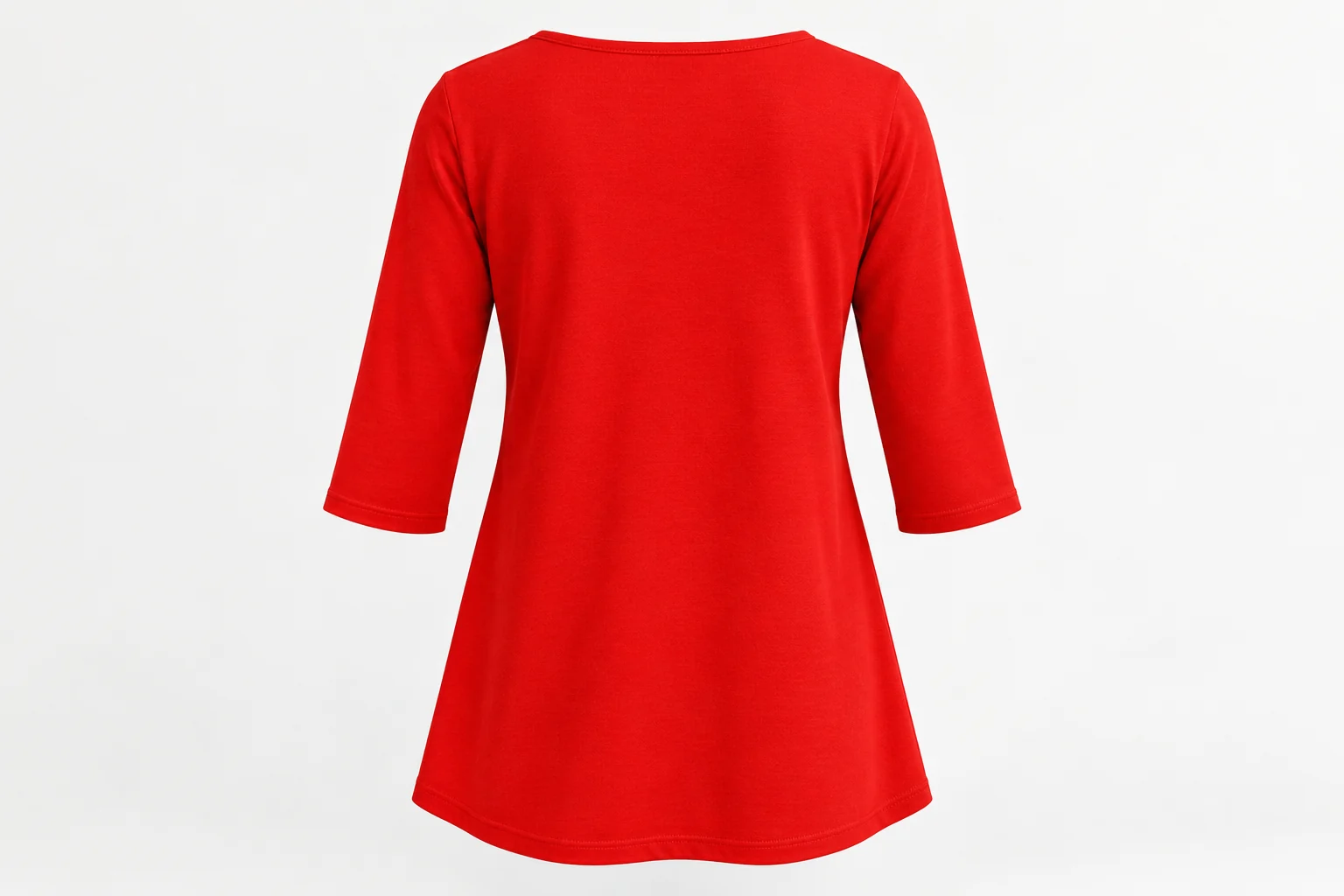
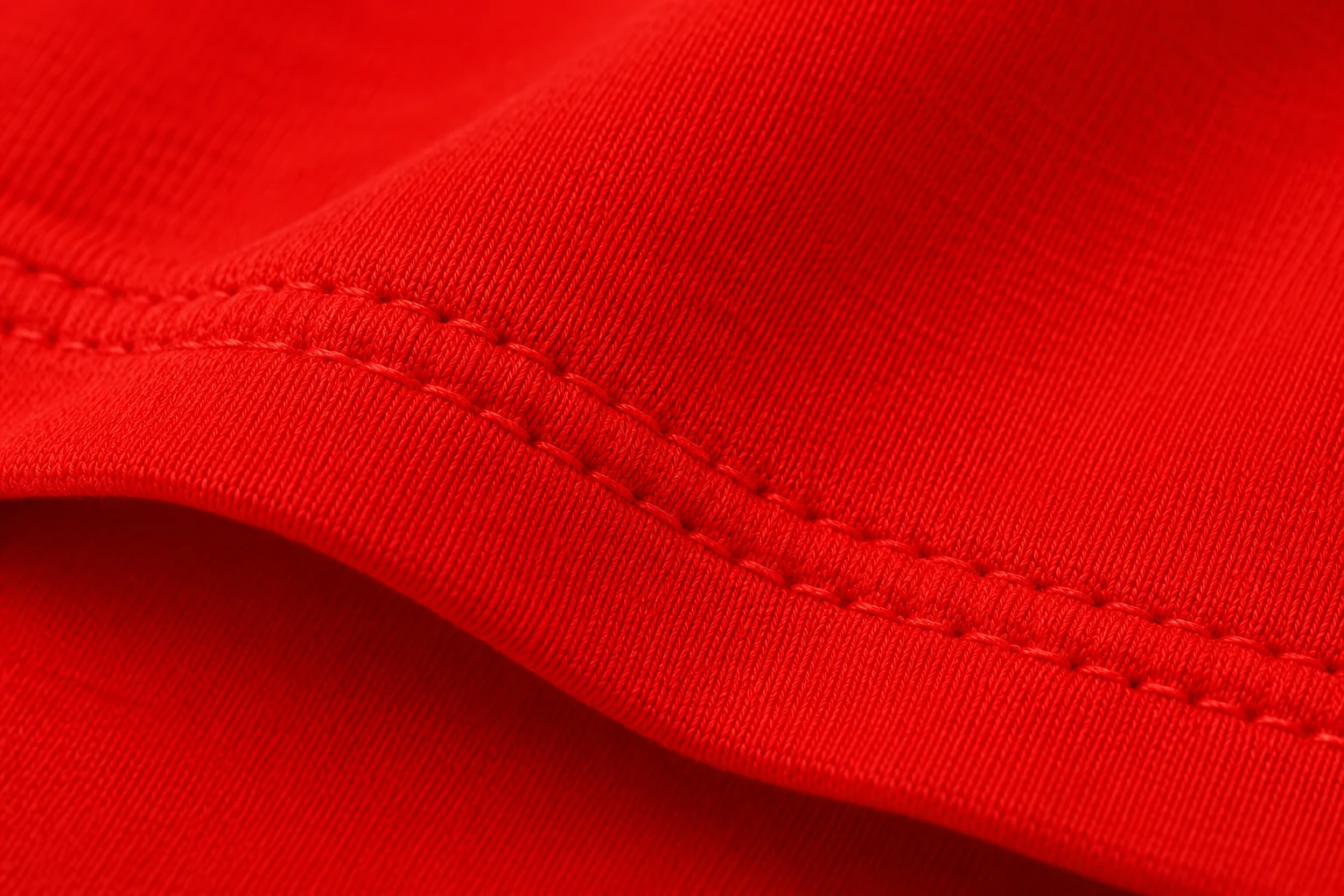
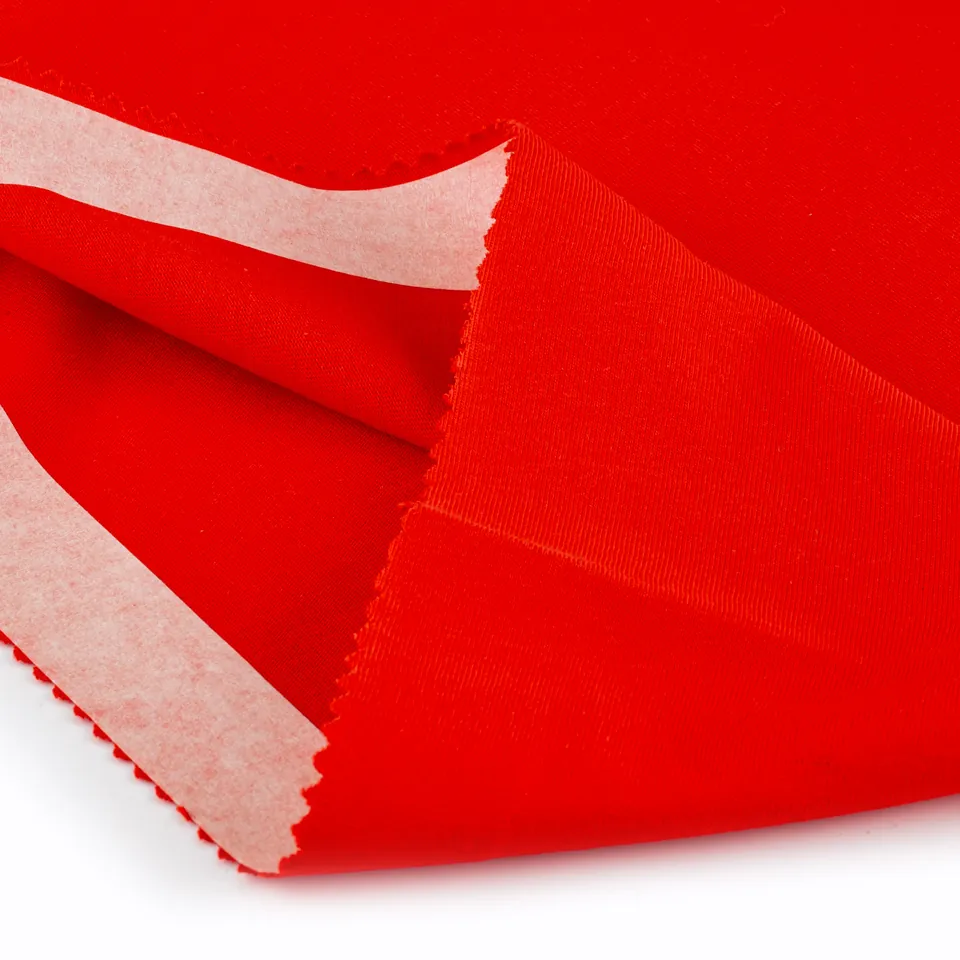
Request a side-view recommendation for the layered tunic
Ask the developer to return a standing-and-seated side-view comparison showing where the intended lower layer is visible through the tunic opening, with a reasoned recommendation for the actual hip-level pattern and slit position. The output is a bounded design recommendation supported by the complete sample, not a generic material quote or a claim that one opening works for every outfit. It should tell the buyer whether the proposed vertical line and intended exposure are achieved in the stated context before the team treats a neatly sewn slit as a complete tunic solution.
Give the recommendation a real lower-layer reference
Provide the intended trousers, leggings or other actual development reference and identify the relevant size and wearing position. Show which waistband, pocket or hip feature matters to the design rather than describing the lower layer as any bottom. Ask the developer to state which part may be visible at rest and during the seated review. This is a product-specific visual decision, not a universal coverage or modesty rule. If another reference is needed for the collection, identify it as an additional combination instead of assuming the same tunic observation qualifies both.
Require separate reasoning for ease and slit changes
The recommendation should explain whether an issue calls for a different hip outline, another opening position or a construction trial, without treating those alternatives as interchangeable. More body ease may change the silhouette, while a higher slit can reveal another part of the lower layer. Ask the maker to show the actual proposed pattern revision and the consequence it expects, keeping accepted upper-body details identified. Do not authorise a material substitution simply because the first photograph looks awkward. The buying decision needs a clear design rationale rather than an unexamined request for greater drape or stronger reinforcement.
Ask for a full hanging result alongside the local opening detail
Require the supporting views to include complete front and back panels, not only a close-up of the opening termination. A neat seam sample cannot demonstrate how an extended panel behaves over the hip or after sitting. CottonWorks includes garment fitting within final material assessment, supporting the complete-sample evidence. The developer should distinguish what the local construction proves from what the worn tunic shows, naming any still-pending specialist assessment. This keeps a useful local sewing solution from becoming an unsupported claim about vertical hang, layered comfort or the whole product's performance.
CottonWorks: Designing Knit Textiles — Actual garment fitting forms part of final fabric assessment. The standing/seated side-view recommendation, hip-ease versus slit-position reasoning and lower-layer reference are original editorial buying outputs, not an industry form, compliance rule or universal outfit-compatibility test.
Tie the recommendation to the actual material proposal
If both SJ-103 and SJ-101 are evaluated, ask which offered weight, finish, pattern and side construction each sample uses. The response should identify whether its recommendation applies to one complete route or whether a further comparison remains open. A changed hip pattern or opening return can affect material and operation estimates, so the developer should flag the affected records before later quantity work proceeds. Do not preserve a cost or approval calculated for another version without review. The recommendation is useful only when the buyer can connect it to a fabric offer and a reproducible garment configuration.
Catalogue starting points
The material proposal can name SJ-103, 95% viscose 5% elastane single jersey, 160, 170, 180, 190, 200 g/m² and Bio-polish + silicone. The alternative is SJ-101, 100% compact combed cotton single jersey, 130, 140, 150, 160, 170 g/m² and Enzyme + silicone. Request the exact offered versions, usable widths and sample identities. These records do not establish stock, slit strength, drape or compatibility with the stated lower layer. Keep those outcomes connected to the actual sample and relevant evidence rather than inferred from the fibre or finish descriptions.
Use the returned recommendation to freeze the right dependencies
The buyer should be able to accept a named hip outline, slit position and layered presentation, request a targeted revision or ask for further evidence. Record the actual reference combination and limits of the decision. Subsequent cutting and commercial work should follow that chosen pattern and material; if the lower layer or opening changes, return the affected side-view reasoning for review. This output makes the tunic's specific over-layer purpose actionable without borrowing a longline balance record, a dress-clearance assessment or a sweatshirt lower-edge quotation as if they answered the same purchasing question.
Technical background and scope
This is a structured editorial draft. Garment-specific development advice is paired with existing catalogue records; compatibility must be established by sampling. AL KUMAŞ supplies fabric. Cutting, sewing and finished-garment production are separate unless explicitly agreed.