




Start at the top-and-bottom meeting line
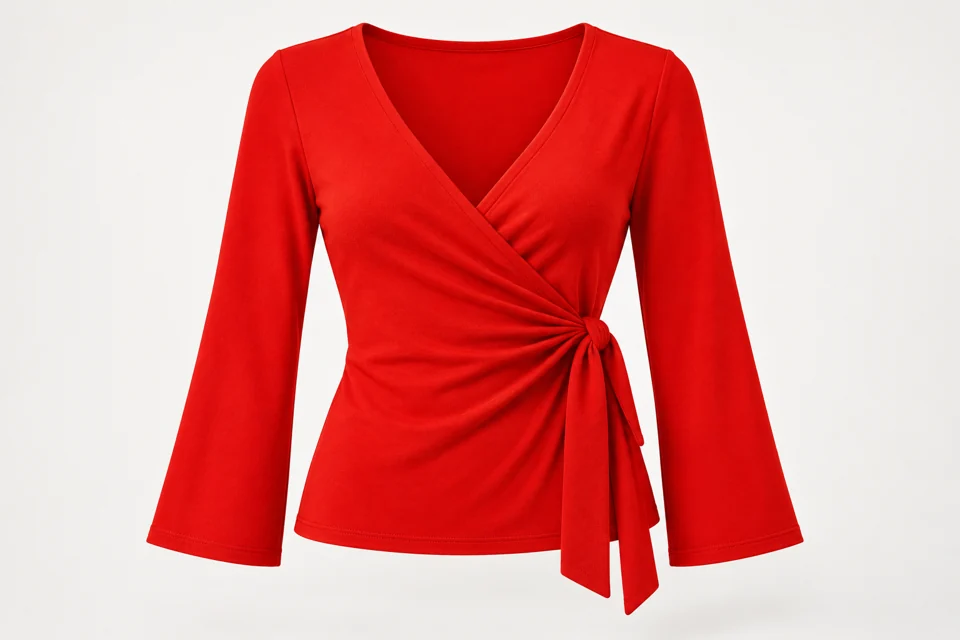
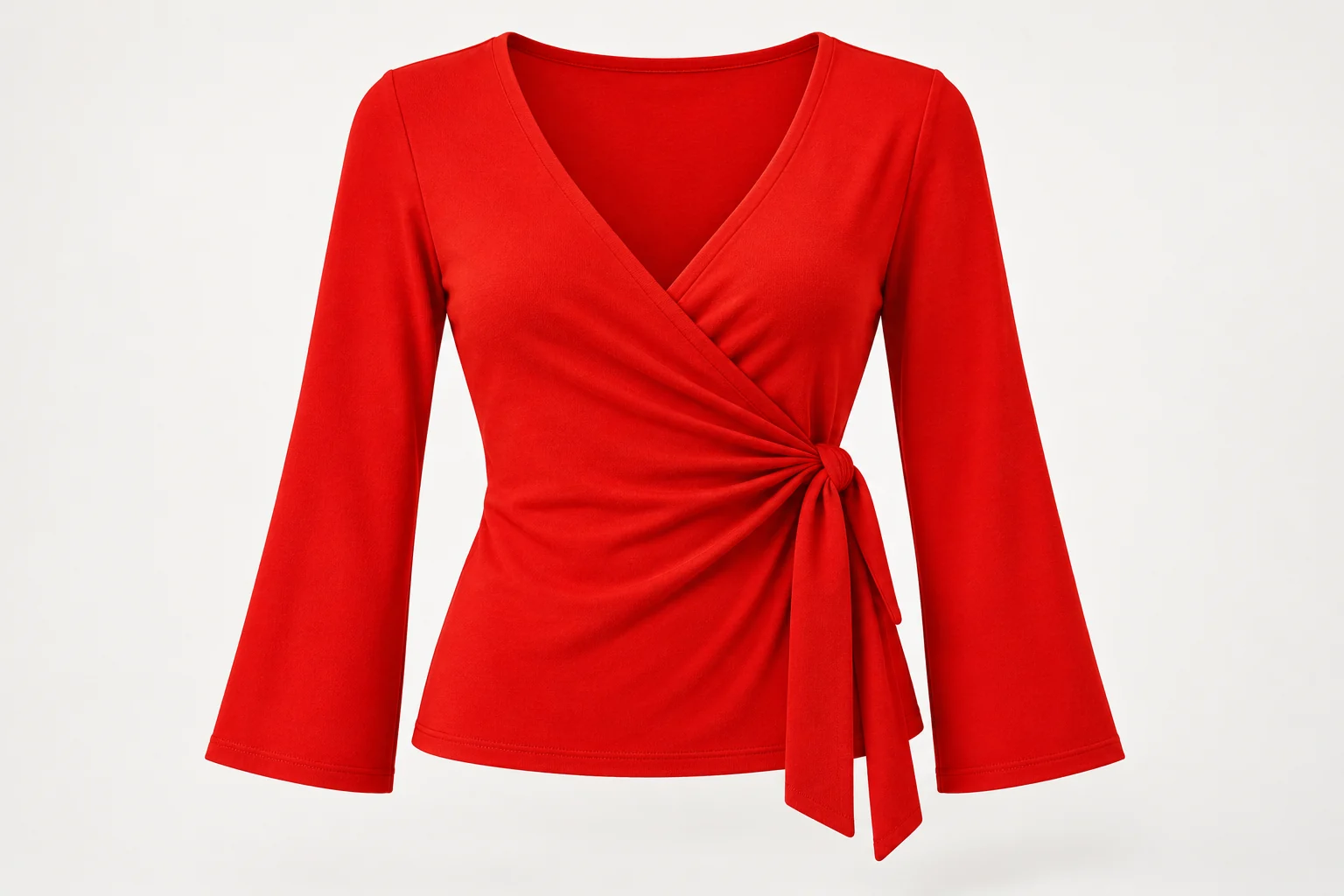
A short wrap top is judged where its overlapping fronts, waist ties and hem meet the chosen trousers or skirt. Draw that outfit relationship before deciding on a material. Identify whether the hem sits at the waist, extends toward the hip or is intended to tuck, and show the position of the bottom garment's waistband. Unlike a wrap dress, this top must work with a separate lower garment. A fabric that makes an attractive diagonal front may still create unwanted bulk or exposure at that meeting line, so the first sample should include the actual styling combination.
Map the tie route on the whole torso
Show each tie attachment, any passage through the side and the intended knot position. Indicate whether a tie travels around the back or fastens directly at the side; do not leave the sample maker to choose. Ask the fitter to observe whether the route keeps the top in its planned position without dragging one side seam forwards. If the knot sits on the lower garment's waistband, assess that junction while seated. These questions concern the pattern and closure arrangement; choosing a softer-sounding fibre cannot by itself settle how the belt path balances the short body.
Compare the front panels before adjusting the pattern
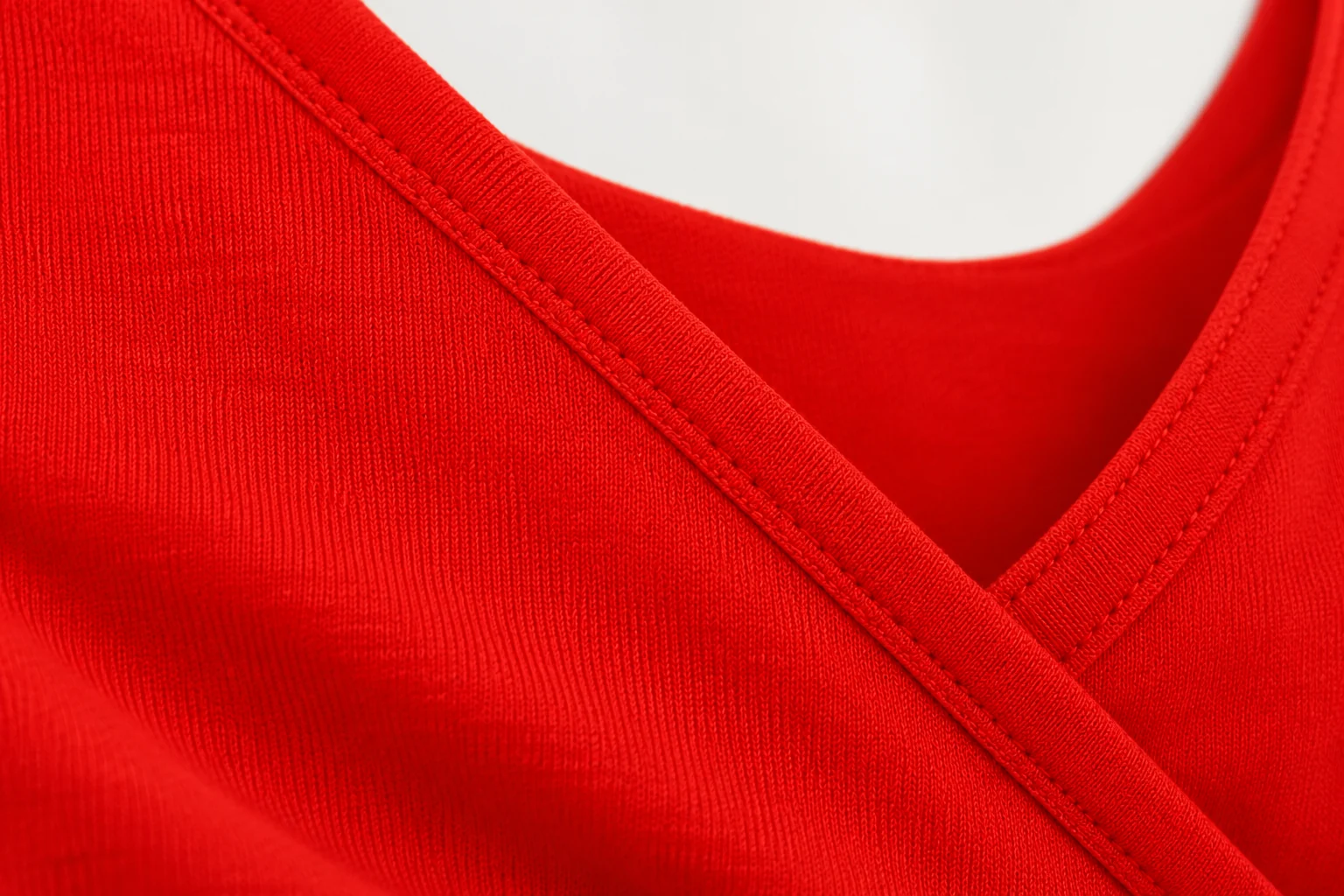
Request identifiable cuttings of the two proposed articles and compare them in a controlled wrap-top prototype. Observe the outer front, the underlap and the hem rather than looking only at a hanging strip. If the first comparison changes fabric, neckline shape and tie placement together, it becomes difficult to identify what caused the result. Keep the pattern reference visible and note which correction is being tested next. The short body may need its own balance review even if the brand already has a successful wrap-dress pattern in another material.
Examine the anchor as a material junction
The attachment where a short tie meets the front or side seam can concentrate several layers in a visible place. Ask the garment maker to sample the folded tie end, body seam and any support as one junction. Inspect the appearance with the top both tied and untied. Coats discusses multiple causes of seam puckering, including how materials and assembly interact; that supports investigating the actual junction rather than blaming the body cutting immediately. More support or tighter stitching is a possible development variable, not an automatic improvement or a universal requirement.
Coats: Eliminating Seam Puckering — Seam puckering can involve materials, feeding, tension and assembly variables. The short tie-anchor comparison is original development guidance, not a diagnosis or tested result for these articles.
Catalogue starting points
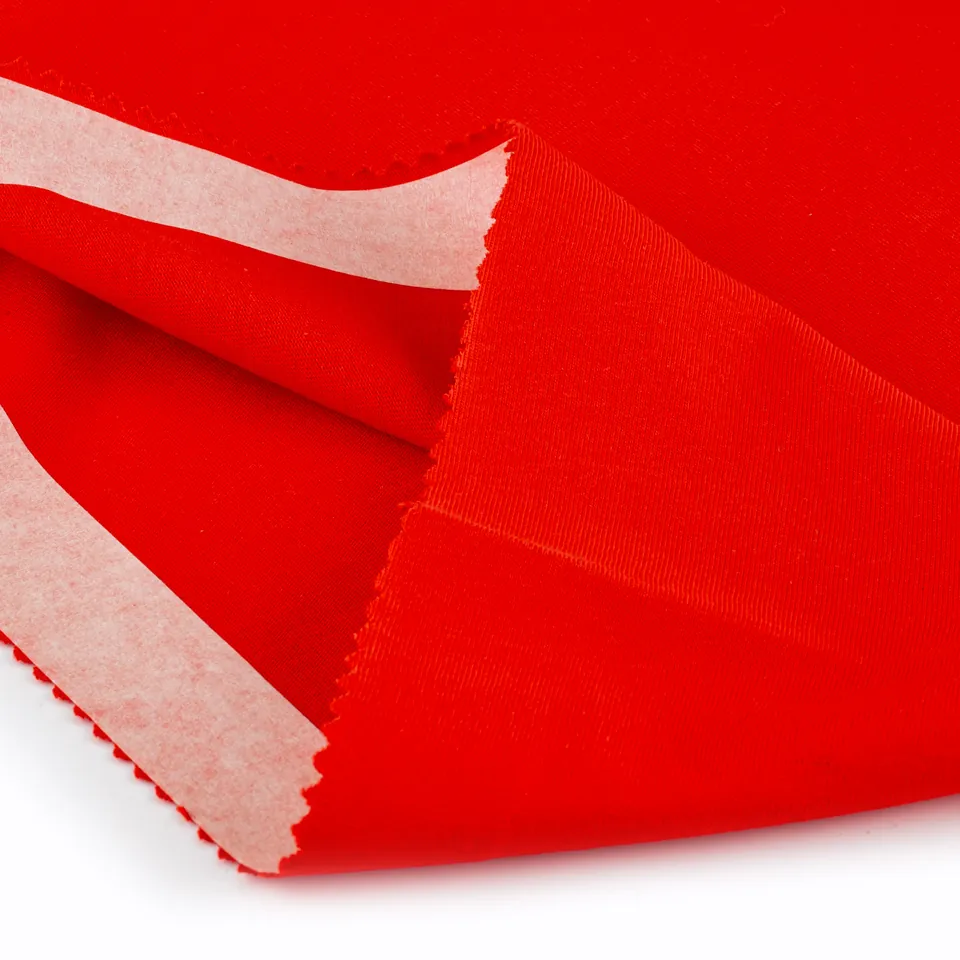
The local specification for SJ-103 is 95% viscose 5% elastane at 160, 170, 180, 190, 200 g/m², finished Bio-polish + silicone. SJ-104 is listed as 95% modal 5% elastane at 150, 160, 170, 180, 190 g/m² with Bio-polish + soft hand finishing. These entries identify body options, not proven tie stability, coverage or usable width for the wrap top. Ask which exact weight and finish the supplier proposes and retain its sample identity. Do not infer superior drape, support or current stock from a fibre or finish name.
Decide whether an underlayer belongs in the design
If the styling requires a separate camisole or other underlayer, include it in the reference outfit and fitting brief. If the top is intended to be worn alone, assess that stated intention rather than assuming an unseen layer will solve an unresolved neckline. Check the diagonal edge while reaching and seated, noting whether the issue is panel overlap, neckline shaping, tie tension or overall body length. Do not describe adjustability as guaranteed coverage. The right decision may be a pattern revision, a different material route or a more explicit styling proposition.
Keep the accepted outfit and fastening record together
Select the material with its tested wrap geometry, edge finish, tie construction and intended bottom garment recorded. A useful development outcome can be provisional: the panel appearance may be accepted while seated knot bulk still needs another trial. Preserve that distinction in purchasing notes. If the brand later changes from high-waisted trousers to a lower waistband or moves the tie position, revisit the relevant fit and hem observations. The fabric selection should explain how this particular short wrap top is meant to work, rather than borrowing confidence from an unrelated dress or longer tunic.
Technical background and scope
This is a structured editorial draft. Garment-specific development advice is paired with existing catalogue records; compatibility must be established by sampling. AL KUMAŞ supplies fabric. Cutting, sewing and finished-garment production are separate unless explicitly agreed.