



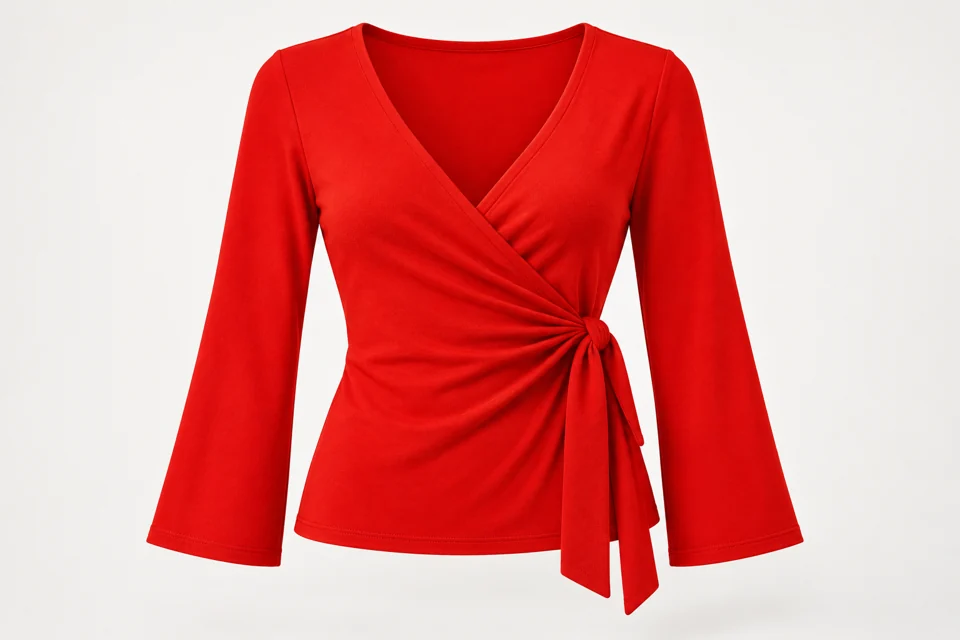
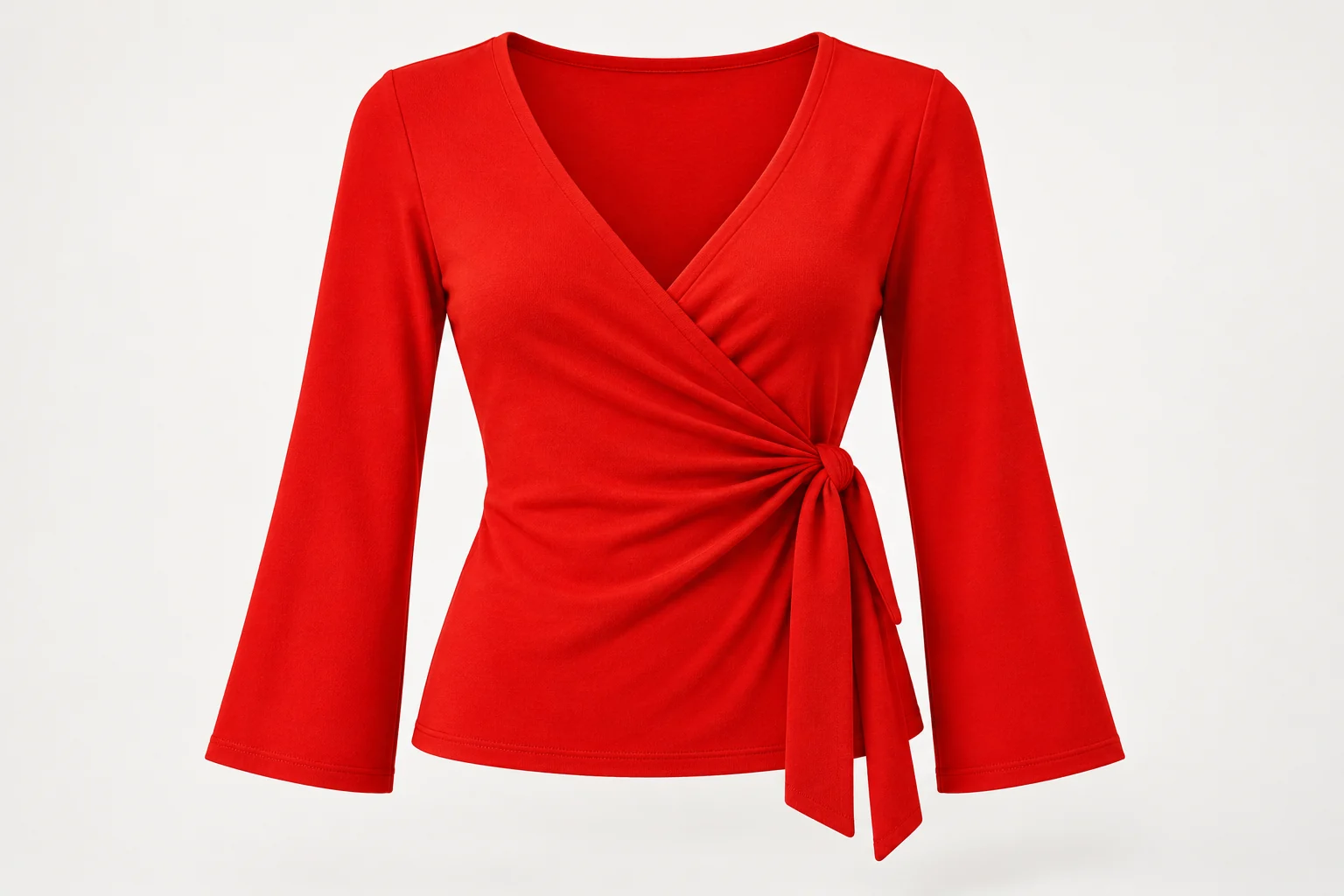

List both wrap fronts and the actual belt path
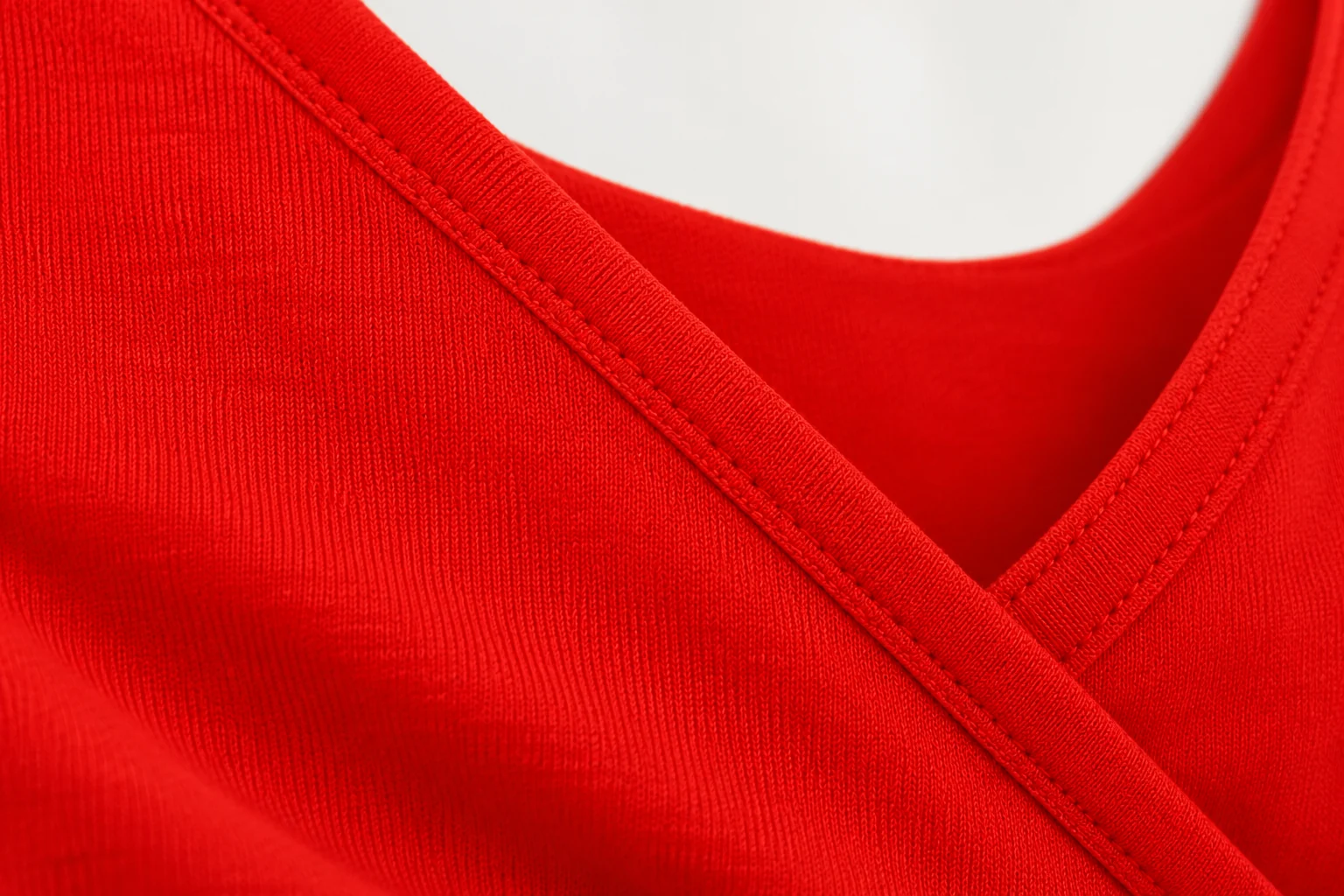
A short body does not make wrap-top consumption equal to a simple front and back. List the outer front, underlap, back, sleeves if present, ties and any edge or facing pieces from the current pattern. Show how much of each tie travels around the body and how its end is finished. A reference photograph often reveals only the bow, not the material inside the route. The costing should therefore begin with a component diagram, not an assumed saving from shortening a wrap dress or using a basic top's marker.
Test the outer front at the confirmed width
Ask the cutter to place the complete diagonal front and underlap in the intended orientation at the offered usable width. The sloping edges can affect nesting, but the real effect needs the actual pattern and size ratio. A short panel is not permission to rotate it in any direction for a tighter layout. If the design has a directional surface or print, record the permitted orientation. Request the marker version behind the estimate so a later neckline or hem correction can be traced to the layout rather than hidden in an unexplained consumption total.
Separate tie length from the visible knot
For an explicitly hypothetical component example, suppose a design uses two ties cut 0.04 metres wide and 0.65 metres long. Their combined cut area is 0.052 square metres; at 180 g/m² that represents 9.36 grams before any cutting allowance. These invented dimensions do not prescribe a finished tie, attachment allowance or wrap-top yield. They illustrate why measuring the visible bow alone omits material. The garment maker must establish the real cutting width, folds, attachment and route, especially if a tie continues through a side opening or around the back.
Compare shared and separate trim layouts
Determine whether the tie and edge pieces will be cut from the same body roll or another material. CottonWorks describes garment markers as arrangements of pattern pieces for cutting and utilisation; apply that principle to the full wrap-top component list. Ask whether a proposed tie join is acceptable and where it would appear when fastened. A layout may use an offcut efficiently yet place an unapproved seam in the knot or exposed end. If the trim uses another substrate, keep its consumption and purchasing basis separate instead of treating every narrow piece as free material.
CottonWorks: Garment Construction — marker making — A marker arranges garment pieces for cutting and material utilisation. The tie-area calculation is explicitly hypothetical, not a supplied pattern or commercial yield.
Catalogue starting points
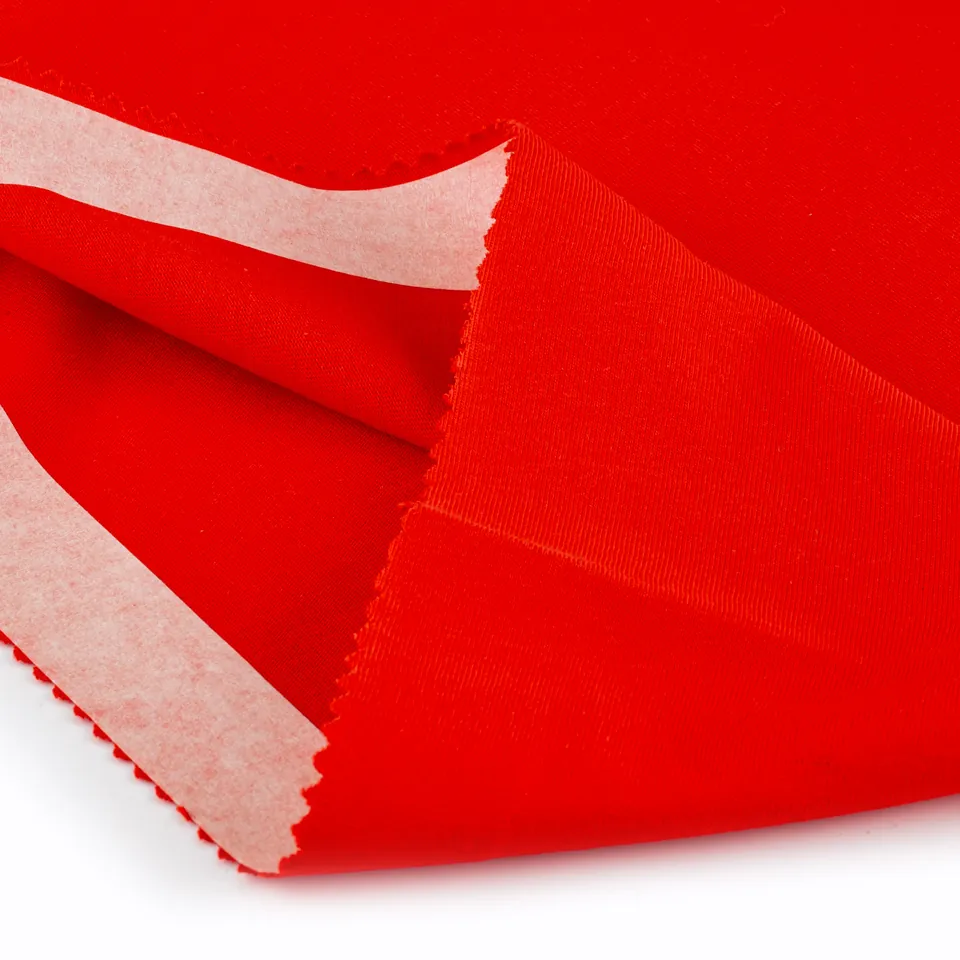
SJ-103 records a 95% viscose 5% elastane body with 160, 170, 180, 190, 200 g/m² choices and Bio-polish + silicone finishing. SJ-104 records 95% modal 5% elastane with 150, 160, 170, 180, 190 g/m² choices and Bio-polish + soft hand finishing. No usable width, marker length or tested tie allowance for this style is contained in those article entries. Request a precise offered weight and width before comparing purchase units. The overlapping GSM choices can isolate one numerical variable without making the two fabrics equivalent in the garment.
Revisit the estimate when the waist relationship moves
A decision to lengthen the top below a waistband may change the front panels, back and tie position together. Ask the pattern team which components have changed rather than multiplying the original total by an arbitrary percentage. Likewise, an underlap correction can alter both area and edge-finishing length. Show dimensional compensation, marker losses and purchasing buffers as separate assumptions, checking whether any are already included. This matters when a seemingly minor fitting correction occurs after an attractive initial cost has circulated; the approved pattern must remain the basis of the commercial calculation.
Cost the specified closure, not a generic wrap label
Compare quotations with material, tie construction, optional secondary trim, edge operations and sewing responsibilities identified. If one version ties directly at the side and another wraps behind the waist, ask the garment maker to cost the actual difference rather than assuming they use the same components. Keep any separate underlayer outside the top's material total unless the offer explicitly includes it as another garment. The resulting price comparison should describe the intended outfit and accepted wrap-top construction while leaving unconfirmed supplier terms visibly open for agreement.
Technical background and scope
This is a structured editorial draft. Garment-specific development advice is paired with existing catalogue records; compatibility must be established by sampling. AL KUMAŞ supplies fabric. Cutting, sewing and finished-garment production are separate unless explicitly agreed.