




Compose the print around a short diagonal front
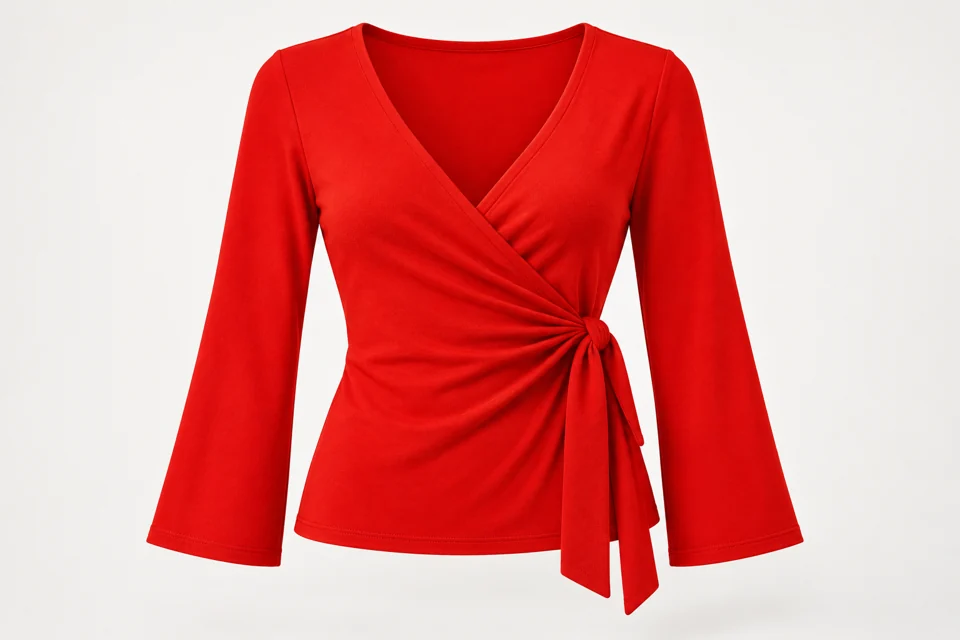
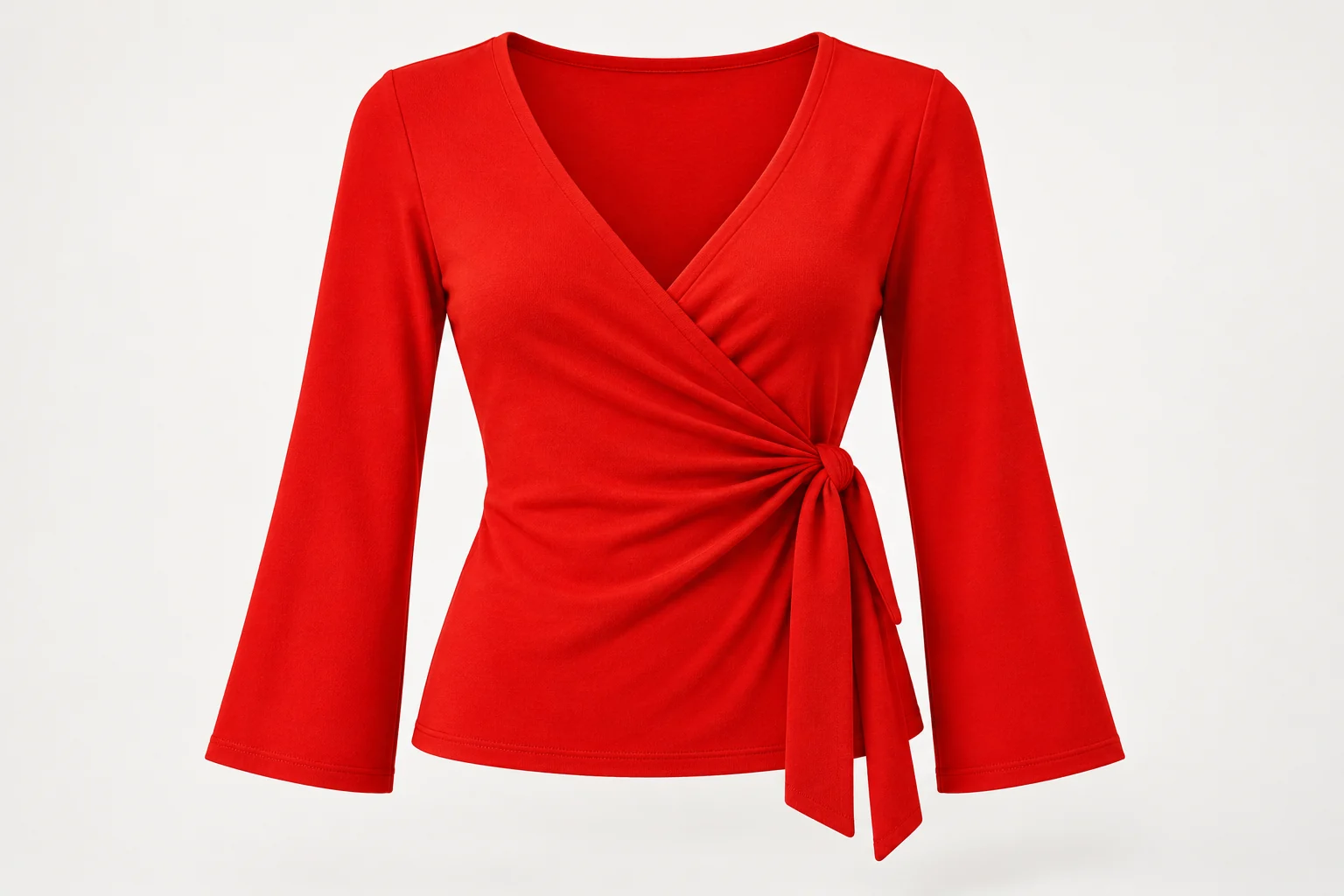
The dominant lines of a wrap top are its diagonal opening, tie position and hem above the separate bottom garment. Put all three on the artwork layout. A print arranged for a long wrap dress may lose its visual balance when its lower portion is absent and the knot becomes a larger part of the visible design. Decide which motif should sit near the face, which may be interrupted by the overlap and which should stay clear of the tie anchor. Evaluate that composition with the intended trousers or skirt, not only on a rectangular fabric mockup.
Choose continuity or intentional interruption at the overlap
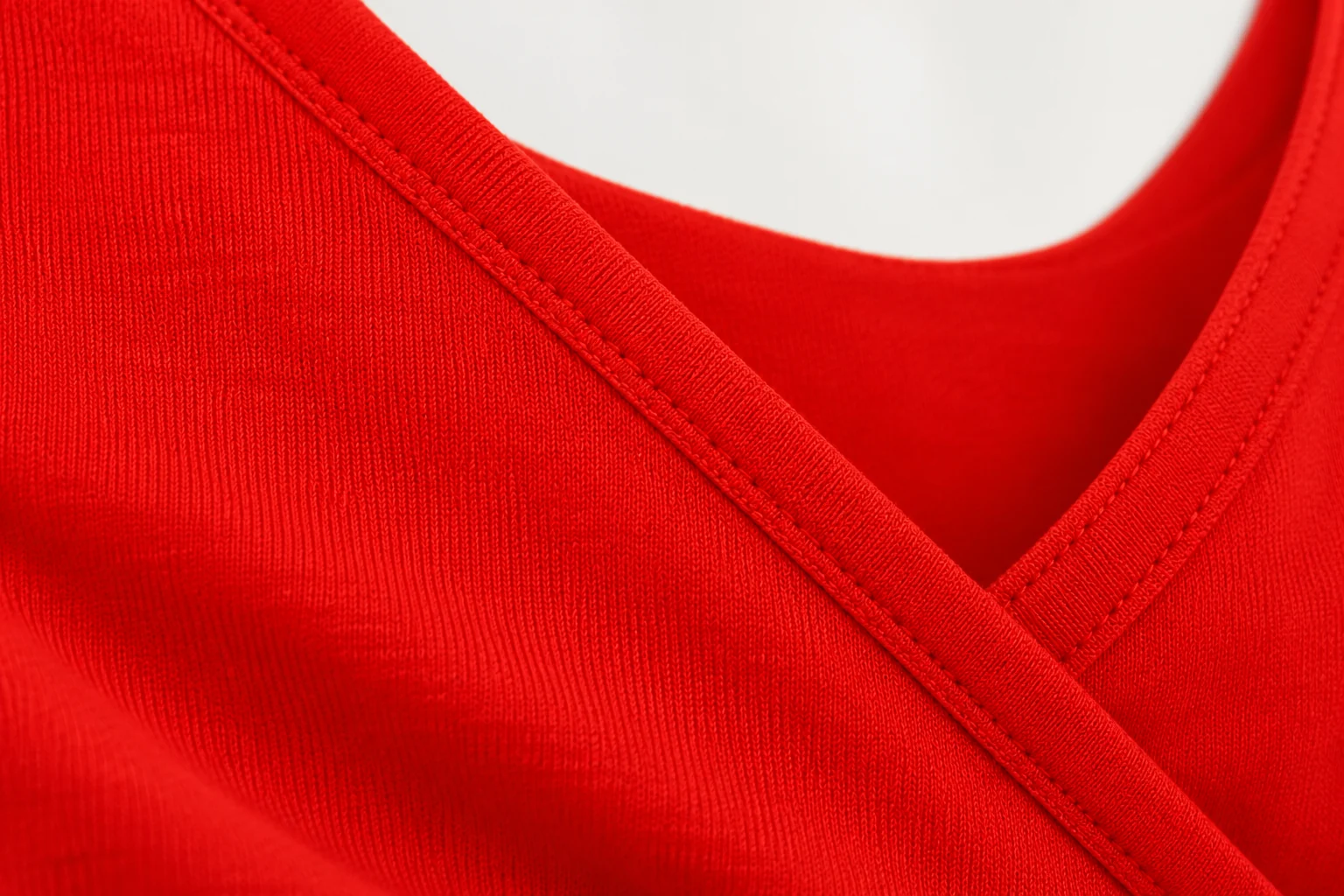
Specify whether the two fronts should appear continuous, loosely coordinated or deliberately different. For an adjustable top, the alignment can move with the way it is tied, so ask the pattern maker what the design can realistically control. A one-off photograph with the fronts carefully arranged is not evidence of matching across the range. Mark any placement requirement on the pattern and ask the cutter to assess it. Treat the visual choice as part of the product proposition rather than promising perfect continuity that the garment's adjustable construction has not demonstrated.
Give the short tie its own artwork decision
A tie can show another face as it passes around the body, folds into a knot or hangs at the side. Decide whether its print direction matters, whether a motif should run towards the end and whether an unprinted or contrast version is intended. Inspect an actual tied sample before fixing that choice. An attractive flat strip does not show how the design breaks through a knot. If a join is allowed, place it on the construction drawing and review its visibility. These decisions can affect cutting freedom and should accompany the material consumption request.
Assess print and colour on the exact body proposal
CottonWorks explains that fabric preparation and the distinction between dye and pigment printing are relevant to print development. That general process background is not confirmation of a service or chemistry for these viscose and modal blends. Ask the decorator to identify a proposed route for the actual offered article and finish, then inspect a trial. For a solid colour with contrasting ties, develop the actual components together rather than approving their colour names separately. The relevant test is the assembled relationship at the crossing fronts, knot and hem, where several surfaces meet.
CottonWorks: Printing Process — The importance of substrate preparation and the general distinction between dye and pigment printing. Does not confirm a process, available decoration service or print performance for SJ-103/SJ-104.
Catalogue starting points
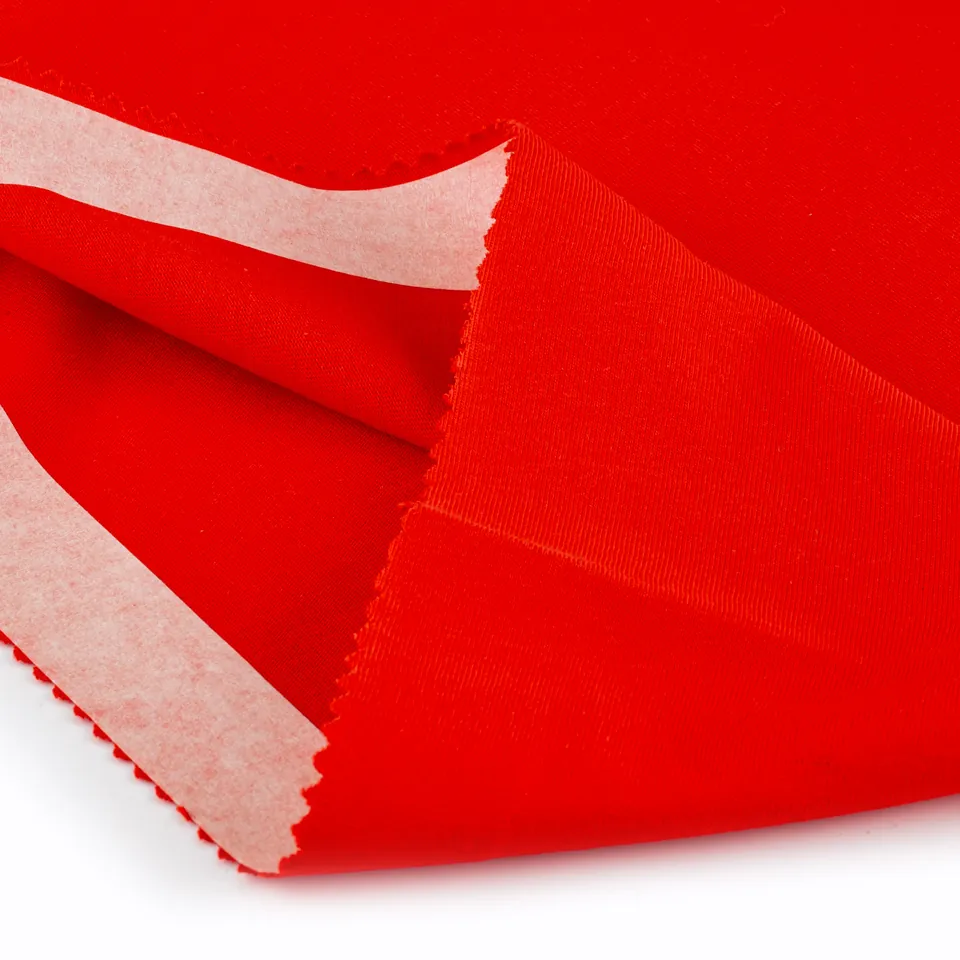
For this design the recorded comparison is SJ-103, 95% viscose 5% elastane, 160, 170, 180, 190, 200 g/m², with Bio-polish + silicone finishing, and SJ-104, 95% modal 5% elastane, 150, 160, 170, 180, 190 g/m², with Bio-polish + soft hand finishing. Neither record establishes print compatibility, colourfastness or an agreed decorated handle. Link the actual selected weight and finish to the trial reference. A subsequent material change needs an explicit decision on repeated approvals rather than automatic transfer of the first colour or artwork acceptance.
Review the hem against the bottom garment
Show whether the print ends above, overlaps or is partly hidden by the intended waistband. A border along a short hem can be interrupted by the wrap angle or disappear when the wearer sits. Compare representative sizes and the proposed fastening position before approving a fixed border placement. If the top coordinates with a separate printed bottom, state whether matching is required or a deliberately related design is enough. Do not infer that a shared digital colour value will produce an identical appearance on different substrates or finishes; request actual samples under agreed viewing conditions.
Approve the worn composition separately from durability evidence
Keep the accepted artwork version, orientation instructions, body and tie references, and photographs of the intended outfit in one visual pack. Record which overlap interruption is acceptable instead of leaving it to be rediscovered during cutting. Ask the quality and decoration specialists to define care and fastness assessments for the programme; an approved composition is not a performance report. If the brand changes the waistband height, knot location or motif scale, reopen the affected visual decisions. The marketing story can describe the considered wrap styling without inventing printing capabilities or a guarantee of matching in every worn position.
Technical background and scope
This is a structured editorial draft. Garment-specific development advice is paired with existing catalogue records; compatibility must be established by sampling. AL KUMAŞ supplies fabric. Cutting, sewing and finished-garment production are separate unless explicitly agreed.