



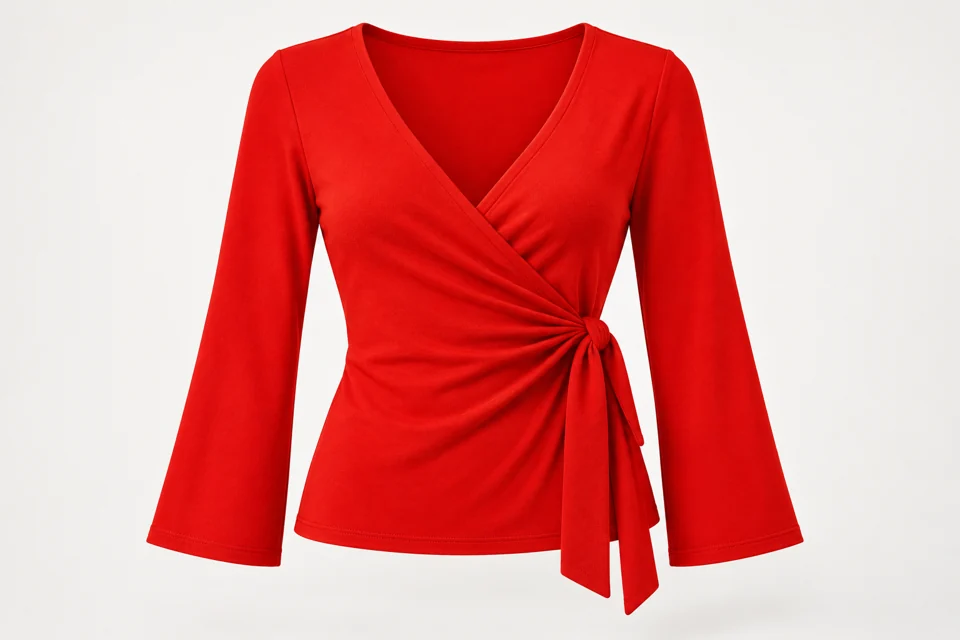
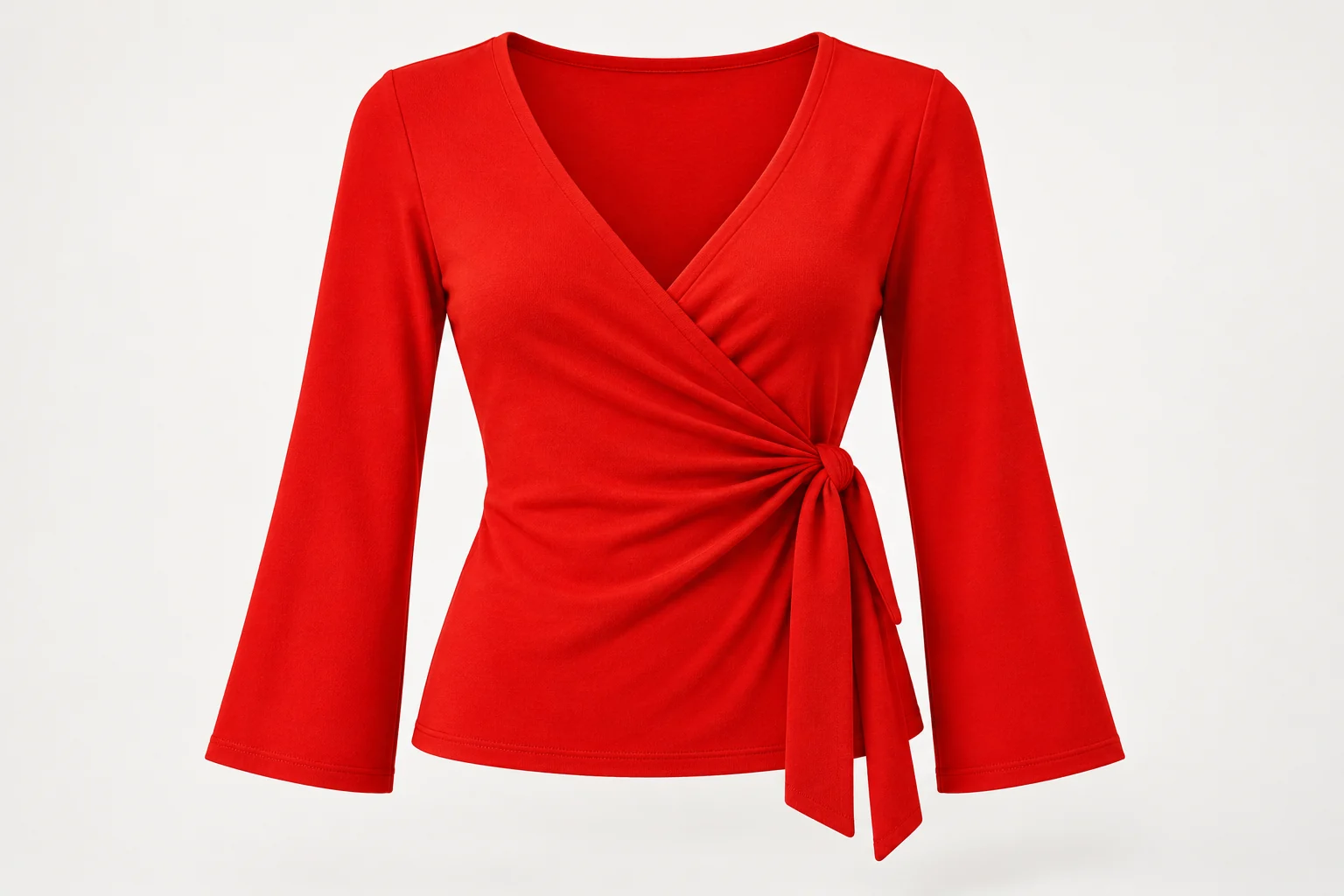

Review the short wrap top with its intended bottom
Prepare the fitting sample with the actual tie construction, edge finish and pattern version identified, then bring the intended skirt or trousers into the review. The relationship at the waistband is part of this style's decision, not an accessory detail. Mark whether the hem is supposed to meet, overlap or sit above that line in the neutral standing position. A hanger sample can hide the consequences of a knot sitting on a waistband. Keep the reference outfit and each provisional substitution named so the team knows what the review can and cannot establish.
Watch the wearer establish the tie route
Observe the intended fastening sequence, including any passage at the side and whether the tie crosses the back. Ask the wearer to tie it as the proposed product instructions show rather than arranging it for a photograph. Record where the knot settles and whether the lower garment displaces it. If the side seam is pulled forward, examine the route and anchor placement before asking for more fastening tension. The top's adjustability is a construction feature to evaluate; it is not evidence that it will provide unlimited fit or guaranteed front coverage.
Separate seated coverage from reaching coverage
Choose ordinary movements relevant to the planned outfit, such as sitting at a table, reaching forward and raising an arm. Review the upper diagonal edge and the short lower front as separate areas. A sample may retain its neckline position yet reveal an unintended gap at the waistband, or the reverse. Mark the location and conditions of each observation. If a separate underlayer is specified, use it consistently; if none is intended, do not add one silently to make the sample appear resolved. These are fitting observations, not a certified coverage test.
Inspect the anchor and passage after fastening
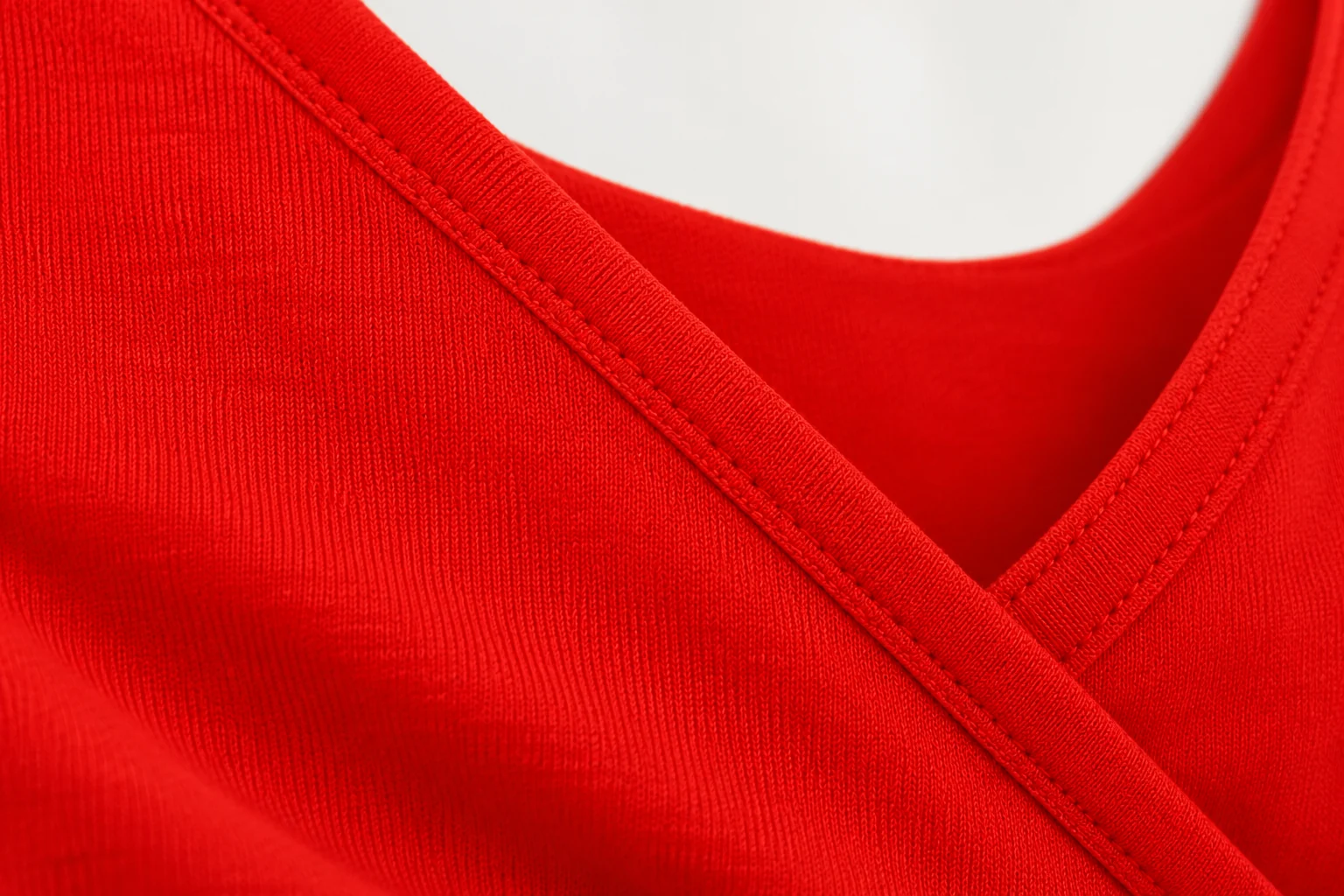
Untie the reviewed top and look at the attachment points and any side passage. Note unwanted gathering, seam distortion, exposed ends or changes that were hidden by the knot. Ask the sewing team to document the trial's support and attachment method. Coats identifies feeding, tension and material behaviour among seam-pucker influences, which is a reason to isolate an assembly variable rather than blame the entire material route from one defect. Compare a controlled correction at the problem junction and repeat the relevant fitting observation if its position or thickness changes.
Coats: Eliminating Seam Puckering — Multiple seam-pucker influences support investigating controlled assembly variables. Does not prescribe settings, strength criteria or fit outcomes for the proposed wrap top.
Catalogue starting points
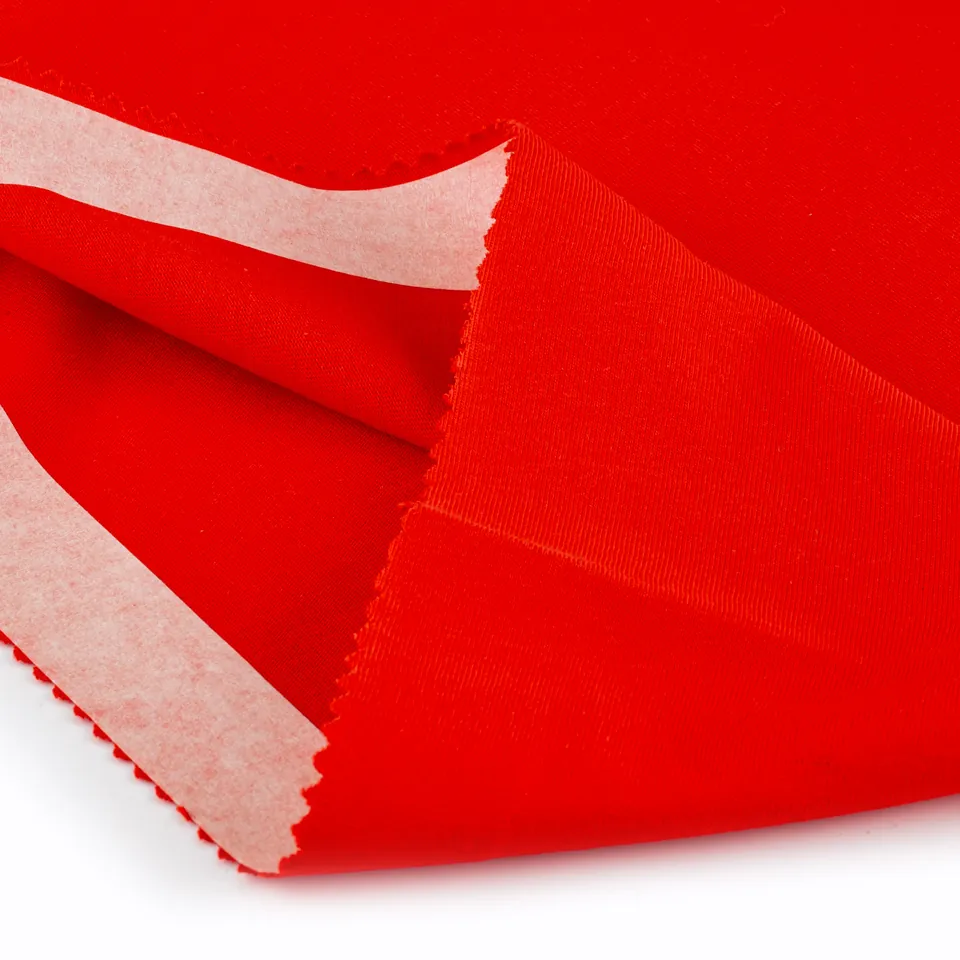
The local article data lists SJ-103 as 95% viscose 5% elastane with weights of 160, 170, 180, 190, 200 g/m² and Bio-polish + silicone finishing. It lists SJ-104 as 95% modal 5% elastane at 150, 160, 170, 180, 190 g/m² with Bio-polish + soft hand finishing. No short-wrap-top fit, anchor-strength, recovery or care report is attached to these records. Identify the actual offered weight and finish used in the sample. Matching elastane percentages do not demonstrate interchangeable behaviour in the tie, diagonal edge or doubled front.
Track the waist and hem relationship after care
Agree the care and measurement procedure with the responsible technical team before exposure. Record relevant body lengths, front-edge position, tie dimensions and attachment locations in a documented garment state. After the trial, repeat the outfit review with the same waistband and fastening route so different styling is not mistaken for material change. Investigate whether an altered tie length, hem position or panel balance affects the accepted appearance. A sample-room care trial can inform development, but its observations should not be described as a recognised laboratory pass unless the required procedure and evidence actually support that statement.
Close issues at the affected outfit junction
Use a report that links each observation to a proposed revision and the review required afterwards. In a hypothetical sample, the knot might appear satisfactory standing but become bulky against a high waistband when seated; moving the tie or changing its construction would need another relevant fitting check. Retain the first sample so the result is visible. Release the accepted body, tie route, anchor, edge and hem combination with the intended styling conditions. That record supports a repeatable short wrap top without extending its approval into bra support, universal sizing or other functions not demonstrated by the design.
Technical background and scope
This is a structured editorial draft. Garment-specific development advice is paired with existing catalogue records; compatibility must be established by sampling. AL KUMAŞ supplies fabric. Cutting, sewing and finished-garment production are separate unless explicitly agreed.