



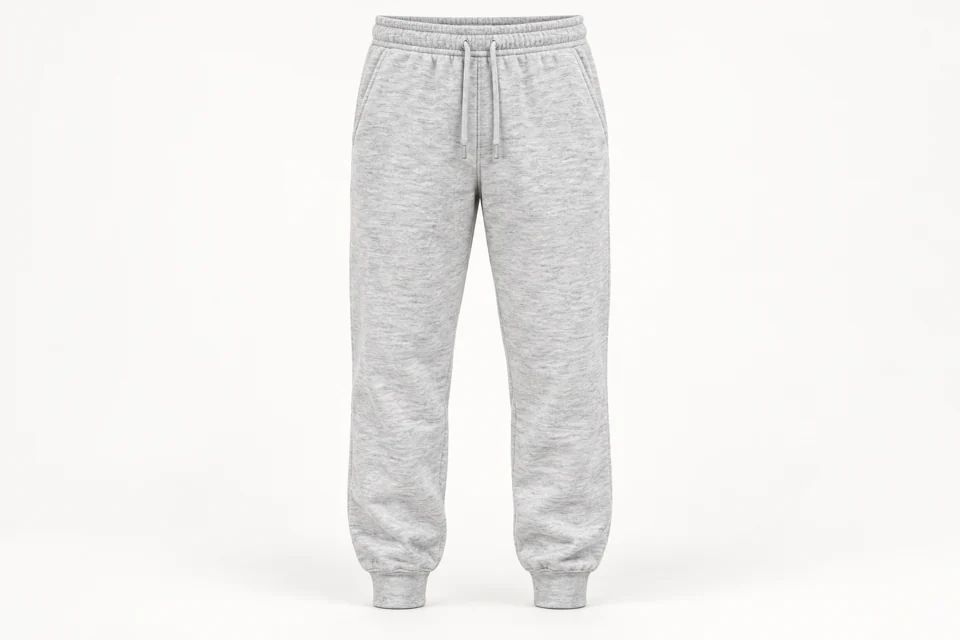
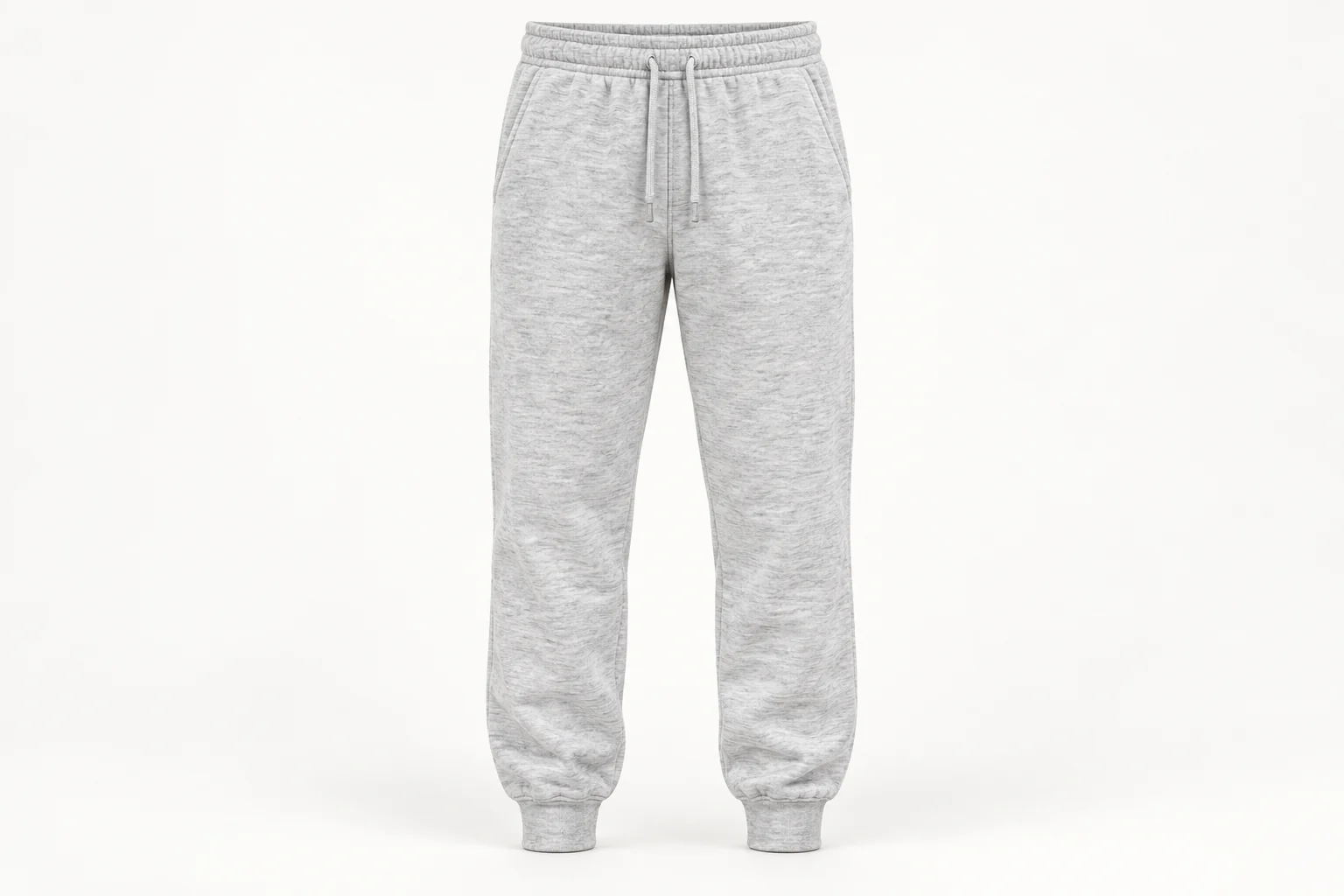
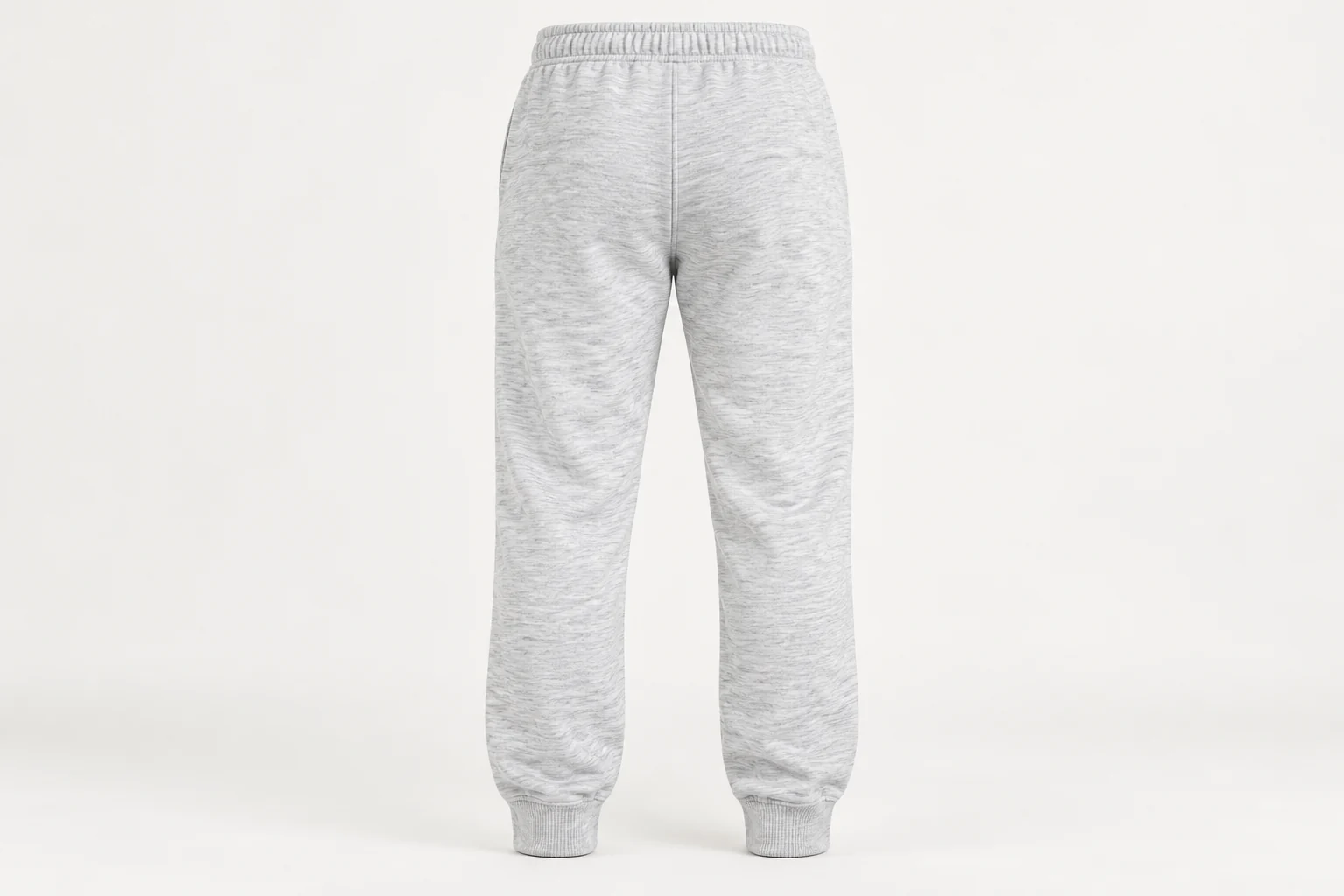
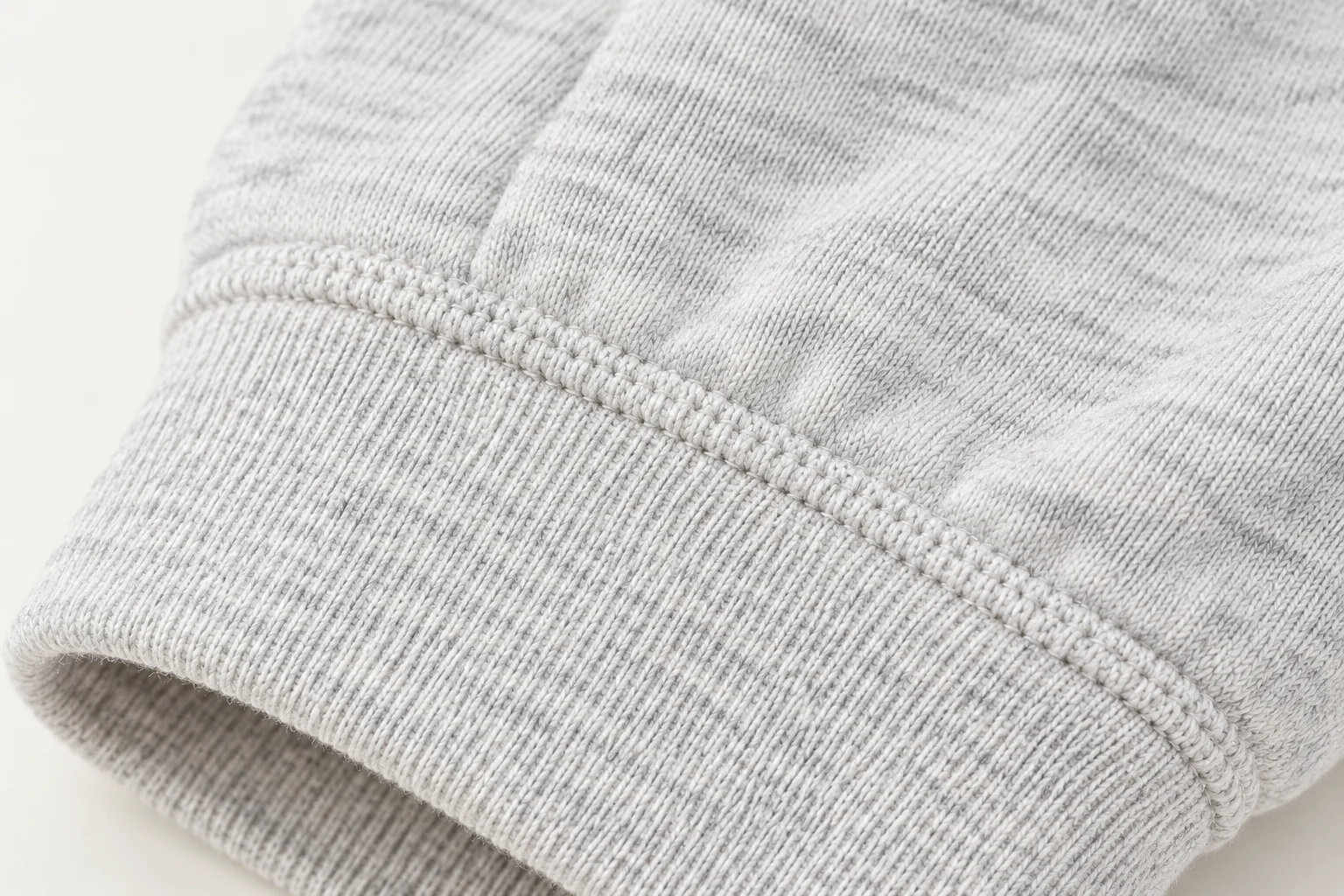
Define the transition from relaxed leg to cuff
Cuffed sweatpants can keep substantial room through the leg while gathering the lower opening into a smaller component. Decide how pronounced that transition should look: a clean approach to the cuff, a deliberate amount of pooling or another stated silhouette. Draw the intended cuff depth and finished leg position before comparing material. CottonWorks recommends defining end use and function early in knit development. Here, the selection question is whether the proposed body and cuff can deliver the chosen transition together, rather than whether a body cutting feels suitable for a generic jogger.
CottonWorks: Designing Knit Textiles — Defining the Product — End use and required function belong early in knit development. The cuff transition, dressing and waist observations are original garment-specific guidance, not verified recovery, warmth or durability results for the candidate articles.
Read the body candidates without treating finishes as results
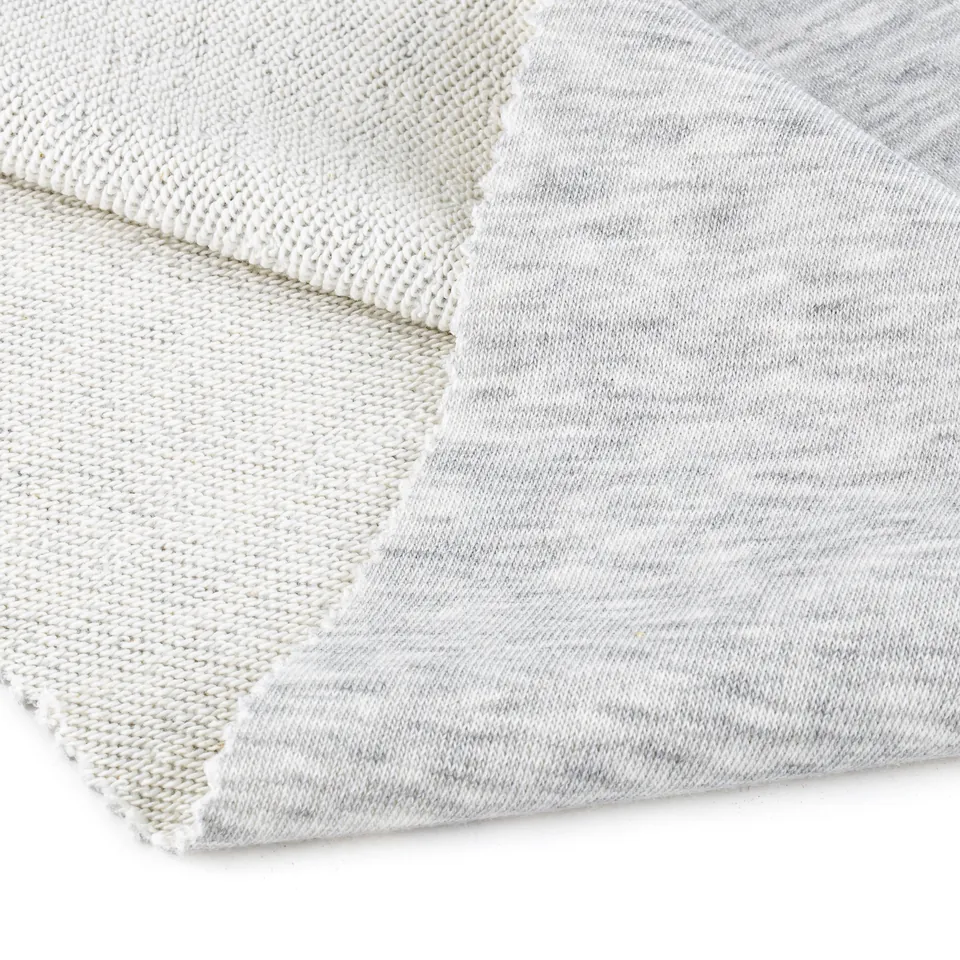
FT-602 is recorded as three-thread unbrushed material in 70% cotton and 30% polyester, unbrushed and compacted, at 300, 325, 350, 375 and 400 g/m². FT-603 is 65% cotton and 35% polyester three-thread brushed material, brushed and anti-pilling finished, at 320, 345, 370, 395 and 420 g/m². Ask which exact offered option is being sampled. Anti-pilling is a finish label, not a supplied test rating, and neither record establishes warmth, recovery or cuff behaviour. The candidates remain body-material routes requiring garment development.
Compare cuff constructions before fixing the body choice
Ask the maker to propose the actual cuff material, direction, depth and attachment for the drawing. A shorter, more open cuff and a taller, closer cuff can be useful design alternatives when clearly labelled as proposals, not standard solutions. Neither body record lists elastane, and a body cutting alone cannot establish the return or dressing behaviour needed at the ankle. Sew the cuff to the proposed leg opening. Inspect how the two materials meet rather than approving their separate hand feel and assuming the junction will look controlled.
Use the assembled leg to judge gathering and bulk
Observe the lower leg standing and seated, with the intended footwear reference if that affects the design. Note whether the body gathers evenly into the cuff or forms an unwanted concentrated fold. Ask the pattern and sewing teams to review the leg-opening shape, joining seam and cuff dimensions together. A heavier body route may need a different pattern solution, but that possibility must be tested rather than declared from GSM alone. Keep the comparison's changed variables visible so a successful revised junction is not misrepresented as a fabric-only result.
Keep ankle dressing access separate from resting appearance
A cuff can look neat around the ankle yet need further development for passing the foot through the opening. Review the intended dressing sequence in relevant sizes without forcing a tight sample. Ask the maker to evaluate cuff extension, seam allowance and stitching as one assembly. Do not enlarge or shorten the cuff solely to solve access without reassessing its worn line. The result should be a documented construction choice for this design, not a universal claim of easy dressing or shape retention derived from a relaxed circumference measurement.
Let the waist support the full chosen leg assembly
Attach the actual relaxed legs and cuffs before approving the waist arrangement. Record the intended waist position and observe whether the finished length and lower-leg pooling remain as designed after ordinary movement and sitting. A waist adjustment can change the apparent cuff transition without resolving the original lower-leg geometry. If the band or elastic changes, repeat the whole-garment observation. Avoid treating body composition as proof of waistband comfort or return; the separate waist components and their attachment need to be identified in the trial.
Select a body, leg length and cuff combination
Retain the offered article, GSM, finish, body pattern, waist construction, cuff specification and seam arrangement with consistent sample photographs. State which degree of pooling or clean transition was accepted and which questions remain unresolved after care. Ask for qualified assessment where measurable surface durability or dimensional behaviour is required. Confirm current supply and commercial terms separately. A later body-weight or cuff substitution should be reviewed against the accepted assembly, not approved merely because the replacement is another brushed or unbrushed sweat fabric.
Technical background and scope
This is a structured editorial draft. Garment-specific development advice is paired with existing catalogue records; compatibility must be established by sampling. AL KUMAŞ supplies fabric. Cutting, sewing and finished-garment production are separate unless explicitly agreed.