



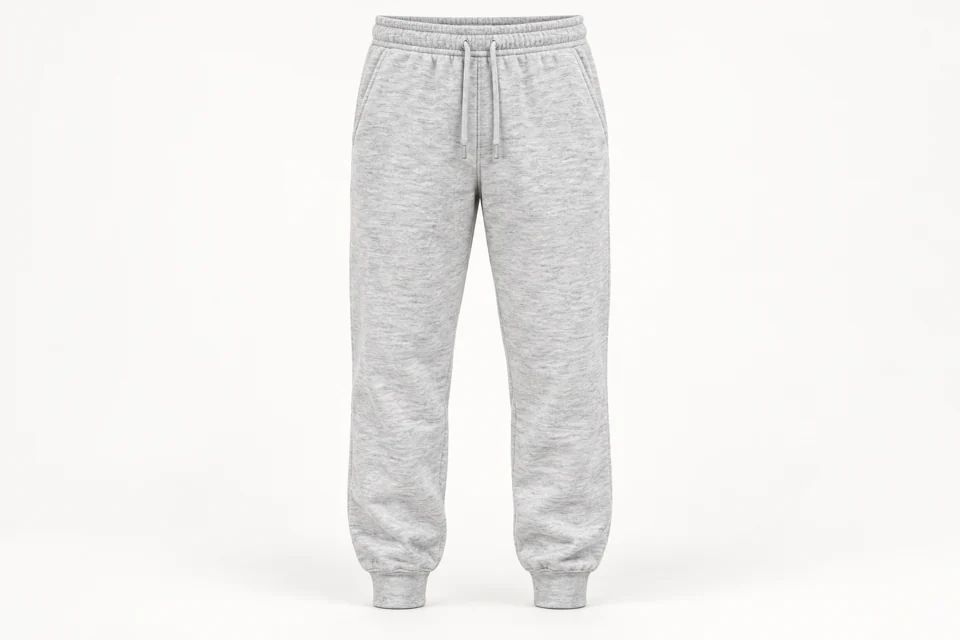
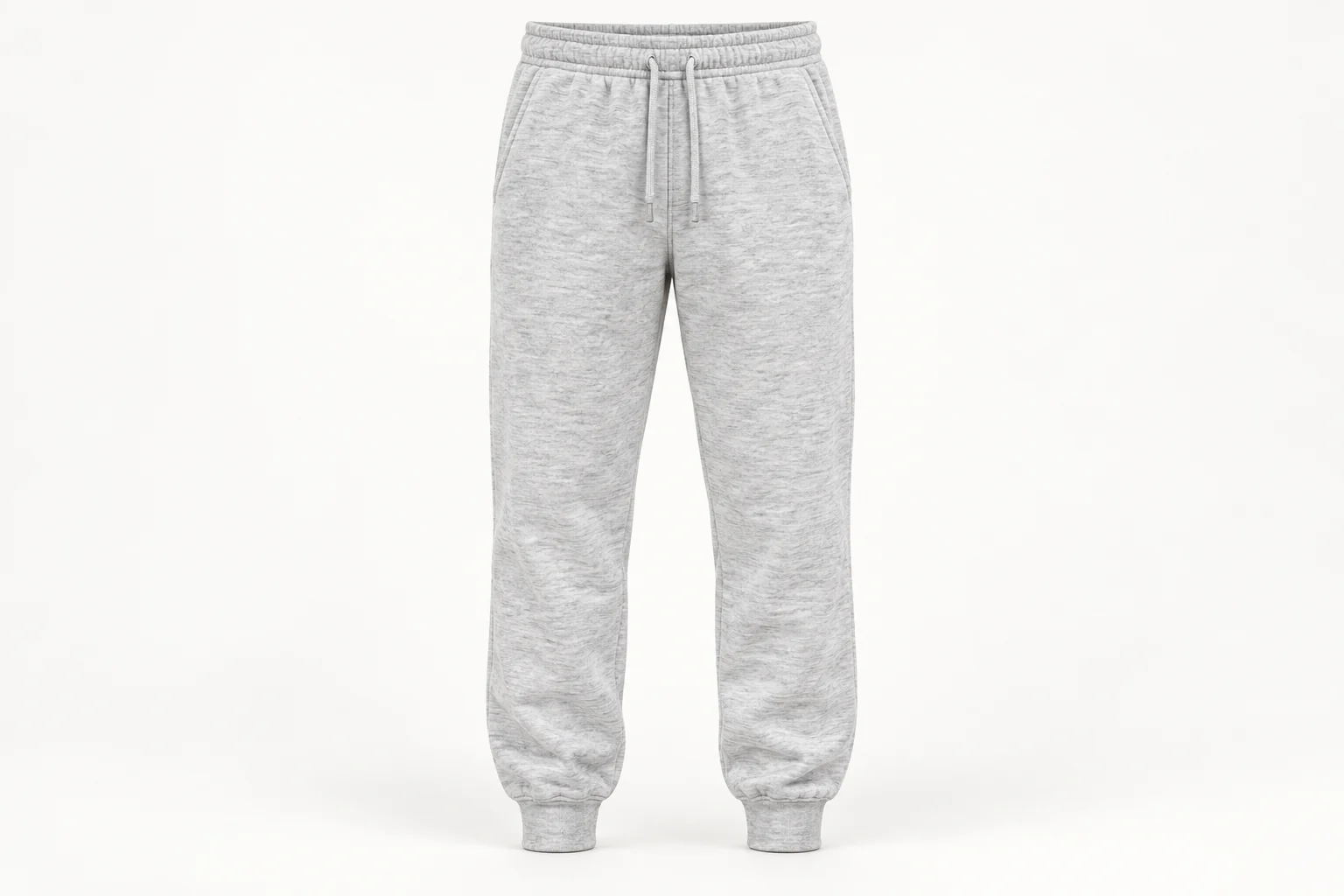
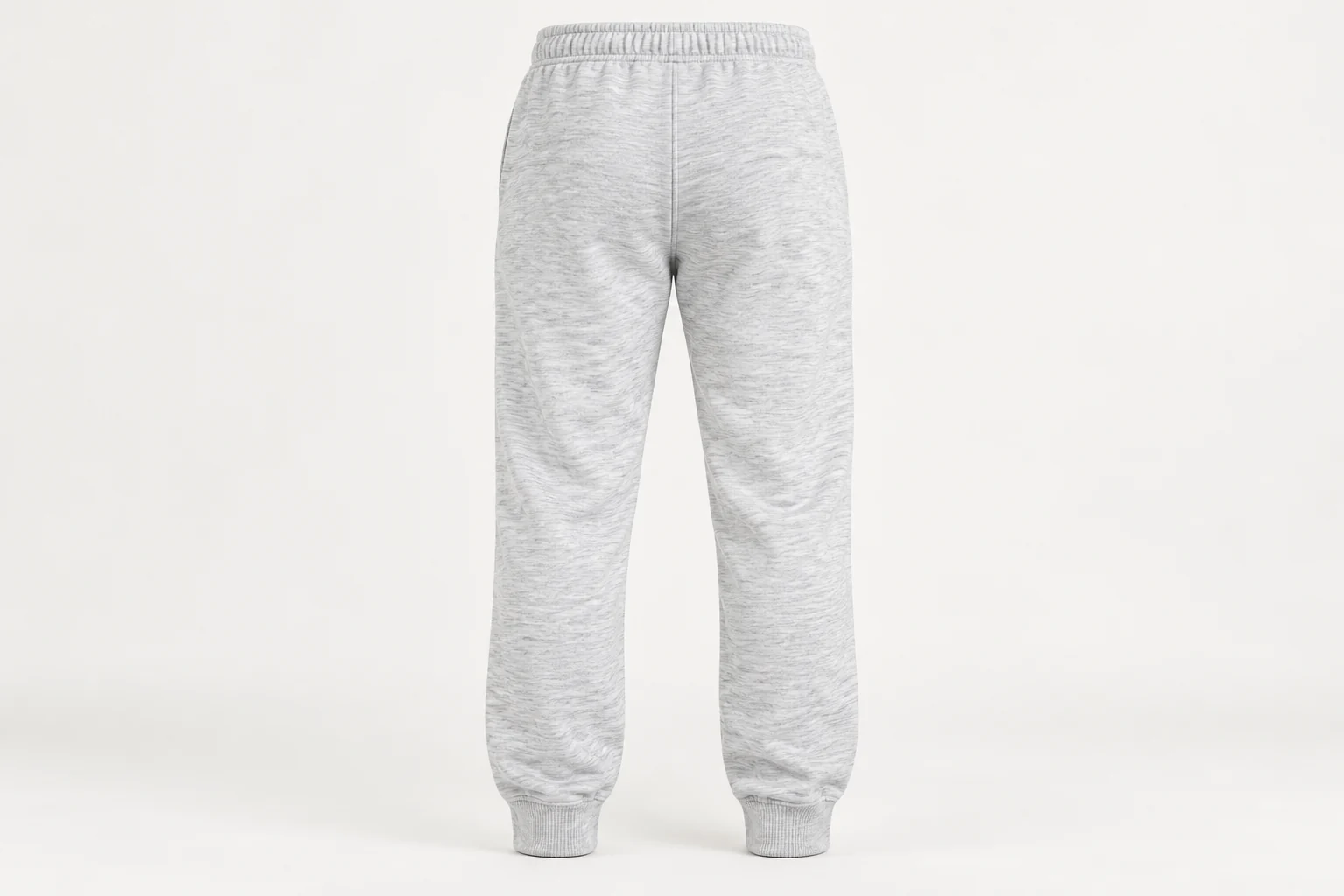
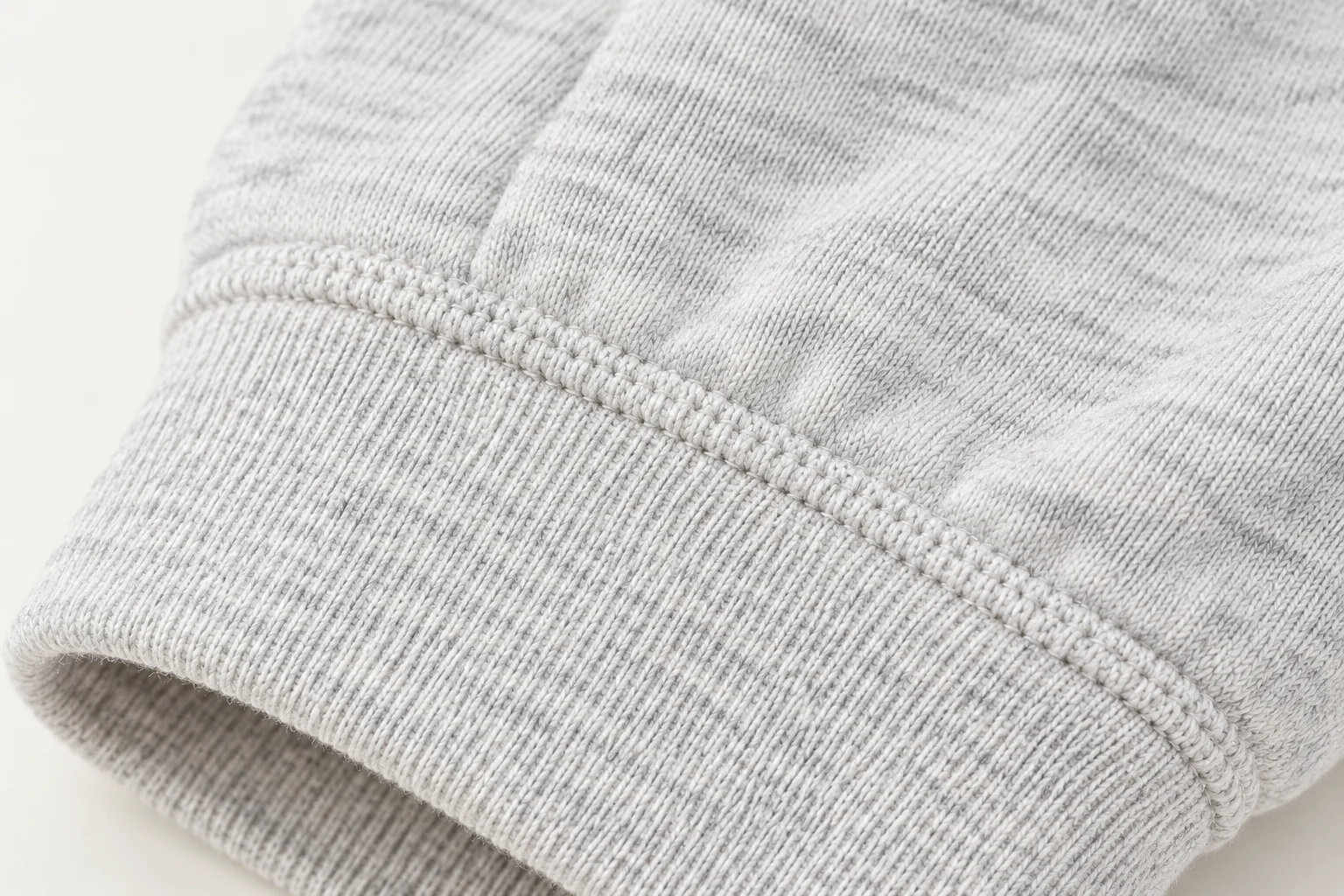
Treat the cuff as the visual end of the leg design
Decide whether the cuff should disappear into the body colour, form a contrasting block or continue a stripe or graphic. Its depth and position determine how much of that colour field is visible above the footwear or beneath gathered leg fabric. Draw the intended lower-leg arrangement before approving a cutting. A graphic planned for an open hem cannot simply be carried into a cuffed version without reviewing what becomes folded, gathered or obscured. The first visual decision is therefore the relationship between body leg, joining seam and finished cuff.
Identify the body surface and the separate cuff substrate
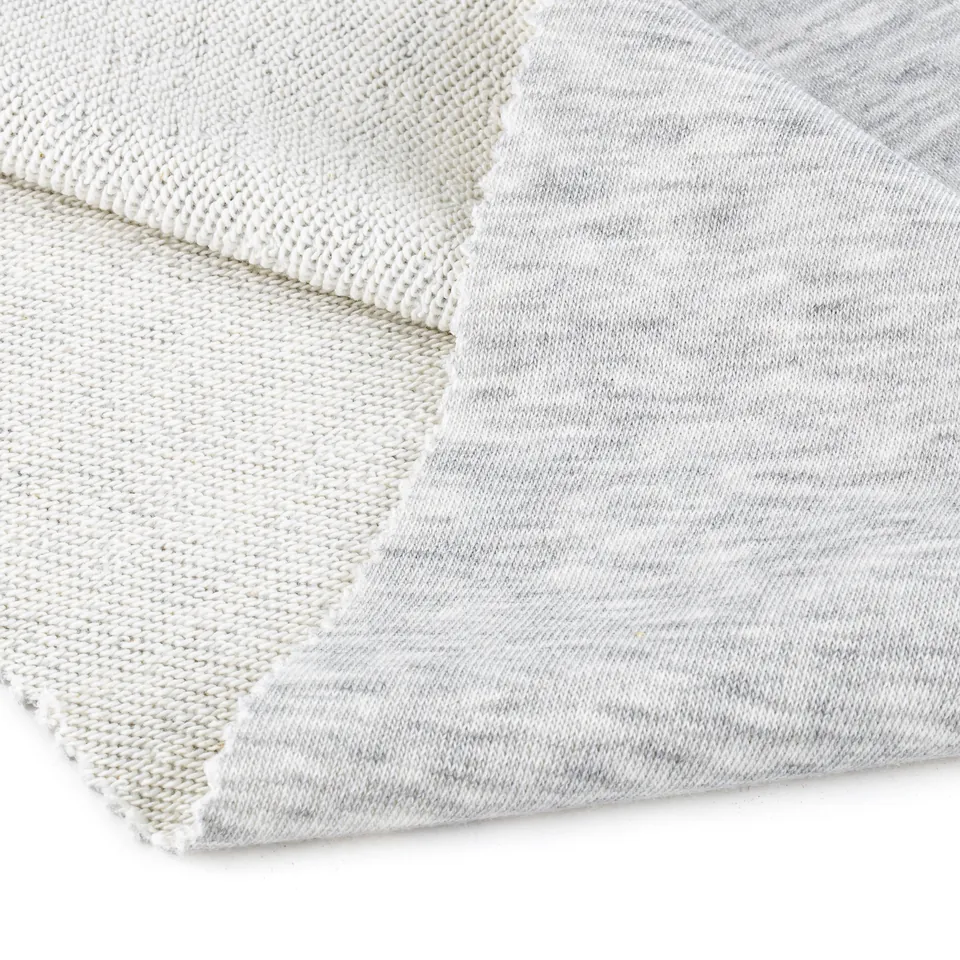
FT-602 is recorded as 70% cotton and 30% polyester three-thread unbrushed material, unbrushed and compacted, at 300, 325, 350, 375 and 400 g/m². FT-603 is 65% cotton and 35% polyester three-thread brushed material, brushed and anti-pilling finished, at 320, 345, 370, 395 and 420 g/m². Ask which option the colour or application sample represents. Identify the actual cuff material separately; neither body record establishes that component. Finish descriptions do not confirm print compatibility, colourfastness or a tested resistance to surface change.
Approve body-to-cuff shade in the sewn transition
Compare the actual components attached to one another, with the cuff in its intended folded state and the relaxed body gathered as designed. Record whether the relationship should be a close match or a deliberate contrast. Two loose swatches judged in isolation may not communicate the same visual effect. If a difference is unacceptable, identify the component and governing reference before requesting a correction. CottonWorks connects visual design with construction choices; the specific cuff relationship still needs a programme decision rather than an assumption that identical colour names mean an accepted match.
CottonWorks: Designing Knit Textiles — Designing the Fabric and Pattern Matching — Visual design relates to construction, and matching constraints can affect marker efficiency. Cuff-specific shade, artwork and matching proposals require actual programme evaluation and are not evidence of mill decoration capability.
Give lower-leg artwork a boundary at the joining seam
Mark a graphic's distance from the body-to-cuff seam and the finished cuff edge, stating which landmark governs placement. If the body gathers above the join, review the artwork on the actual sewn sample. Decide whether the design may enter those folds or should sit higher. A longer cuff can move the artwork relative to the ankle even if its distance from the seam is unchanged. Review the intended position across the relevant sizes and lengths instead of giving the decorator one sample-size photograph as a universal placement instruction.
Decide whether pattern continuity is worth the constraint
For stripes or directional motifs, specify whether they must continue into the cuff or whether a solid component is preferred. Ask the maker and decorator to assess the actual material orientation and folded construction before promising continuity. CottonWorks notes that matching requirements can affect marker efficiency; the cost implication here needs the programme's own pattern and cuff specification. A deliberate visual interruption can be a legitimate design choice, but it should be approved as such. Do not let a convenient offcut arrangement silently redefine the cuff's intended direction.
CottonWorks: Designing Knit Textiles — Designing the Fabric and Pattern Matching — Visual design relates to construction, and matching constraints can affect marker efficiency. Cuff-specific shade, artwork and matching proposals require actual programme evaluation and are not evidence of mill decoration capability.
Assess shade and application evidence separately
Ask for relevant colour-change and transfer information for the actual body, cuff and any decoration. AATCC's public index distinguishes rubbing, perspiration and laundering colourfastness categories; qualified selection of current methods and agreed requirements remains necessary. An accepted colour relationship does not show that the complete assembly has passed those checks. Likewise, the anti-pilling finish label on FT-603 is not a reported rating for the body or decoration. Keep the material, colour and application identities attached to evidence so later substitutions do not inherit unsupported results.
AATCC: Standard Test Methods and Procedures — Colourfastness — Public index distinguishes rubbing/crocking, perspiration and laundering colourfastness categories. No procedures, numerical requirements or material/garment results are supplied.
Release appearance with the approved cuff depth attached
Retain the body and cuff references, finishes, offered weights, physical colour standard, artwork version, graded placement and accepted transition photographs. State whether approval covers shade only, a complete component match or the decorated application. If cuff depth, body length or joining arrangement changes, ask which visual instructions need revision. The release should reproduce a deliberate end-of-leg design while identifying any missing technical evidence. A successful sample photograph is not permission to claim universal colour durability, perfect matching or resistance to pilling for every future supply.
Technical background and scope
This is a structured editorial draft. Garment-specific development advice is paired with existing catalogue records; compatibility must be established by sampling. AL KUMAŞ supplies fabric. Cutting, sewing and finished-garment production are separate unless explicitly agreed.