



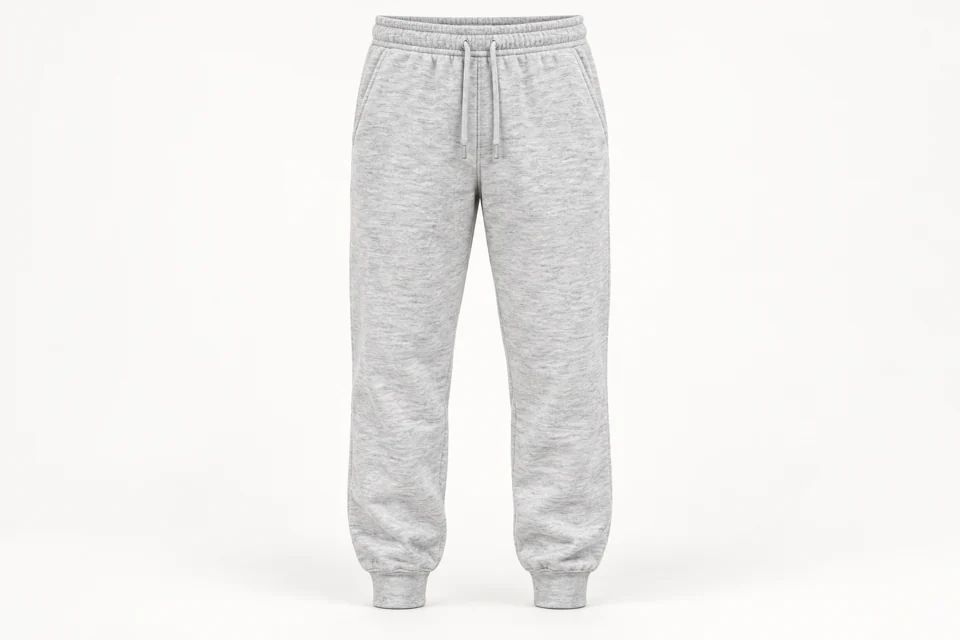
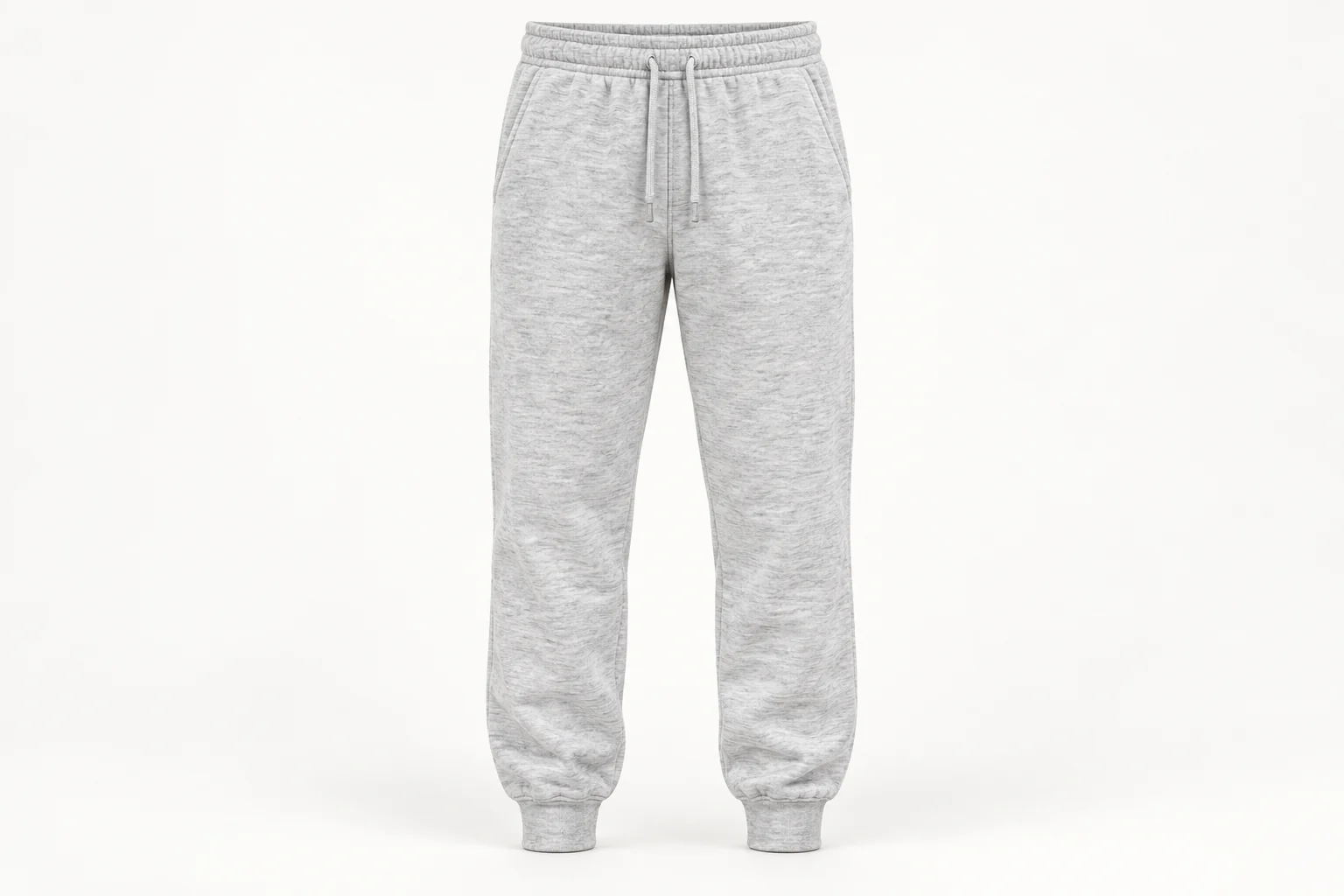
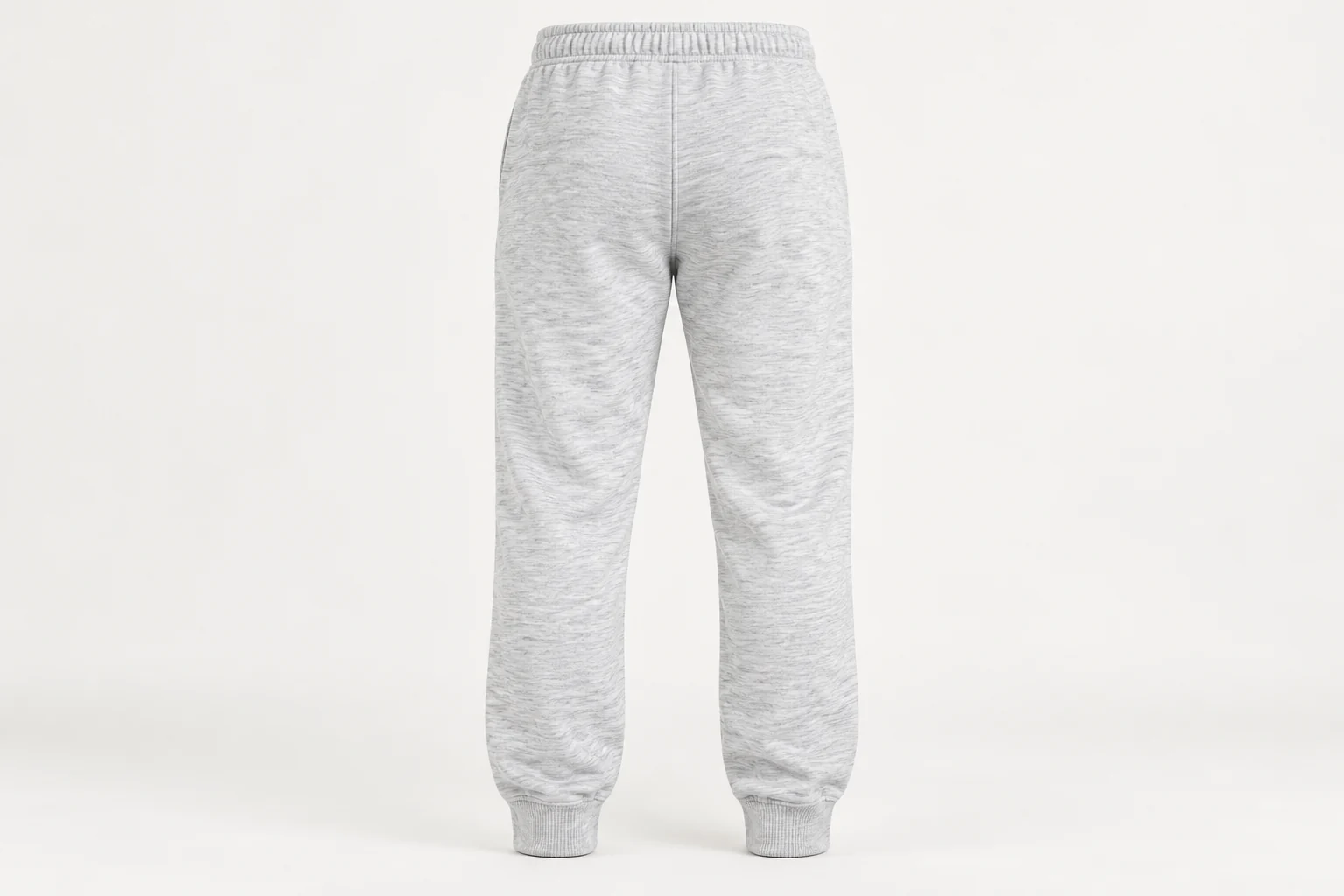
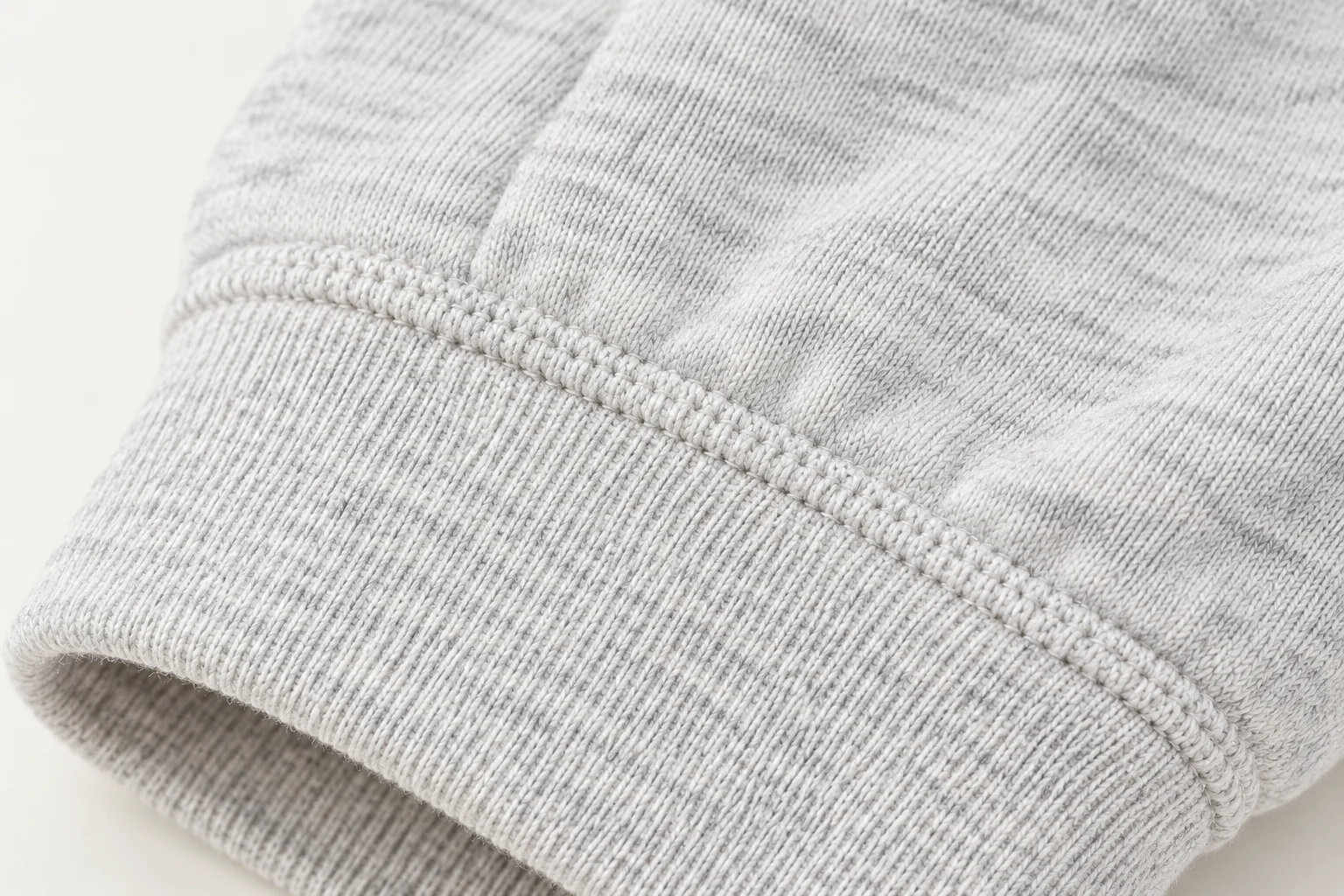
Request a paired lower-leg prototype before fixing the order
Begin with a pair of sewn lower-leg prototypes using the same identified body material: one proposed short, relatively open cuff and one taller, closer alternative. Include enough leg above each join to show the intended gathering, and label whether pooling is deliberate. These are development variants, not universal cuff specifications. Tell the maker which question the pair must resolve before constructing the complete trousers. CottonWorks treats required function as an early design question; here, that function needs to be translated into a cuff transition the buyer can inspect, rather than a generic request for sweatpant fabric.
CottonWorks: Designing Knit Textiles — Defining the Product — Define end use and required function before knit development. The two cuff variants, fixed-length tradeoff, paired costs and accountable transition review are original decision aids, not published acceptance criteria or confirmed supplier offers.
Attach the two body proposals to the comparison
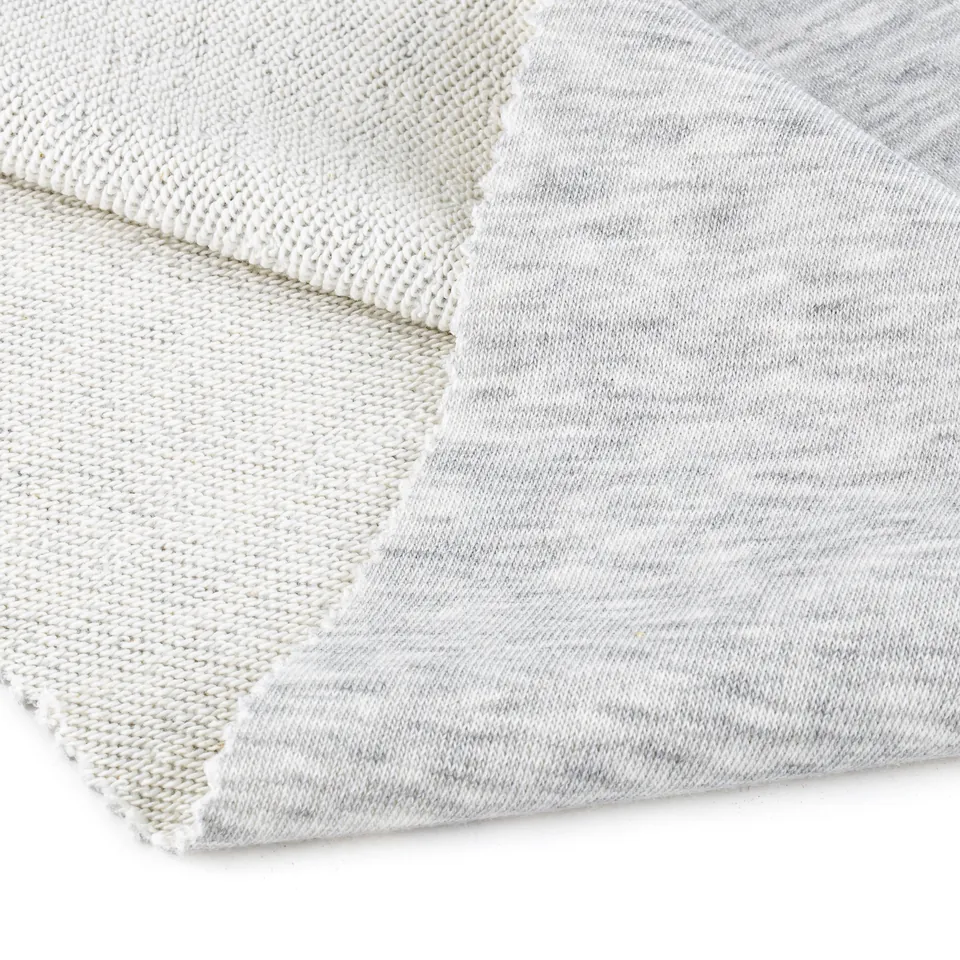
Name FT-602 as 70% cotton and 30% polyester, three-thread unbrushed and compacted, with catalogue weights of 300, 325, 350, 375 and 400 g/m². Name FT-603 as 65% cotton and 35% polyester, three-thread brushed and anti-pilling finished, at 320, 345, 370, 395 and 420 g/m². Ask which precise offered options can be sampled. The anti-pilling wording is a recorded finish label, not a supplied rating. Neither body record establishes the cuff's material identity, extension, recovery or the final garment's shape after care.
Make cuff supply and attachment an accountable task
Ask who proposes and supplies the cuff material, who defines its cut direction and dimensions, and who develops the joining seam. Require a material identity for each cuff variant rather than the phrase matching rib. State whether waist components are part of the same supplier's responsibility or another route. A body-fabric quotation should not silently become a finished-garment offer. Request a sewn lower-leg comparison with enough surrounding body to show gathering and fall; two disconnected cuff loops cannot answer how the complete transition will look.
Choose which length remains fixed when the cuff changes
Tell the maker whether both variants must retain the same finished inseam or whether different overall lengths are intentionally being compared. If total length is fixed, a taller finished cuff can require a different body-leg pattern; if the body remains fixed, the worn length can change. Mark the measurement route and desired waist position. Ask the designer to approve that tradeoff before costing. This prevents a cheap-looking cuff substitution from quietly changing the silhouette, and gives the reviewer a clear basis for deciding whether later pooling is intended or a development problem.
Request paired markers and costs for the actual variants
Obtain precise body GSM, usable finished width, format and its measurement convention. Give the cutter the size ratio, material directions and all leg, waist and cuff patterns. Request separate body and cuff quantities for each accepted design proposal, identifying separately purchased materials. If a cuff-depth change alters body length, require the marker revision rather than adding a trim-price difference to an old estimate. Keep agreed dimensional allowances, marker loss and other purchasing assumptions distinct. The buyer needs a comparison of complete length-and-cuff options, not one body-fabric price decorated with an unspecified component allowance.
Make the sample reply close named transition questions
Ask for a short comparison record covering the joining appearance, foot passage, resting ankle line, waist position and body-to-cuff relationship after the agreed care procedure. State who accepts each design observation and who reviews any required measured property. Request article-specific evidence where the programme needs quantified recovery, surface or dimensional performance, with methods and requirements chosen by the responsible specialist. Do not invent a universal cuff ratio or pass threshold. A supplier response that identifies one unresolved assembly question is more useful than an unsupported promise that the whole garment will retain its shape.
Tie the commercial offer to the chosen transition
After selecting the route, attach the approved body, weight, finish, cuff identity, depth, waist construction and pattern references to the quantity request. Show demand by colour and size with units, and ask for current minimums, price basis and proposed terms. Keep any unconfirmed forecasts labelled. A later substitute cuff or body length should reopen the relevant fitting and marker decisions instead of inheriting approval from the words cuffed sweatpants. Retain the accepted assembly so purchasing and production can reproduce the intentional lower-leg transition rather than approximate it from a catalogue family name.
Technical background and scope
This is a structured editorial draft. Garment-specific development advice is paired with existing catalogue records; compatibility must be established by sampling. AL KUMAŞ supplies fabric. Cutting, sewing and finished-garment production are separate unless explicitly agreed.