



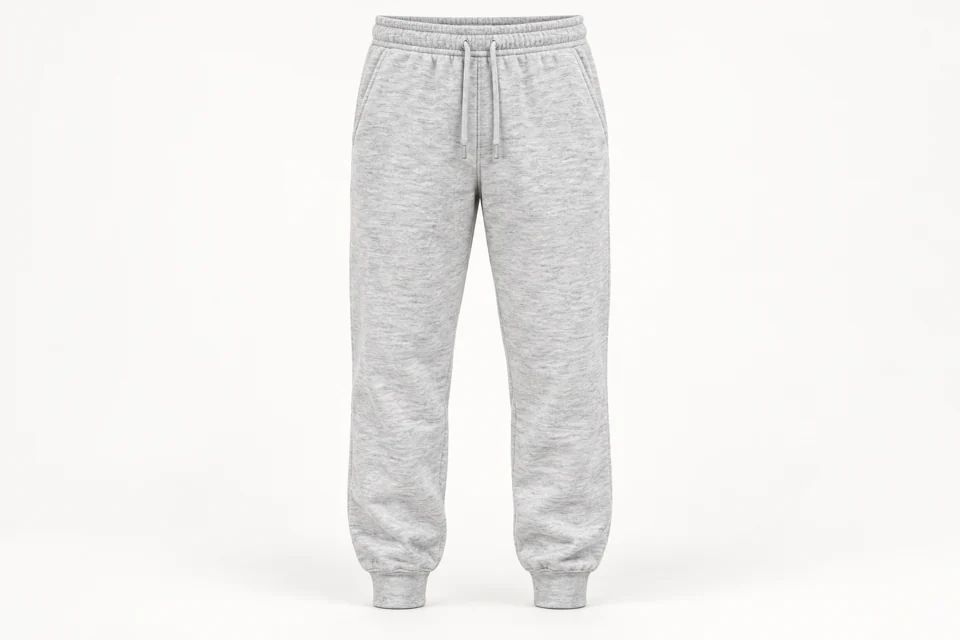
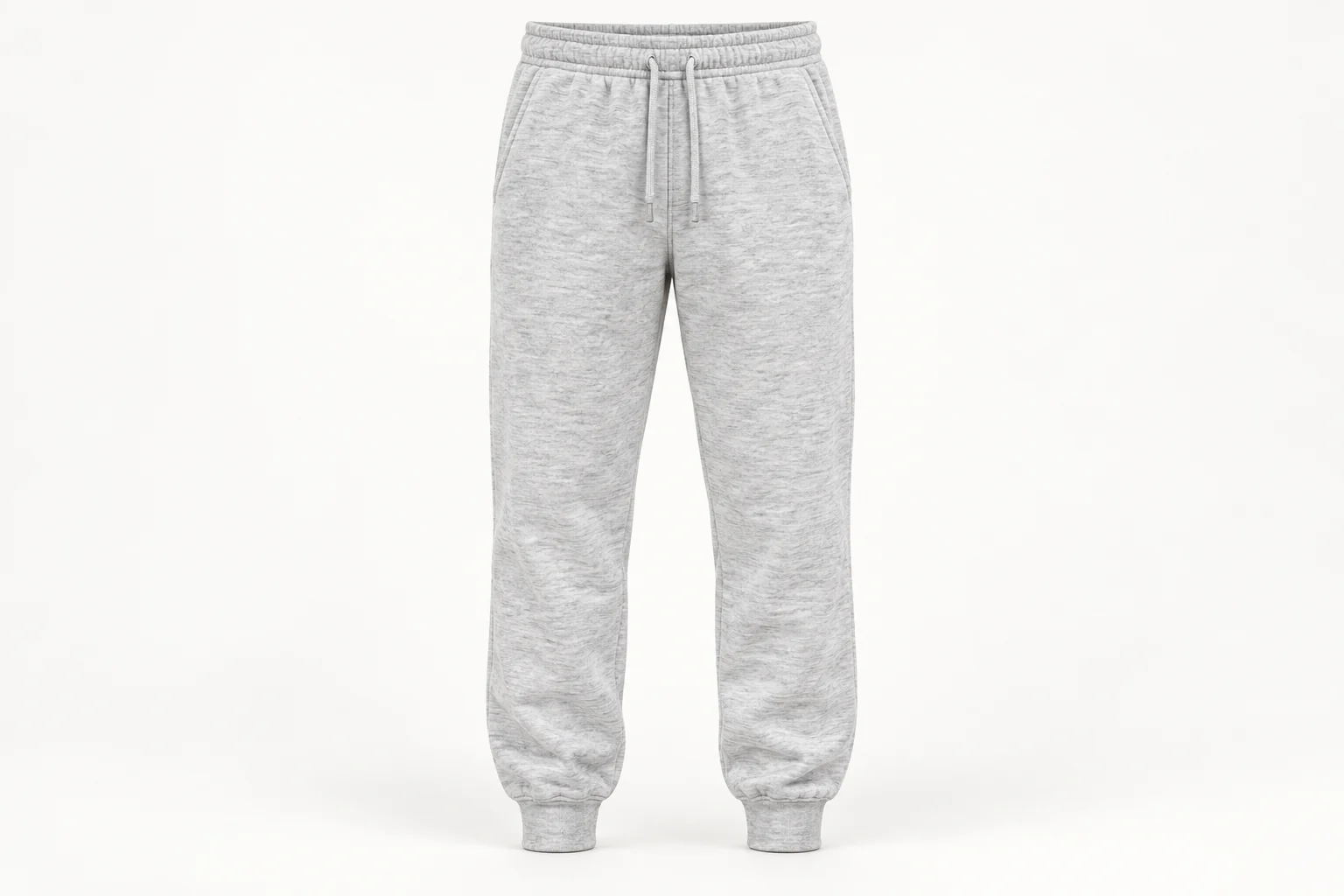
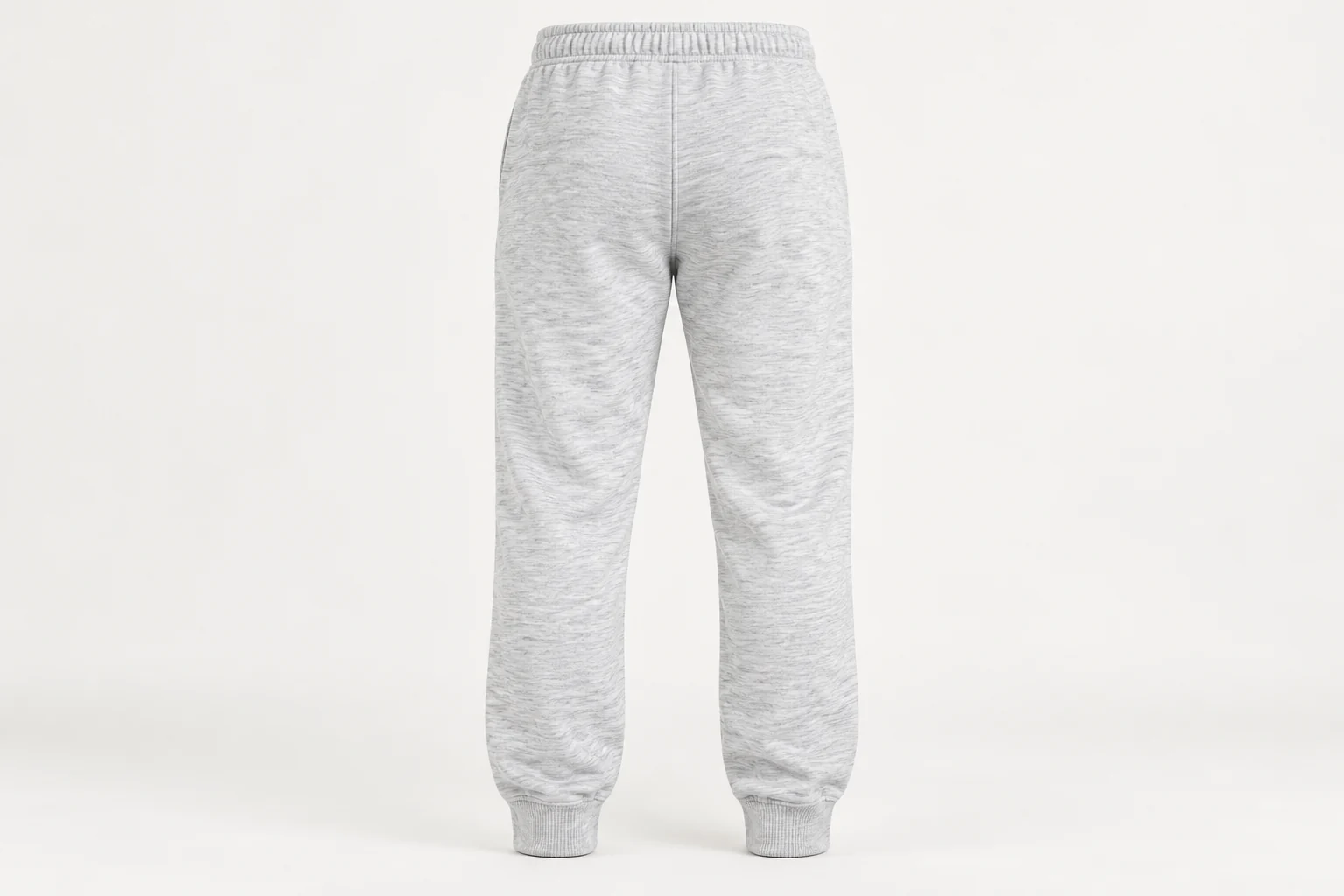
Separate finished leg length from body-panel length
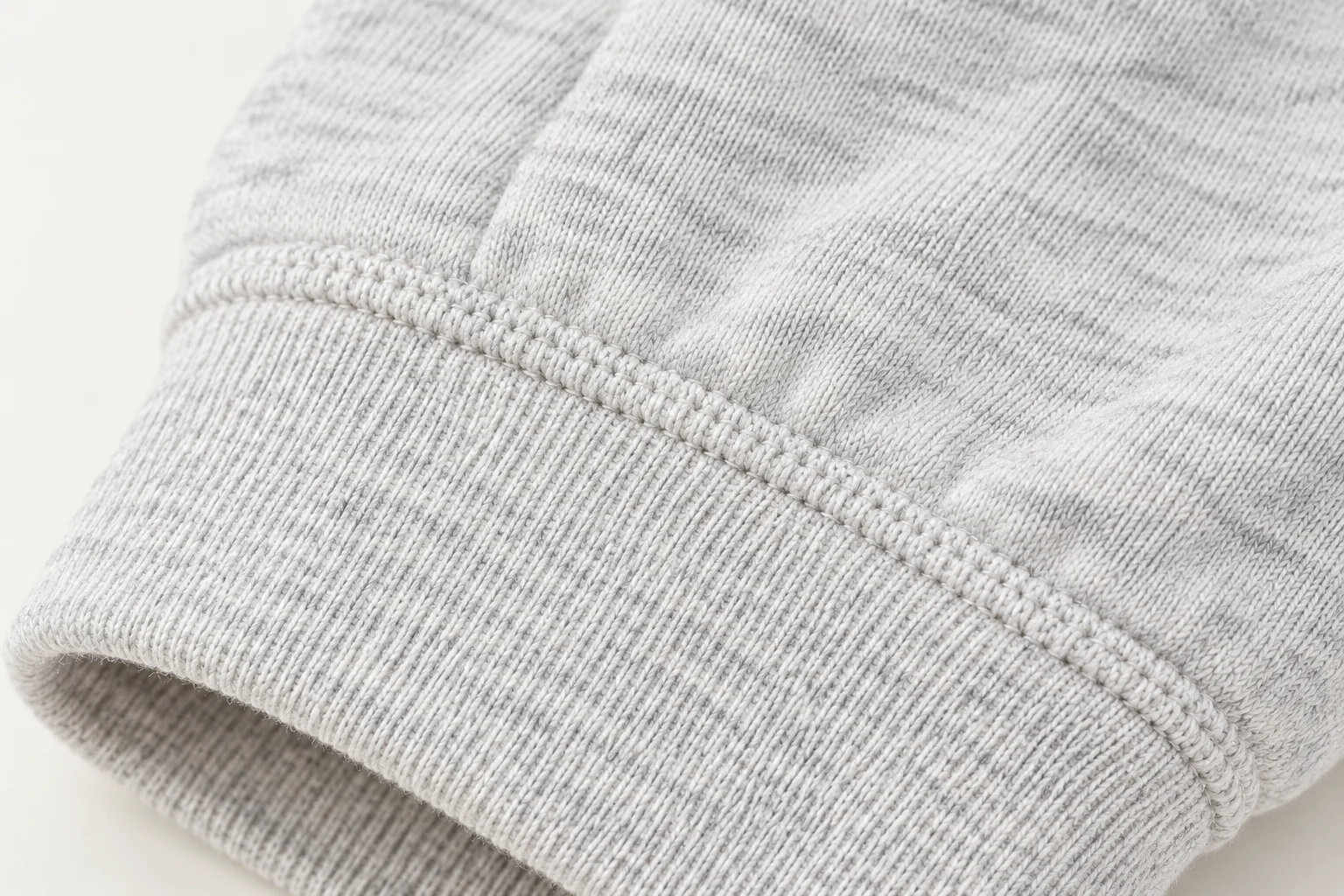
A cuff contributes to the finished leg, so the body panel and cuff must be costed from the same length definition. State where the measurement starts and ends and whether the specification includes the cuff. A long relaxed leg with intentional pooling is a different pattern from a clean transition ending higher at the ankle. CottonWorks describes marker planning as arranging actual components efficiently. Ask the cutter to identify the approved body and cuff version before presenting consumption; a generic sweatpant quantity can conceal a different lower-leg design.
CottonWorks: Garment Construction — Marker Making — Marker planning arranges actual pattern components efficiently. Length/cuff dependencies and hypothetical cuff-area arithmetic are original explanations, not real production dimensions, widths, allowances or measured yields.
Keep both body weights and finish routes explicit
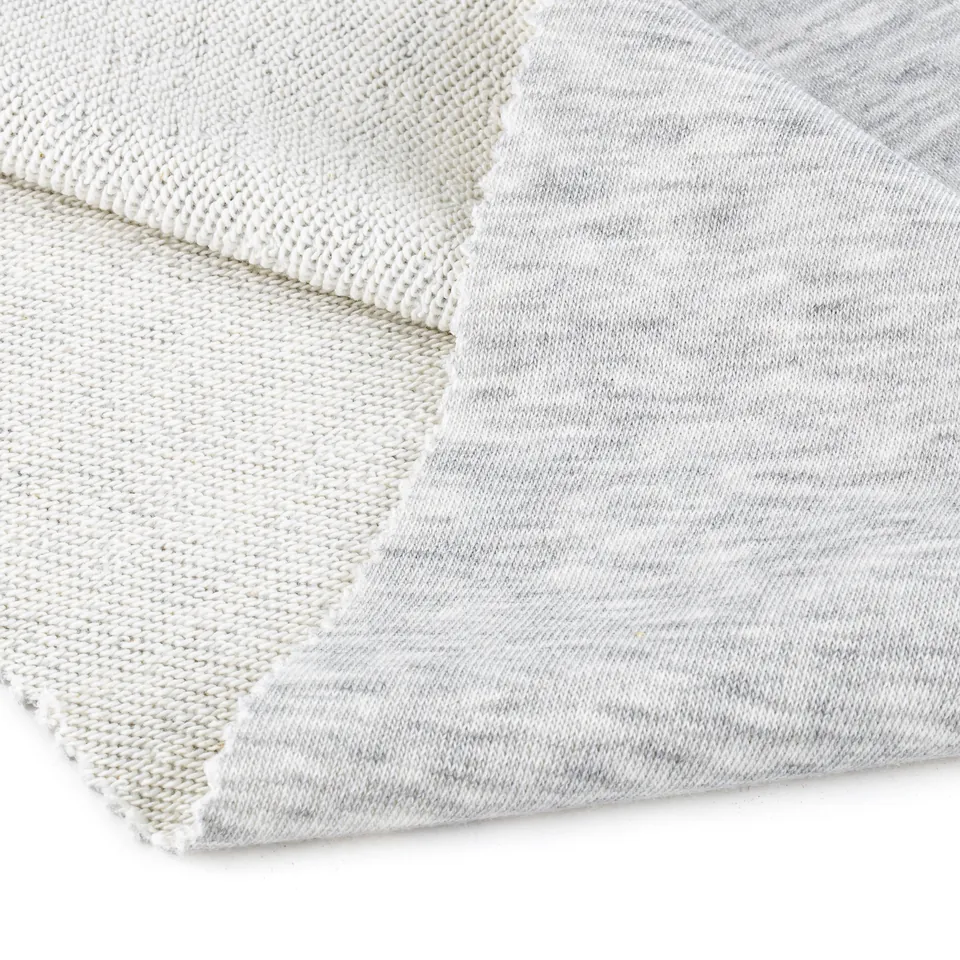
FT-602 offers 300, 325, 350, 375 and 400 g/m² in 70% cotton and 30% polyester, three-thread unbrushed and compacted. FT-603 offers 320, 345, 370, 395 and 420 g/m² in 65% cotton and 35% polyester, three-thread brushed and anti-pilling finished. Ask for the precise offered sample and quote option. The finish label does not supply an anti-pilling test result, and a heavier body does not establish a better cuff transition. If the two routes need different leg or component patterns, preserve those differences in the cost comparison.
Use a length example to expose the cuff dependency
In a deliberately simplified illustrative specification, a finished inseam of 74 centimetres might comprise 67 centimetres along the body leg plus 7 centimetres of finished cuff along the same measurement route. Substituting a 10-centimetre cuff while keeping the body unchanged would change that total; keeping the total fixed would require another pattern decision. These numbers are not a size recommendation, production pattern or allowance formula. The example shows why a cuff-depth change cannot be priced as a trim substitution alone when it changes the intended finished leg and pooling.
Calculate the cuff from its actual cut pieces
For a hypothetical two-cuff set with each cut rectangle measuring 32 by 16 centimetres, the combined cut area is 0.1024 square metres. At an illustrative cuff-material weight of 300 g/m², that area represents 30.72 grams before other considerations. Neither rectangle nor material is an approved cuff specification for this programme. A folded construction, joining allowance and orientation need the actual pattern. Ask the maker to show cuff material area and supply quantity separately where another article is purchased, rather than assuming it is included in the body marker.
Ask what the relaxed lower leg permits in the marker
Provide the full size mix, body-panel shapes, permitted directions and any artwork restrictions. A relaxed leg may leave different spaces from a tapered jogger, but that is a layout question for the cutter, not an automatic waste penalty or saving. Obtain usable finished width, supply format and its measurement convention for the offered body. Keep the cuff layout separate if it uses another material or direction. A body marker that omits components can be useful for comparison if clearly labelled, but it is not a complete purchasing quantity.
Recalculate after the transition is corrected
If fitting changes the leg opening, body length or cuff depth, update both pattern and consumption references. A correction that reduces pooling can change cut area and nesting; a cuff made taller can alter the desired body length. Ask the maker to separate agreed dimensional allowances, marker loss and additional purchasing allowances. Do not hide a provisional lower-leg decision inside a standard percentage. The buyer should know which quantity follows an accepted sample and which remains an estimate pending the dressing and after-care review.
Compare complete length-and-cuff scenarios
Show the offered body article, finish, exact GSM, confirmed width, body pattern, size ratio, cuff material and depth, marker references and quantities on the same cost sheet. Put the commercial units and price basis beside them. Ask for current minimums and terms for the defined programme rather than extrapolating from the catalogue. A shorter cuff with a longer body and a taller cuff with a revised leg may have different costs even at the same finished inseam. Compare the viable assemblies that actually reproduce the chosen silhouette.
Technical background and scope
This is a structured editorial draft. Garment-specific development advice is paired with existing catalogue records; compatibility must be established by sampling. AL KUMAŞ supplies fabric. Cutting, sewing and finished-garment production are separate unless explicitly agreed.