



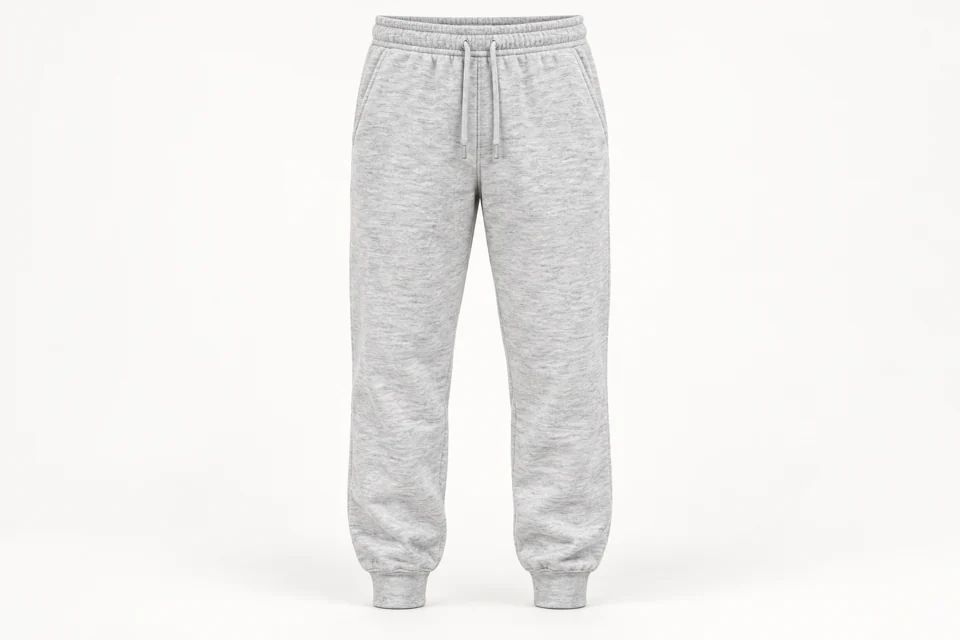
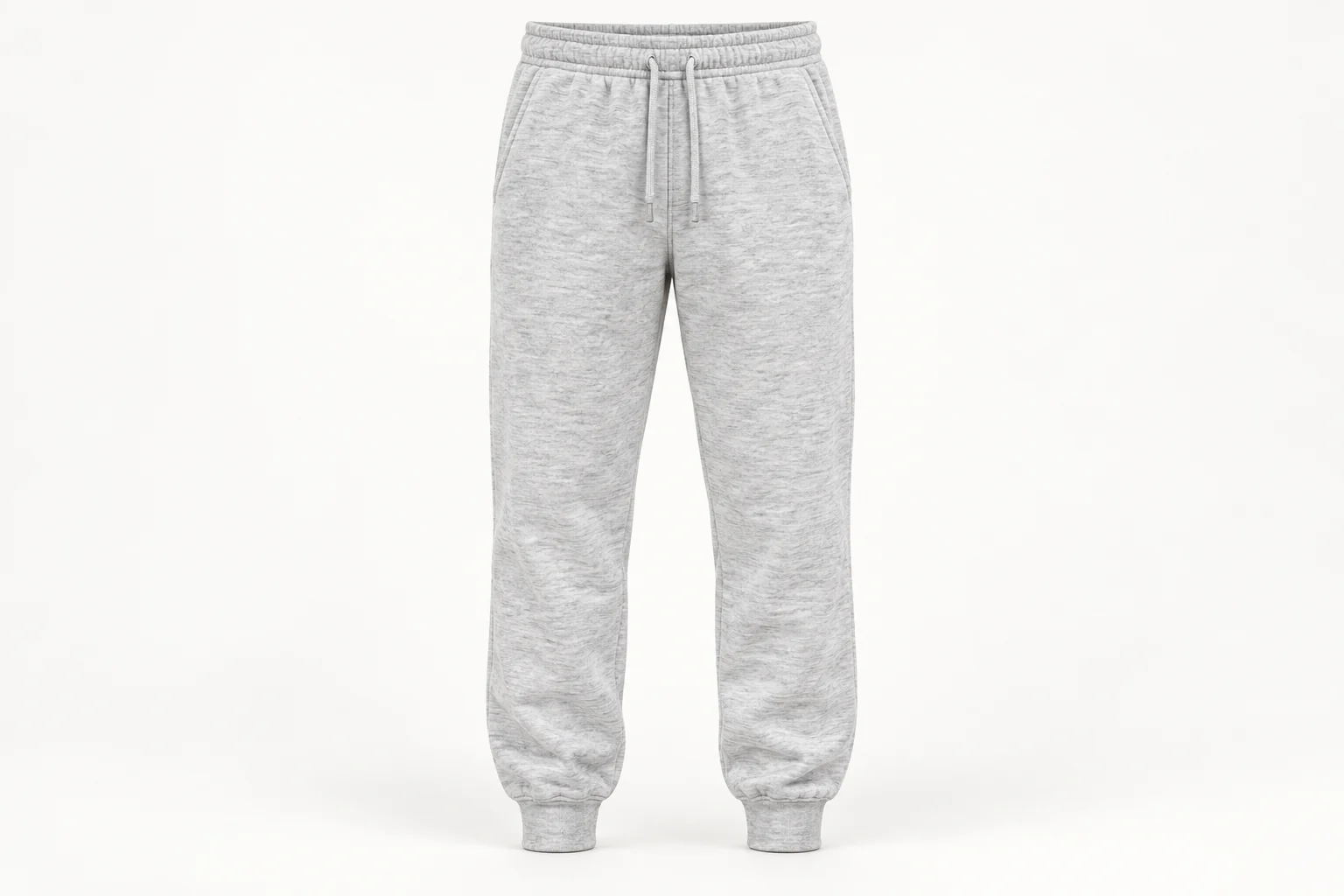
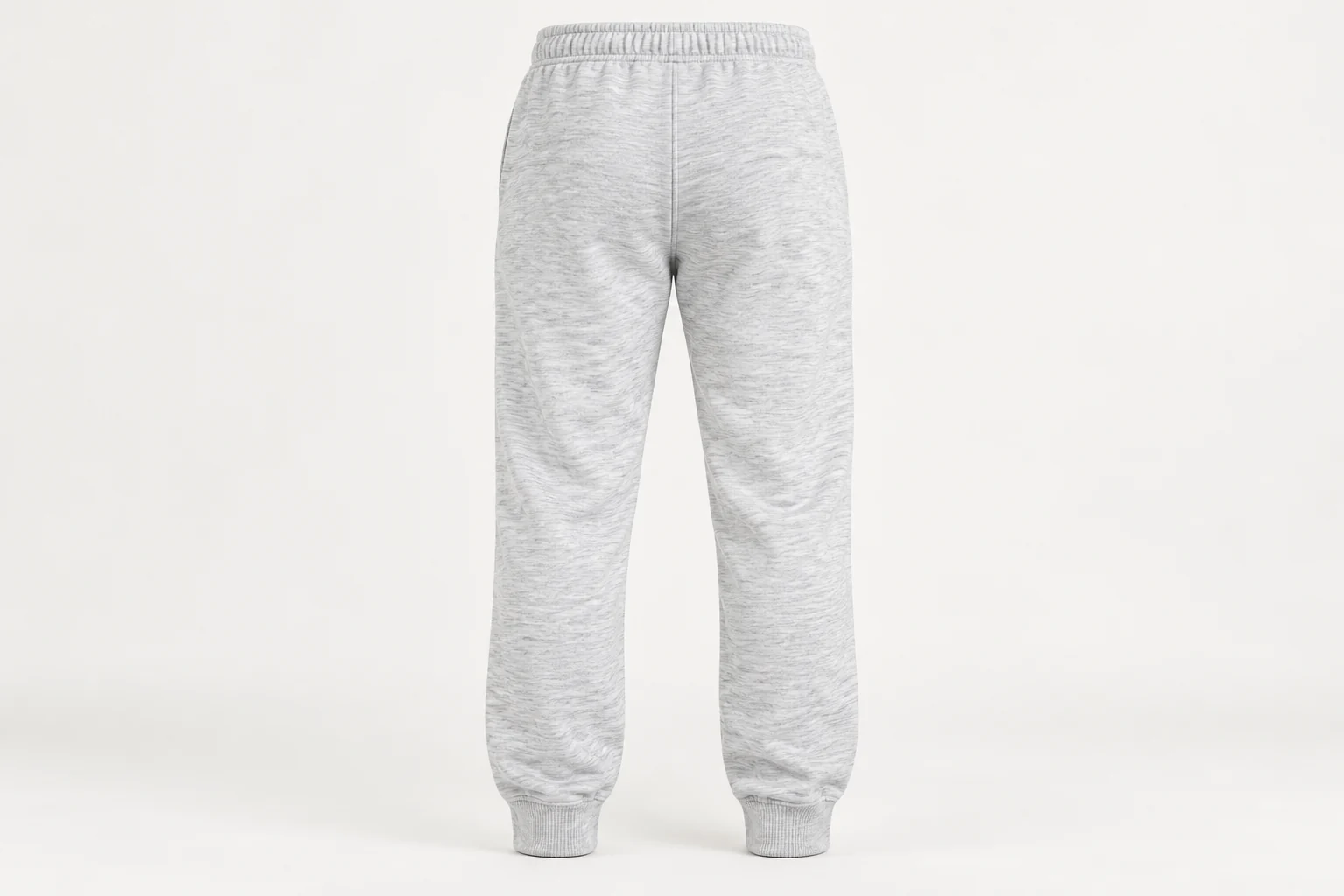
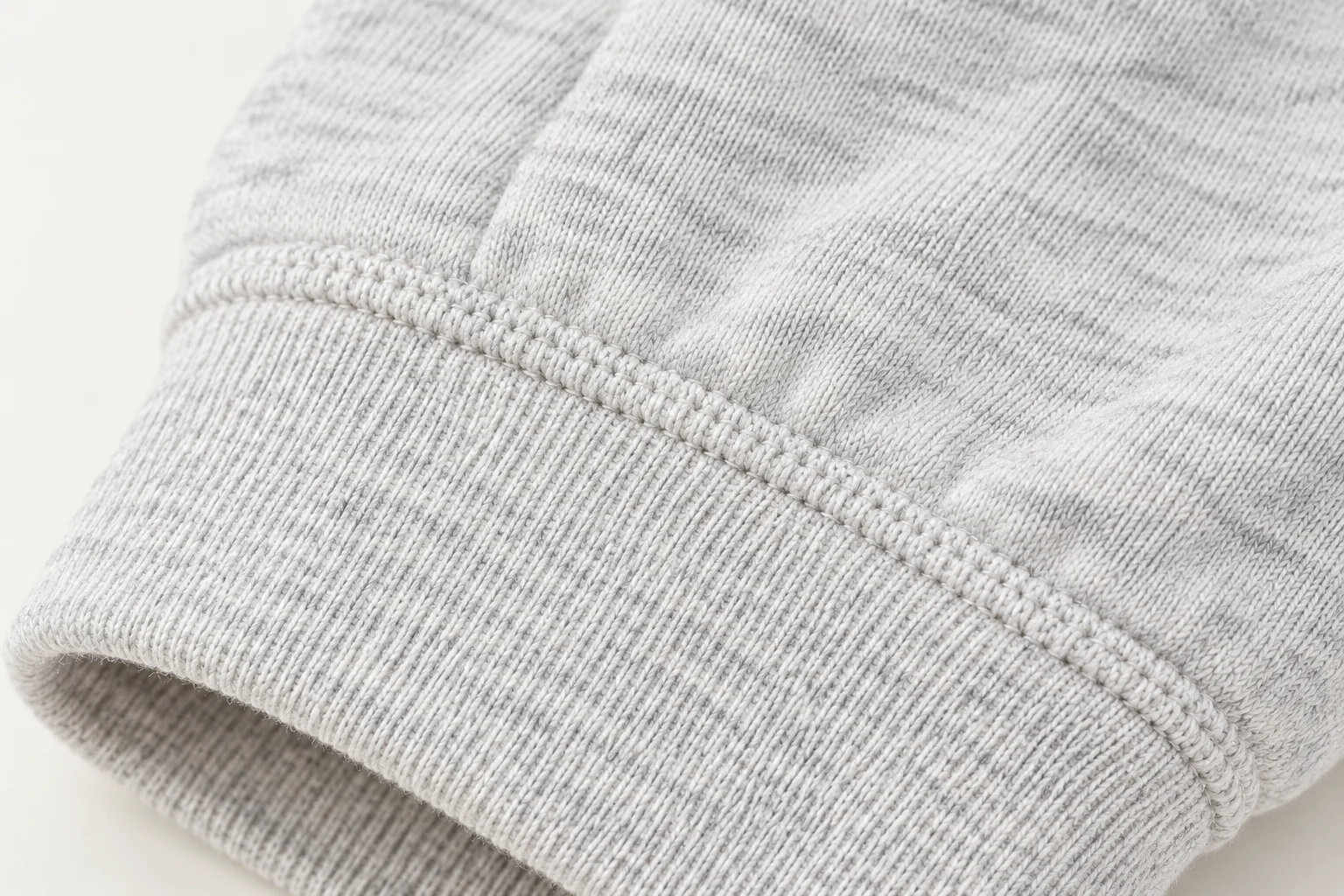
Record the length relationship before judging the cuff
Define the intended waist position, body-leg length, finished cuff depth and overall leg measurement on the sample sheet. Photograph the relaxed transition and the worn silhouette with the relevant footwear reference held consistent. State whether pooling above the cuff is deliberate and how much of the cuff should remain visible. The review should decide whether that design is achieved, not alternate between praising a relaxed outline and correcting every fold. Keep both legs identifiable so an asymmetric result cannot be hidden by reporting only one overall measurement.
Identify body, cuff and waist materials separately
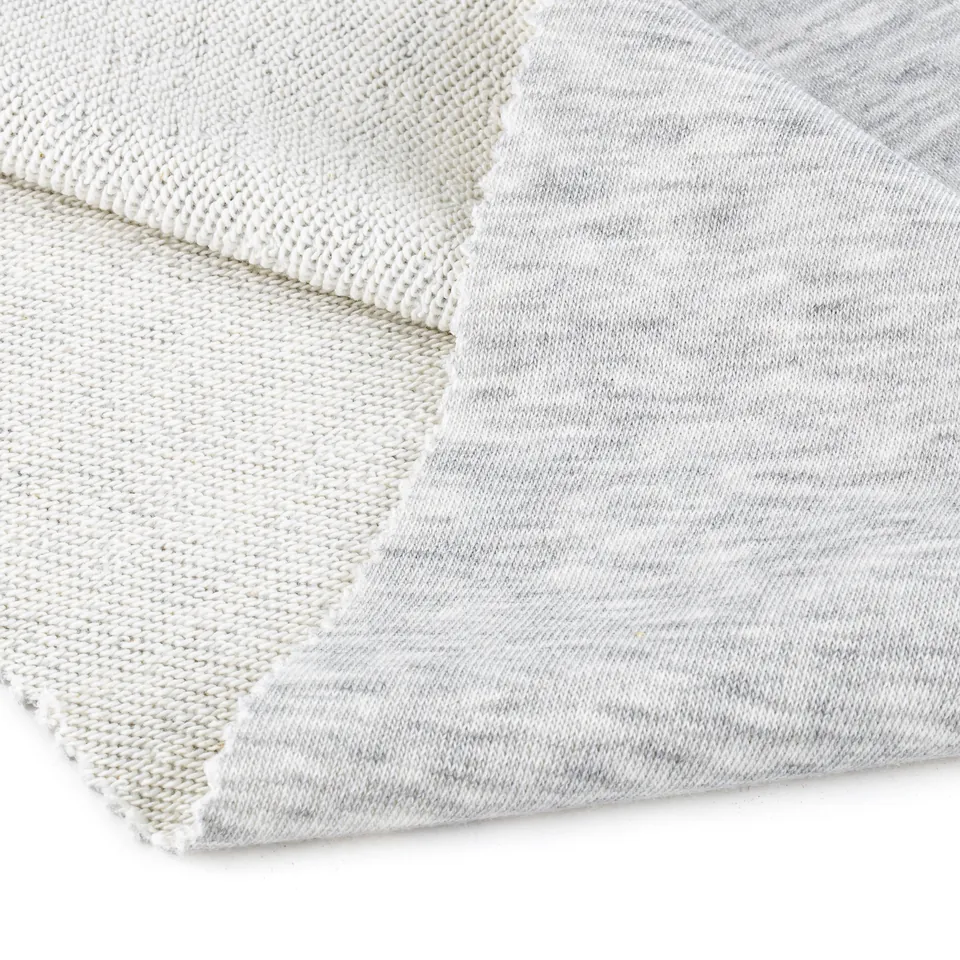
The body options are FT-602, 70% cotton and 30% polyester, three-thread unbrushed and compacted at 300, 325, 350, 375 and 400 g/m²; and FT-603, 65% cotton and 35% polyester, three-thread brushed and anti-pilling finished at 320, 345, 370, 395 and 420 g/m². Record the exact sampled weight and colour plus the actual cuff and waist components. Neither finish establishes tested return, pilling resistance or dimensional stability. A sample-room component substitution should be named before its result is attributed to the proposed body article.
Assess the joining seam through the intended gathering
Examine the leg-to-cuff junction inside and out, both relaxed and worn. Note concentrated folds, unwanted seam bulk or distortion where observed. Ask the sewing team to compare the actual leg-opening and cuff dimensions with the intended pattern and attachment method. If a correction changes the cuff ratio or seam construction, retain the original sample and record the altered variable. Do not assume a higher body GSM or a different fibre percentage caused the problem without that assembly review. A neat short seam specimen cannot establish the complete circular transition.
Review foot passage and resting ankle fit as two observations
Have relevant wearers use the intended dressing sequence without forcing an unsuitable sample. Note the cuff and seam behaviour during foot passage, then examine the resting opening in the worn garment. A cuff that passes easily may still need a different depth or shape for the desired silhouette, while a tight resting appearance does not by itself prove practical access. Ask the maker to develop a revised assembly if needed. These observations do not provide a universal extension limit or measured recovery rating; qualified assessment is needed where the programme requires a numerical property.
Check pooling with the waist in its approved position
Observe ordinary walking and sitting, then record where the waist, leg and cuff sit before the wearer adjusts them. If the trouser slides at the waist, the lower-leg folds may change for a reason unrelated to cuff construction. Ask the pattern team to separate waist support, rise balance and body length from the local joining question. Compare the corrected garment with the same reference arrangement. Do not solve an unintended fold by raising the sample on the wearer for the photograph while leaving the production pattern and waistband unchanged.
Measure the body and cuff through the care comparison
Agree the care procedure and measurement preparation before reviewing changes. Track body-leg length and cuff depth separately along the defined route, together with the opening and relevant waist dimensions. AATCC lists garment dimensional changes and appearance after home laundering as separate assessment categories; the provider should confirm current applicable methods and requirements. Reassess both dressing access and the chosen pooling after care. A similar total leg length can conceal a changed relationship between body and cuff, so one overall number should not close the complete transition review.
AATCC: Standard Test Methods and Procedures — Garment Care — Public index distinguishes garment dimensional changes and appearance after home laundering. Current methods and requirements need qualified selection; cuff access and pooling observations are not represented as standard test protocols or recovery proof.
Close the decision on a reproducible cuffed assembly
List accepted observations, requested corrections and missing evidence against body article, offered weight, finish, cuff material, waist, pattern and seam versions. Identify which checks must be repeated after a changed cuff depth, body length or material. Keep reported surface or dimensional results tied to their actual scope. Do not turn the anti-pilling label or a successful fitting into a durability guarantee. The final reference should let the maker reproduce the intended lower-leg line and let purchasing recognise substitutions that would reopen the original design decision.
Technical background and scope
This is a structured editorial draft. Garment-specific development advice is paired with existing catalogue records; compatibility must be established by sampling. AL KUMAŞ supplies fabric. Cutting, sewing and finished-garment production are separate unless explicitly agreed.