



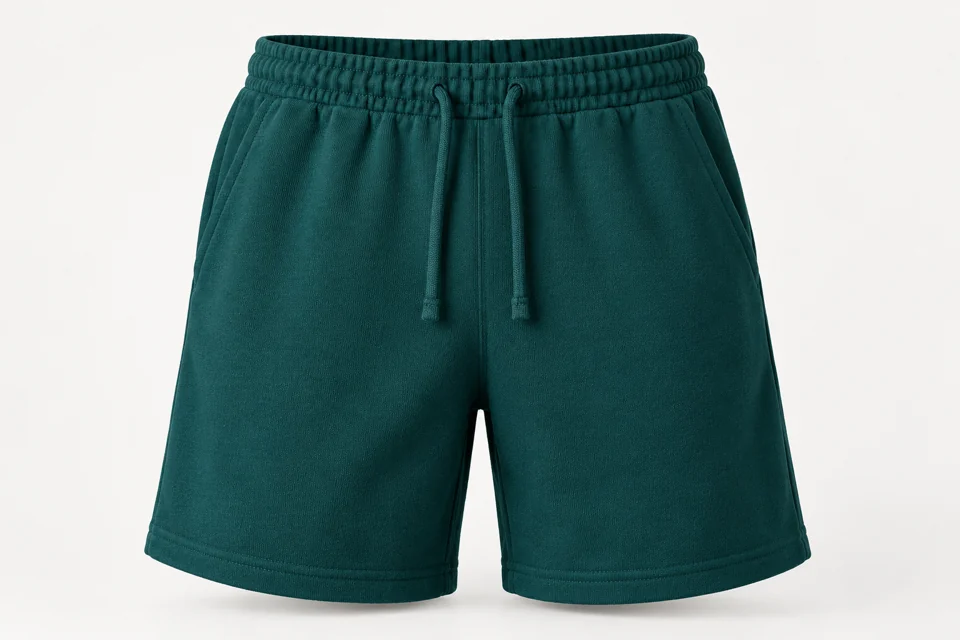

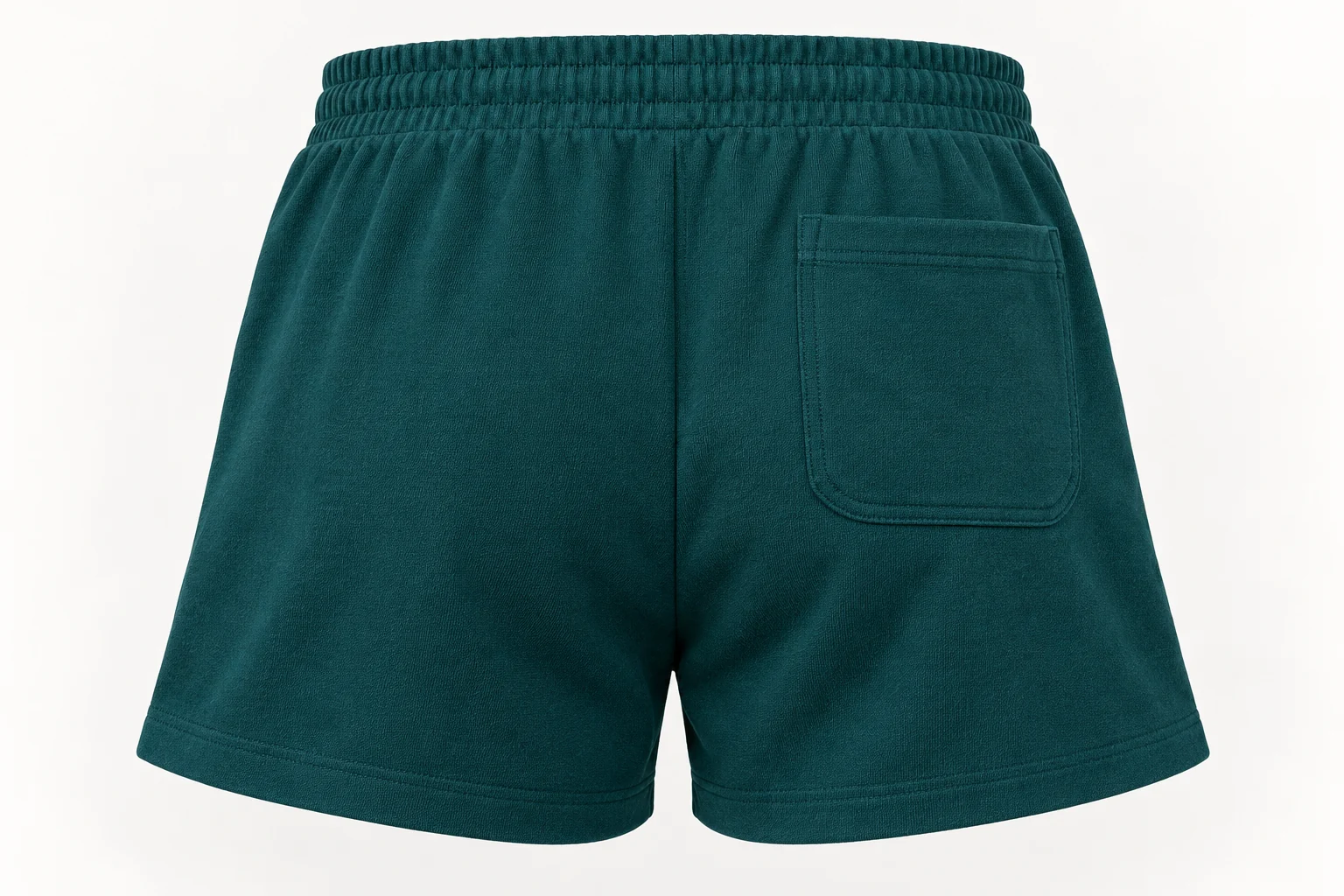

Choose the body with an adjustable waist assembly in mind
A drawstring lounge short needs a body material that works with the proposed channel, cord exits and waist construction, not merely a pleasant cutting. Draw the intended waist section and show whether elastic is also specified or the design relies on another arrangement. Describe the desired amount of gathering and the short's ease. CottonWorks treats end use and required function as early knit-development questions. Here, the comparison should reveal whether the complete adjustable assembly achieves that intention without an unwanted bulky ridge or an unresolved routing problem; the drawstring name is not evidence that it does.
CottonWorks: Designing Knit Textiles — Defining the Product — End use and required function are early development questions. Channel, cord-exit and pocket observations are original garment-specific recommendations, not verified adjustment, durability or safety results.
Use the actual two fabric records
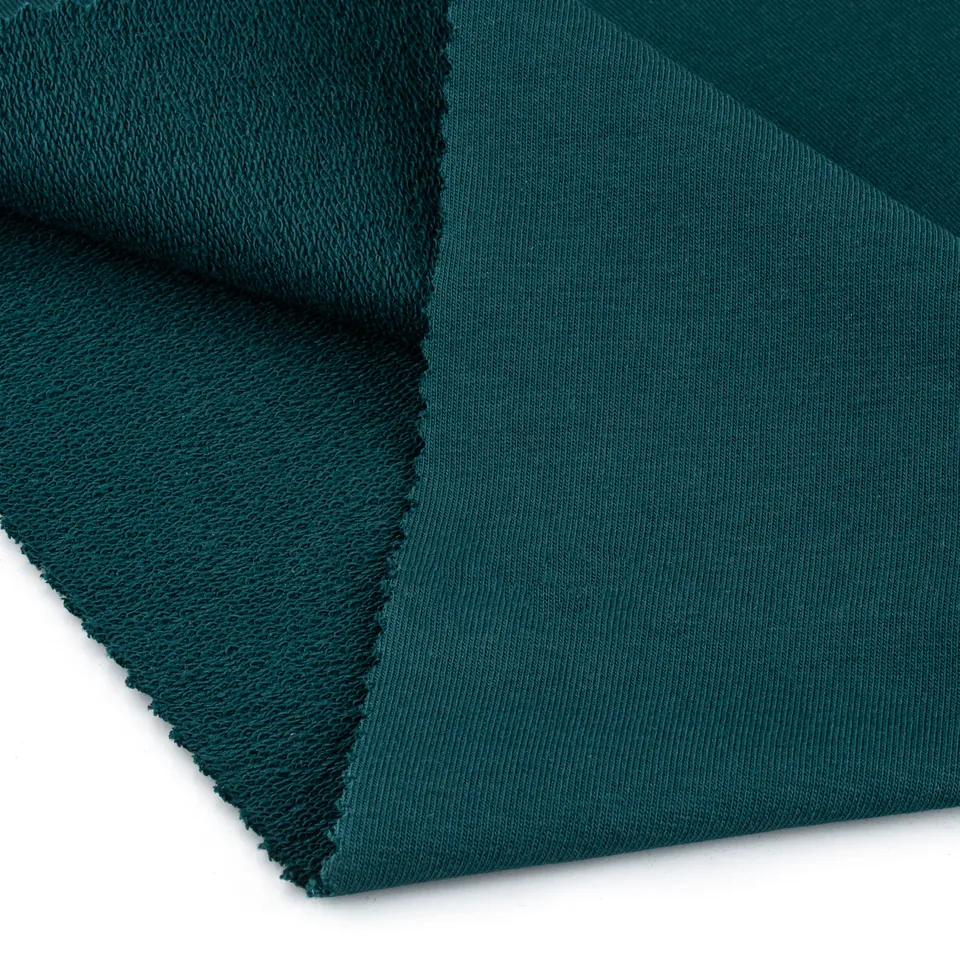
FT-601 is 70% cotton and 30% polyester two-thread French terry with an unbrushed and silicone finish, at 240, 260, 280, 300 and 320 g/m². TL-701 is 80% cotton and 20% polyester loop-back terry, enzyme and silicone finished, at 250, 270, 290, 310 and 330 g/m². Ask for the exact offered sample weight and finish, including which surface is intended inside the garment. These descriptions do not demonstrate channel performance, recovery or quantified comfort. The routes should be compared as actual body-and-component assemblies rather than ranked solely by their cotton percentage.
Prototype the channel cross-section before approving the waist
Ask the maker to show the proposed channel depth, folds, seam lines and relationship to any elastic. A folded body extension and a separately constructed casing create different layer arrangements and should not be treated as interchangeable sample details. Sew a representative section in the actual body candidate and include a complete threaded waist in the garment trial. Inspect how the assembly appears and adjusts. If it feels or looks excessively bulky, ask which layer or junction creates that observation instead of assuming that a lighter body material will automatically resolve the construction.
Develop the cord exits with their actual reinforcement
Identify whether the design uses a metal eyelet, stitched opening or another specified exit. Ask who selects it and how the surrounding material is reinforced in the proposed sample. Review that region with the cord following its intended path, rather than approving an isolated hardware sample. Note distortion, local pulling or unwanted surface change actually observed during adjustment. No component or fabric label establishes a safe cord design, universal strength or long-term durability. Where the programme needs defined testing or compliance review, ask the responsible specialist what evidence is required for the complete construction.
Check the channel path against seams and pockets
Trace the cord through the complete waist and identify where it passes side seams, joins or pocket attachments. Ask the maker to keep that route distinguishable from any elastic path in the development record. If adjustment catches or gathers unevenly, inspect the relevant assembly before changing cord length or body article. Where pockets are specified, examine the opening and bag with the waist set to its intended worn position. A pocket that looks balanced with the cord loose may need another review when the waist is adjusted as designed.
Observe the whole short at the intended adjustment
Use the actual cord, channel and any waist components in standing, sitting and ordinary movement observations. Record the adjustment state, gathering and resulting hem and pocket positions without implying a universal comfort result. A change in cord setting can alter the garment's apparent balance, so compare samples under an agreed arrangement. If one body candidate needs a changed casing or another reinforcement, label that route explicitly. It may be a useful complete assembly, but it is not evidence that the body fabric alone performed better than the unchanged comparison.
Select a material and a reproducible routing arrangement
Retain the accepted article, offered GSM, finish, body pattern, channel cross-section, exit reinforcement, cord and optional pocket details with the sample. State which adjustment and after-care questions remain unresolved. Confirm supply and commercial availability separately, including components not provided by the fabric supplier. A later cord, opening or casing substitution should be reviewed against that arrangement. The useful decision defines the lounge short the buyer intends to reproduce, without turning a terry-family name or an attractive threaded sample into a guarantee of comfort, durability or cord safety.
Technical background and scope
This is a structured editorial draft. Garment-specific development advice is paired with existing catalogue records; compatibility must be established by sampling. AL KUMAŞ supplies fabric. Cutting, sewing and finished-garment production are separate unless explicitly agreed.