





Split fabric demand from cord and operation demand
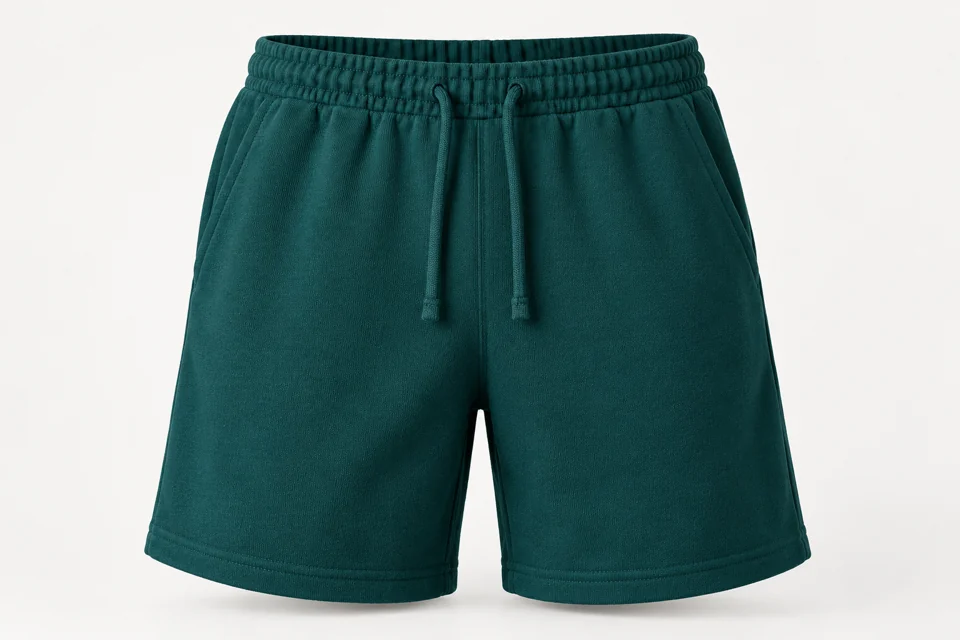
A drawstring lounge short has at least two different quantity questions: the fabric cut into the body and channel, and the cord used by the chosen routing. Reinforcement and specified hardware can add further component quantities. CottonWorks distinguishes the garment shell from findings and trim, making that separation useful in a costing request. Do not combine everything into one kilogram estimate. Ask the maker to identify the actual channel construction and cord route before presenting a complete material cost, especially when the body pattern and adjustable-waist details are still being developed.
CottonWorks: Garment Construction — Findings and Trim — Shell material and findings/trim are distinct garment components. The routed-waist quantity breakdown is an original application; cord-length arithmetic is explicitly hypothetical and is not a recommended dimension, safety rule or supply offer.
Keep the body offer tied to a precise weight
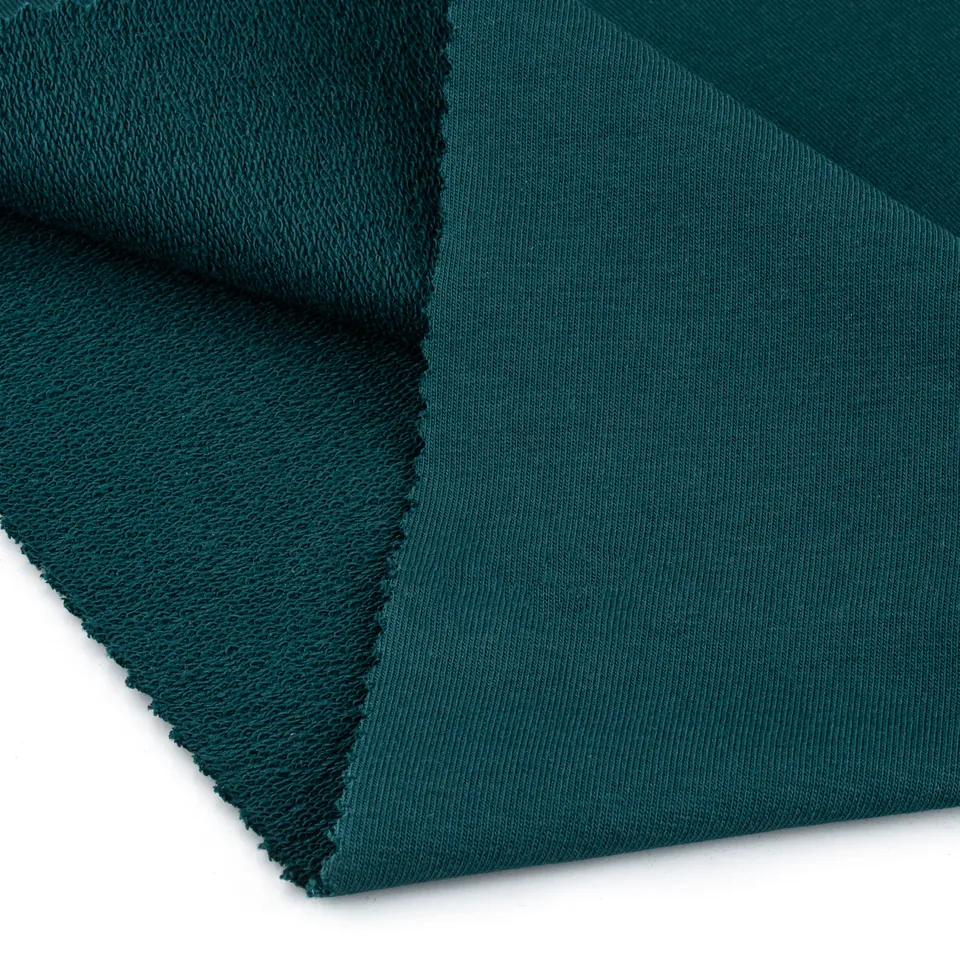
The FT-601 record lists 240, 260, 280, 300 and 320 g/m² in 70% cotton and 30% polyester, two-thread unbrushed and silicone finished. TL-701 lists 250, 270, 290, 310 and 330 g/m² in 80% cotton and 20% polyester loop-back terry, enzyme and silicone finished. Request the exact proposed sample and quote options. A body weight does not state the cord specification or complete waistband mass. If the channel route differs between the two candidates, show that difference rather than comparing the body quotations as though the assembled shorts were identical.
Make the casing construction visible in the pattern quantity
State whether the channel is a body extension, a separately cut casing or another actual design. Give the cutter its full cut dimensions, including the proposed folds and joins, rather than only a finished waist height. If the casing uses another material, identify its separate demand and direction constraints. Ask how the exit reinforcement is cut and supplied. A revised channel depth can alter body area or introduce another strip layout, so it should have a pattern reference instead of being absorbed into an unexplained general waistband allowance.
Calculate cord length with an explicit hypothetical route
For illustration only, suppose a cord route is 0.80 metres around the relevant channel, with two intended exposed portions of 0.20 metres each and a further 0.10 metres allowed for the chosen end operation. That would give a hypothetical cut length of 1.30 metres. For 2,000 shorts, the corresponding net cut requirement would be 2,600 metres before separately justified purchasing allowances. These are not recommended cord dimensions, a safety rule or a supply offer. The actual route, adjustment range and end construction must be specified and reviewed for the real programme.
Count exits and reinforcement by the actual design
If the drawing has two cord exits, two specified openings per short should appear in the component or operation count, with the corresponding reinforcement arrangement identified. Do not assume each opening uses a metal eyelet or that one hardware item represents the complete assembly. Ask which components are paired parts and how the supplier quotes them. Where an operation is stitched rather than hardware-based, keep that distinction visible in the maker's costing. The body-fabric supplier's kilogram price does not establish the cost or availability of the complete adjustable waist.
Recheck the marker after the channel and pocket are resolved
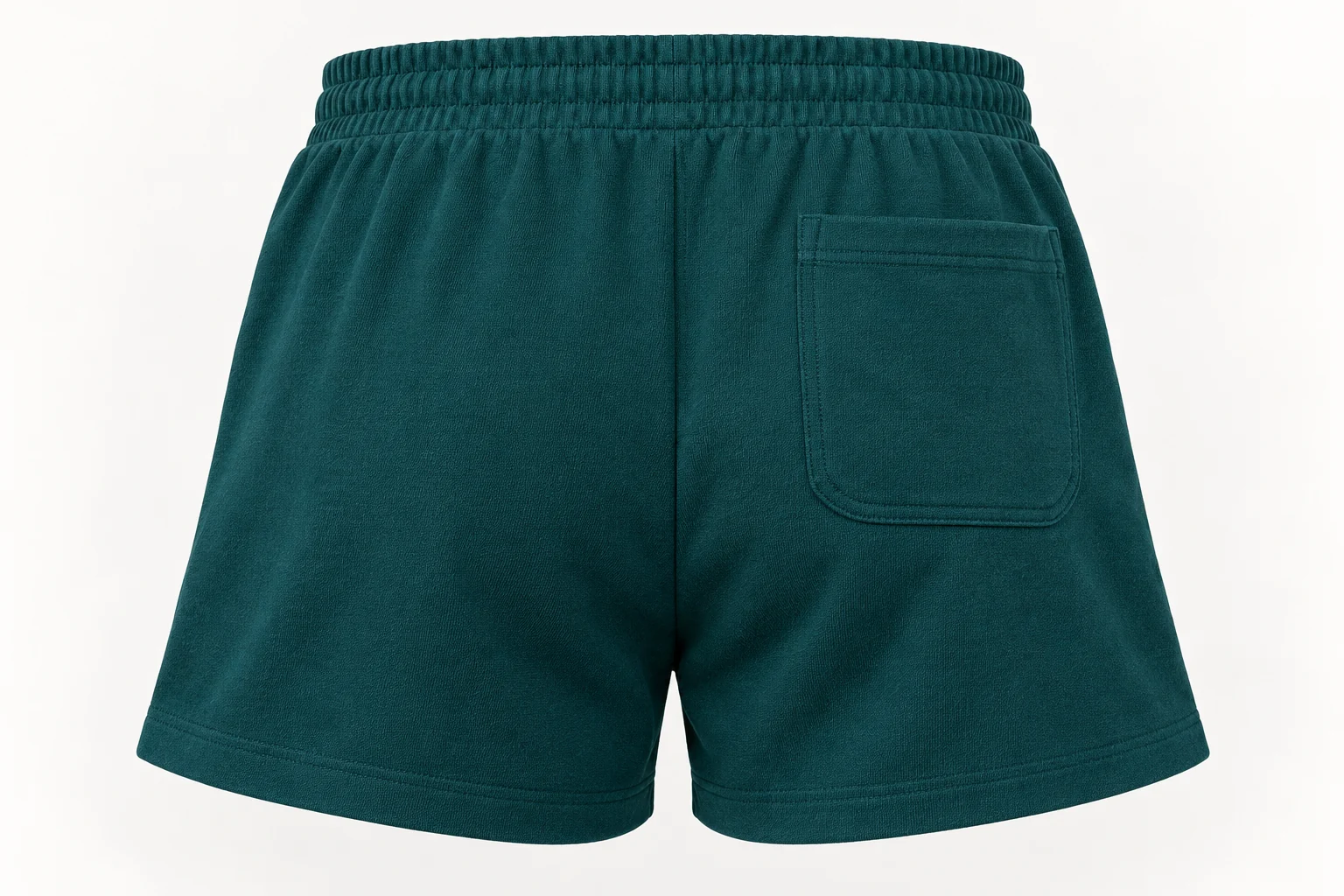
Obtain usable finished width, supply format and its measurement convention for the offered body. Give the cutter the actual size ratio, component shapes and permitted material directions. If a separate channel, changed reinforcement or optional pocket alters the pieces, request updated references and quantities. Separate agreed dimensional allowances, marker loss and other purchasing allowances. Keep component-length allowances distinct from fabric waste so an adjustment made to the cord order does not silently inflate the body requirement too. Label estimates provisional while the construction remains unapproved.
Compare complete adjustable-waist cost scenarios
The comparison should identify body article, finish, precise GSM, confirmed width and format, pattern, channel route, cord cut lengths by size and relevant exit components. Put body consumption, separate casing material, cord metres and operation or hardware counts beside their actual quotation units. Ask for current minimums and terms for the defined programme. If one candidate needs another casing to achieve the intended bulk, include it honestly. The buyer can then compare viable assemblies rather than accept a lower body price that leaves the drawstring system uncosted.
Technical background and scope
This is a structured editorial draft. Garment-specific development advice is paired with existing catalogue records; compatibility must be established by sampling. AL KUMAŞ supplies fabric. Cutting, sewing and finished-garment production are separate unless explicitly agreed.