





Request a channel-routing drawing as the first output
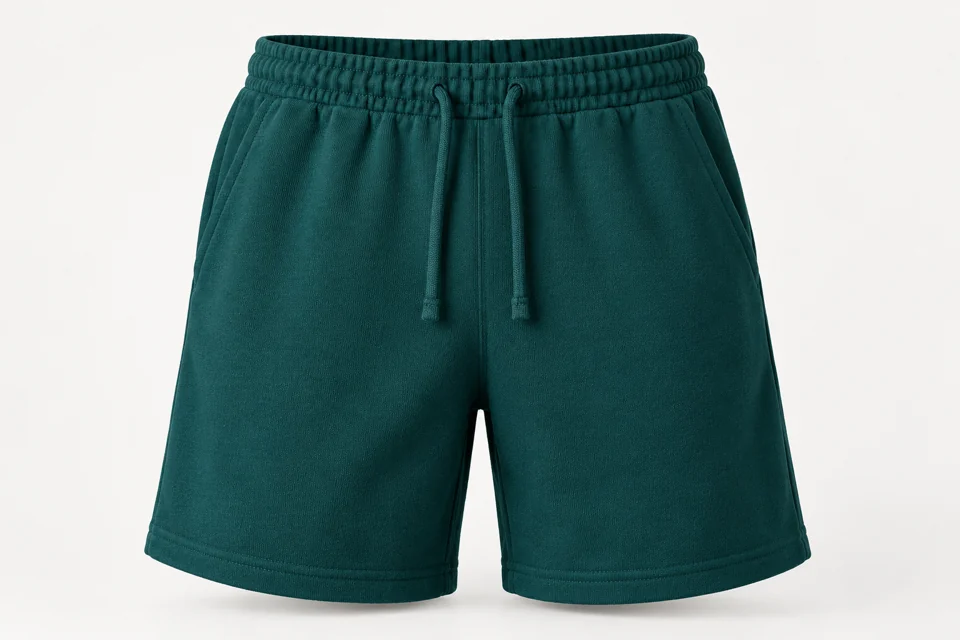
Instead of beginning with a generic fabric quotation, ask the garment maker for an annotated waist section and continuous cord route for the proposed lounge short. Show where the cord enters, crosses joins and exits, and how any elastic or pocket attachment relates to that path. CottonWorks distinguishes shell material from findings and trim; this enquiry needs those component responsibilities made visible. The buyer's first output should be a construction proposal that can be inspected and costed, not an assurance that adding a drawstring to an existing short automatically produces the intended adjustable waist.
CottonWorks: Garment Construction — Findings and Trim — Shell and findings/trim are distinct component categories. The channel-routing drawing, operation ownership and component-quantity output are original decision aids, not a published construction protocol or confirmed supplier process.
Put actual body candidates beside the proposed cross-section
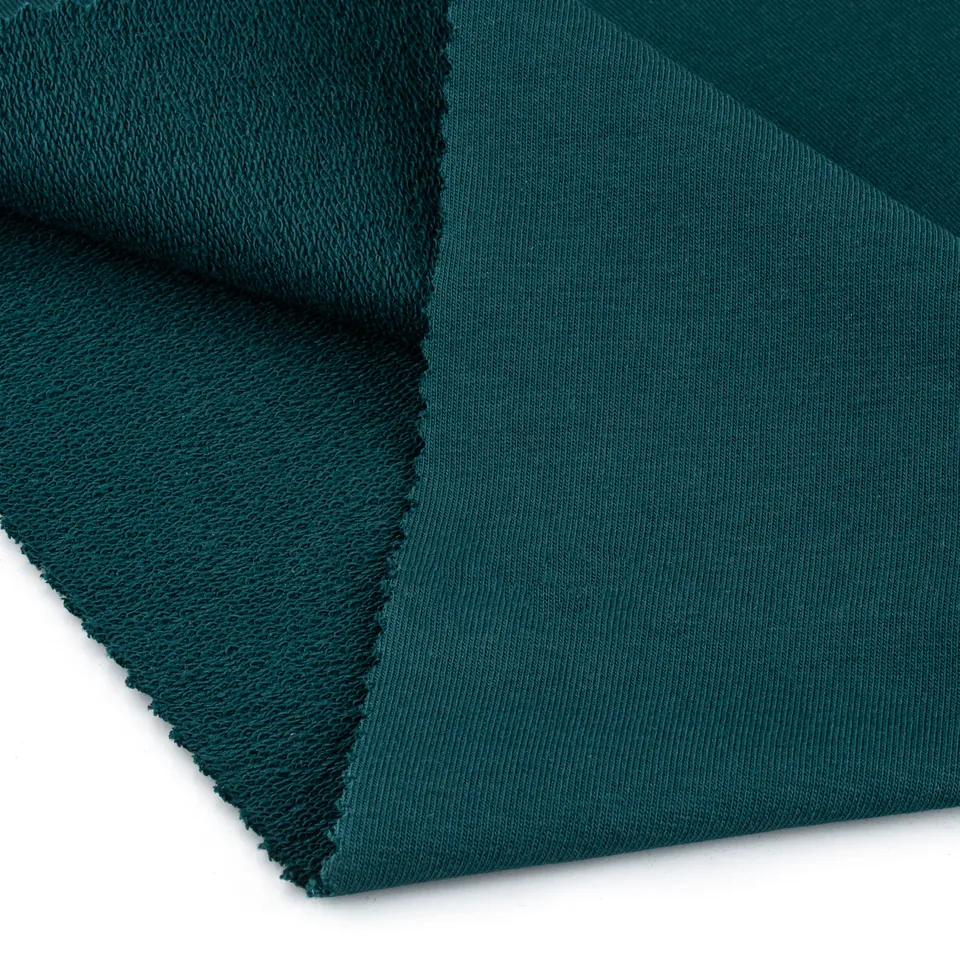
Ask the maker to identify whether the channel proposal uses FT-601, 70% cotton and 30% polyester two-thread French terry, unbrushed and silicone finished, at 240, 260, 280, 300 and 320 g/m²; or TL-701, 80% cotton and 20% polyester loop-back terry, enzyme and silicone finished, at 250, 270, 290, 310 and 330 g/m². Name the precise offered sample option. Neither record settles the bulk or adjustment of the assembled waist. If a separately sourced casing is proposed, it needs its own identity rather than being described as an invisible part of the body offer.
Ask the proposal to identify every operation at a route change
At each join, exit or overlap, request the actual operation and component involved: a folded or separate casing, stitched opening or specified hardware, reinforcement and the seam arrangement. Ask who supplies each item and who approves its use. Do not prescribe an eyelet or cord construction without the maker's proposal and the appropriate programme review. The useful response connects a drawing location to an accountable operation. A list of trim names alone can leave the sample room to invent how those parts meet, making a later adjustment problem difficult to trace.
Resolve pocket interference in the drawing before comparing prices
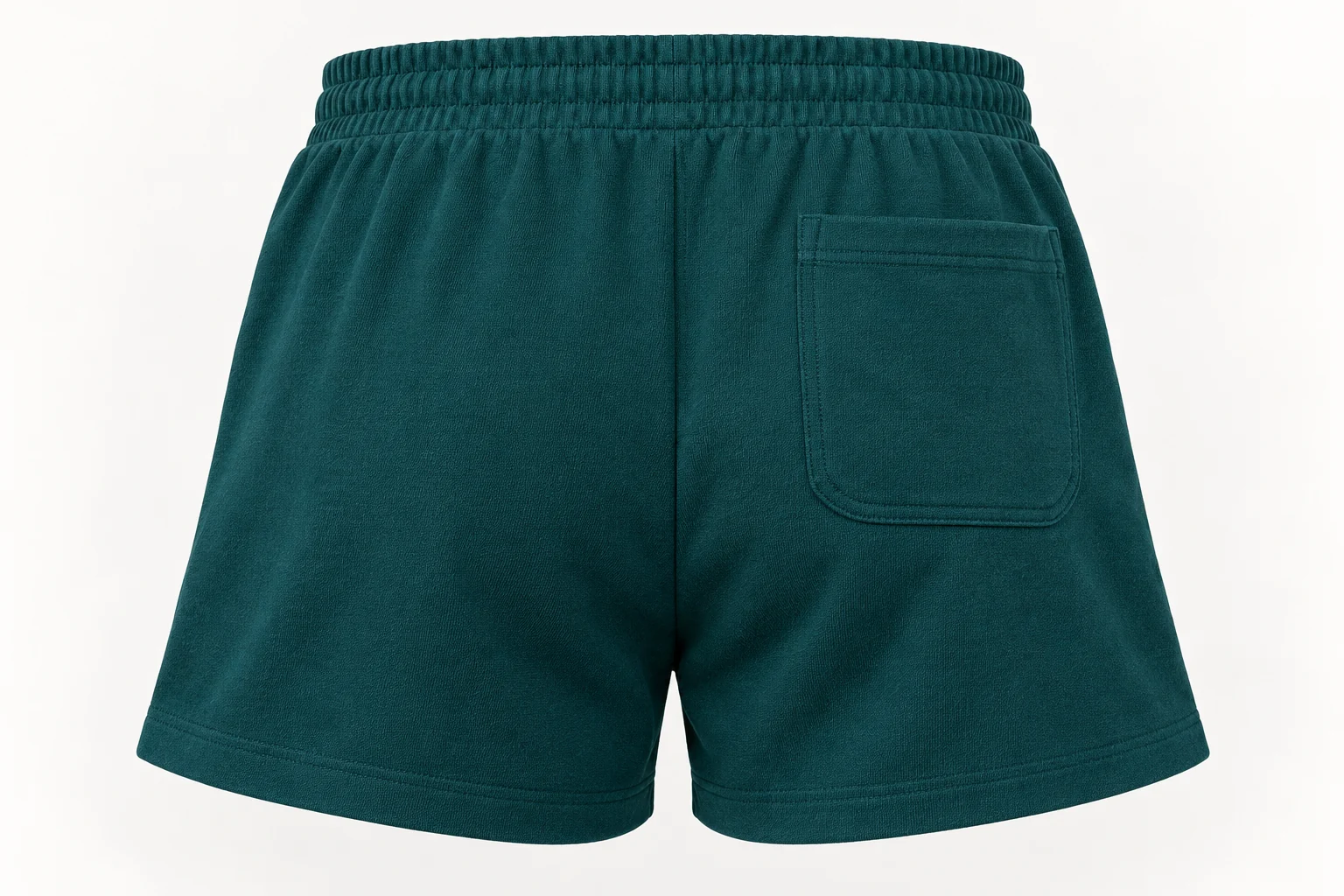
If pockets belong to the design, show their opening, bag and attachment relative to the channel. Ask whether any proposed seam enters the intended cord path and how the actual worn gathering affects the opening. If the design has no pockets, keep them outside the component count. Request a sample section or complete waist that demonstrates the proposed relationship rather than a generic short with an unrelated pocket detail. The maker should identify which operation changes if that relationship fails, so a correction is not presented vaguely as another fabric requirement.
Request a component and operation quantity output
Have the maker report body and casing fabric demand, cord cut length by relevant size, exit or reinforcement counts and the identified operation sequence. Obtain usable finished widths and supply formats for materials entering the marker, and show separately purchased items in their actual units. Ask how a revised channel depth or routing changes those figures. A cord-length adjustment should not become an unexplained percentage added to body kilograms. Keep sample and purchasing allowances distinct so the buyer can see exactly what the construction proposal requires before converting it into a commercial demand.
Make the sample prove the route rather than conceal it
Ask for a threaded assembly with the exits and internal construction identifiable, plus observations of adjustment, waist bulk and any pocket interaction at the intended setting. The maker should report where an issue occurred and which operation or component is proposed for correction. Include the need to recheck channel and pocket openings through the agreed care procedure. Request qualified advice on any required measured property or compliance question; the construction drawing and informal sample review are not evidence of cord safety. Do not accept a tidy flat photograph as a substitute for the component-path explanation.
Quote and approve the identifiable routed assembly
Once the route is accepted, attach the body option, channel drawing, cord and reinforcement identities, opening method, optional pockets and operation references to the offer request. Ask for current component and material availability, quotation units and terms for the actual colour and size demand. Keep unconfirmed quantities labelled as forecasts. A later cord, casing or exit substitution should reopen the affected operation and review rather than inherit approval from the same style name. The commercial specification should reproduce a known adjustable assembly, without adding unsupported comfort, durability or safety claims.
Technical background and scope
This is a structured editorial draft. Garment-specific development advice is paired with existing catalogue records; compatibility must be established by sampling. AL KUMAŞ supplies fabric. Cutting, sewing and finished-garment production are separate unless explicitly agreed.