




Design the narrow back before selecting a stretch label
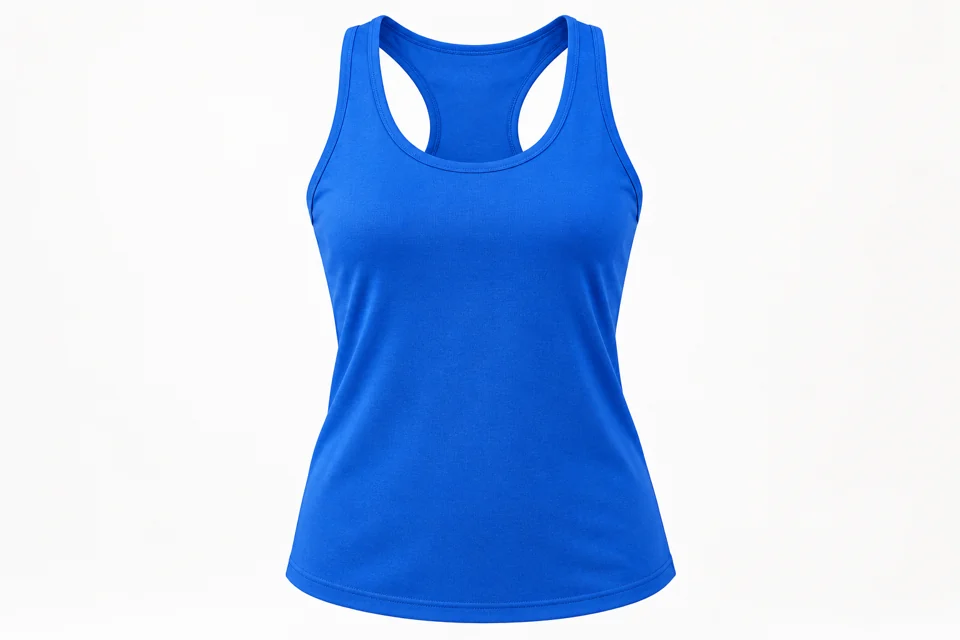
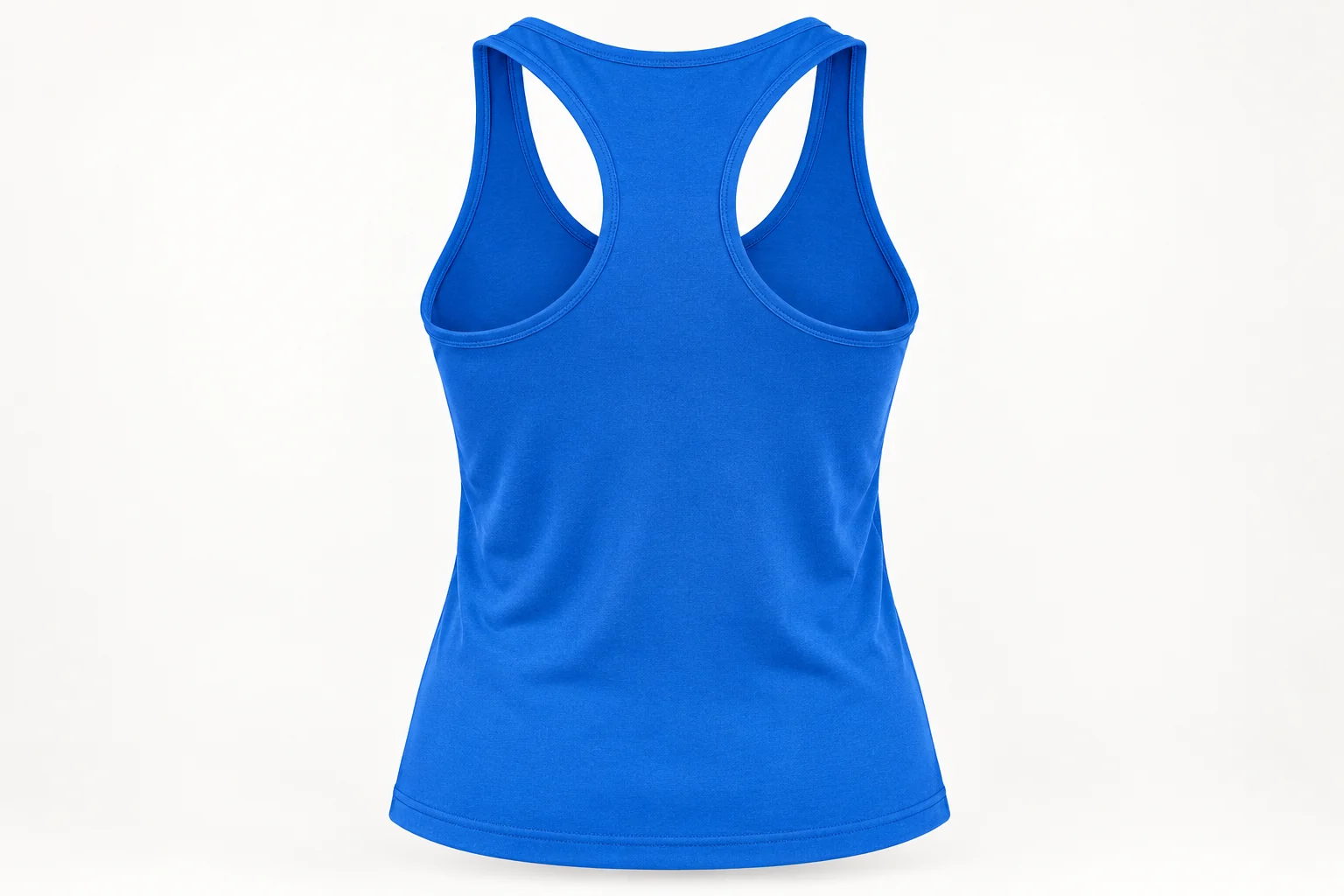
A racerback top brings the shoulder straps toward a narrower upper-back region instead of following the outline of a conventional tank. Start with a drawing that identifies the back-panel width, strap paths and intended armhole shape. Explain the movements and coverage the garment should accommodate, without calling the silhouette a performance guarantee. CottonWorks advises defining end use and required function before knit development. For this design, the first material comparison should help the team decide whether the narrow back and its edges can maintain the intended position during ordinary use.
CottonWorks: Designing Knit Textiles — Defining the Product — Define end use and required functionality at the beginning of knit development. The narrow-back, strap-junction and binding observations are original garment-specific development guidance, not published test findings or athletic performance evidence.
Use the two catalogue candidates as different routes
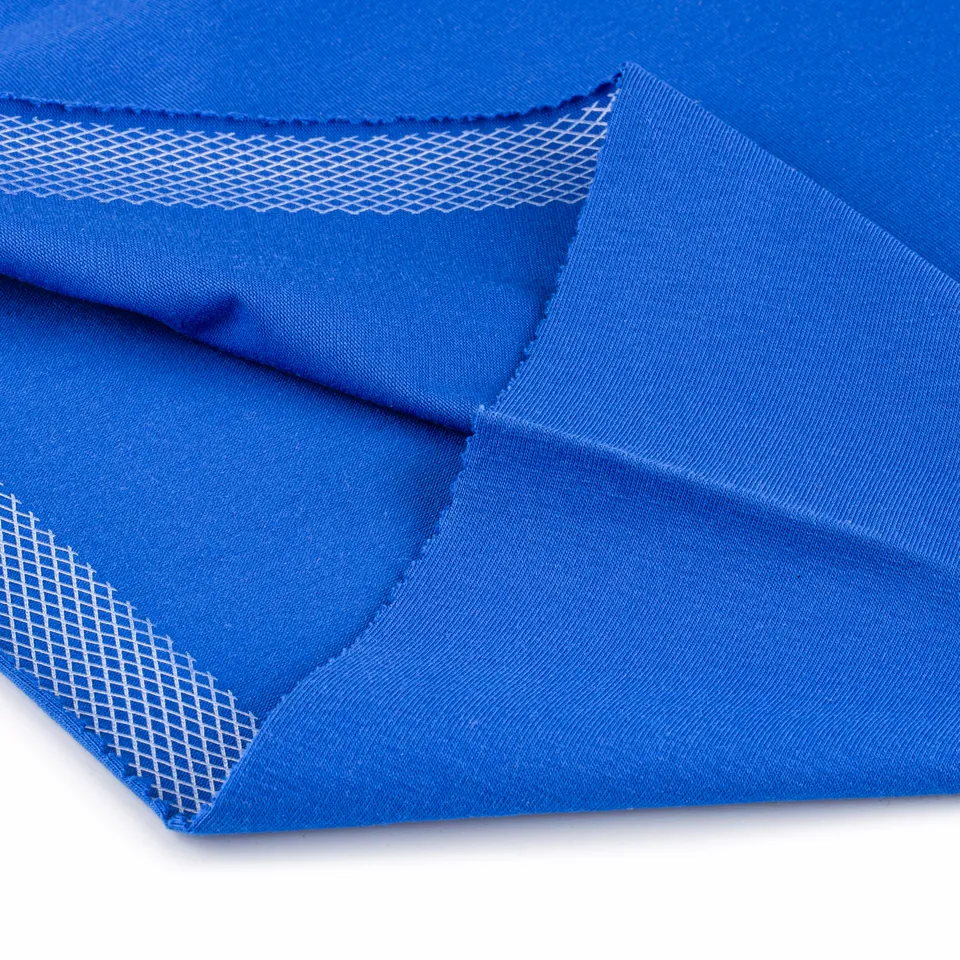
SJ-102 is 95% cotton and 5% elastane single jersey with an enzyme and compacted finish, offered in catalogue weights of 170, 180, 190, 200 and 210 g/m². PF-121 is 92% recycled polyester and 8% elastane at 130, 142, 154, 166 and 178 g/m², with Moisture management + quick dry as its finish label. The larger elastane percentage does not establish better recovery or shoulder freedom. Request actual proposed cuttings and offered weights. The functional label is a description to investigate, not a report proving this finished top's moisture behaviour.
Test the strap-to-back junction as an assembly
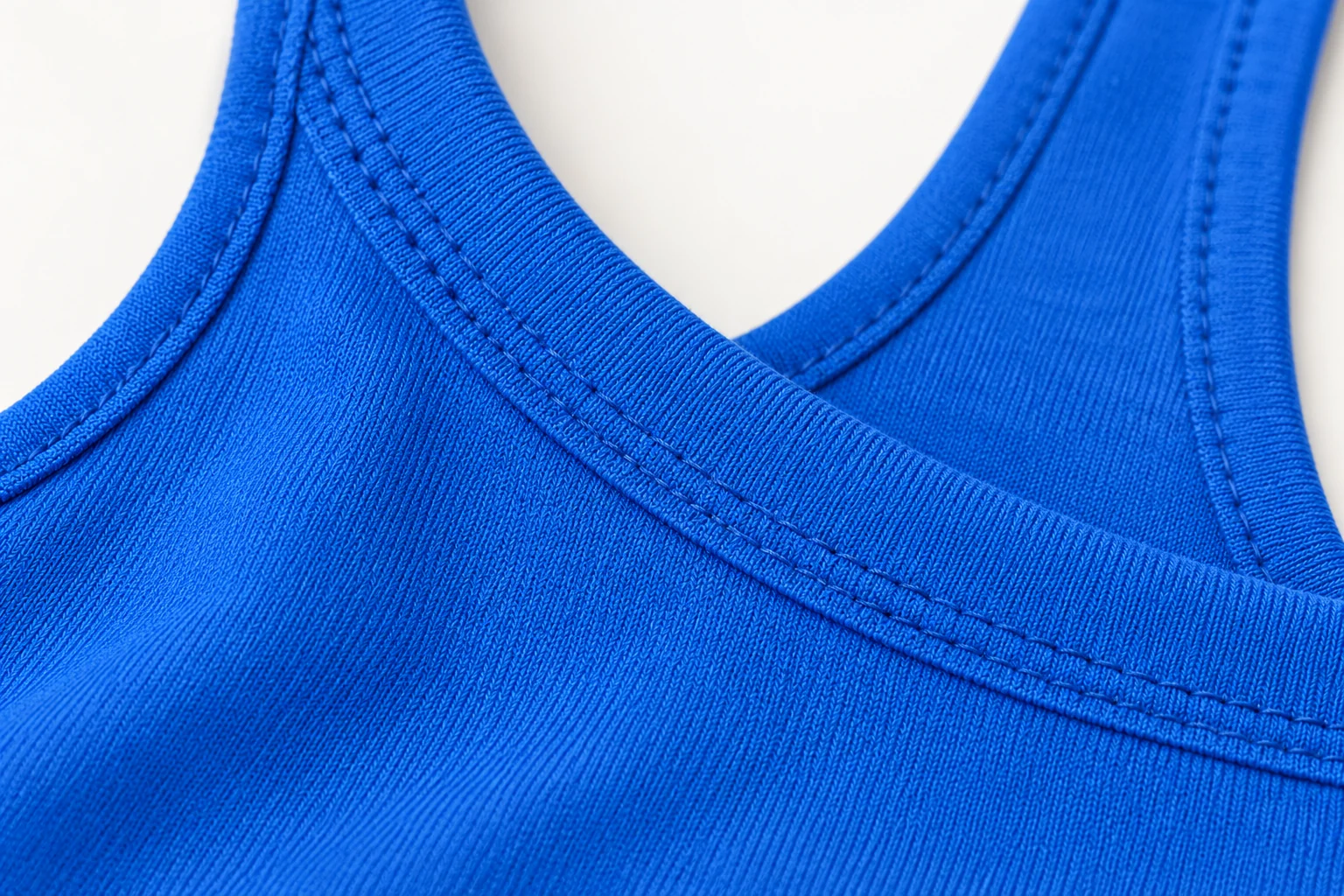
Ask the maker to show how each strap joins the narrow back, including seam allowances, binding and any reinforcement actually proposed. Sew that junction in the candidate material instead of assessing only a long strip pulled by hand. Observe whether the join creates unwanted bulk, turns the strap or distorts the adjoining panel. If the sample twists, review orientation, cut shape and construction before assigning the cause to fibre content. A change of body fabric and binding at the same time should be recorded as a new assembly comparison, not an isolated improvement in material quality.
Examine the back during shoulder-blade movement
Have the fitting team agree relevant movements such as reaching forward and raising the arms, then observe the actual sample before and after the sequence. Note whether the narrow panel shifts to one side, the edges lift or the neckline is pulled out of position. These are development observations, not measured sports performance. Check a representative size and the intended body ease rather than forcing one small sample into every fit judgement. If the pattern must change, keep the original comparison record so the next material decision has a useful reference.
Resolve binding behaviour without tightening away the problem
The long curved back armhole and the narrower neck region may need different construction discussions even when one binding material is proposed. Ask the sewing specialist to document binding width, direction, attachment and seam arrangement. A tighter edge can reduce a visible gap while introducing pressure or pulling at the strap junction. Review the worn assembly, dressing access and relaxed appearance after any change. Do not copy an attachment ratio from another tank and assume the racerback curve and proposed body material will respond in the same way.
Keep coverage and support claims within the evidence
If the brief includes an underlayer, identify it and assess the intended visible relationship at the back and armholes. The racerback name does not establish support, compression, opacity or freedom from irritation. Ask for relevant article-specific evidence where the programme genuinely requires a measurable property. A fabric sample can be shortlisted while the garment's edge stability remains unresolved. Reject or revise a route that cannot deliver the design, rather than adding unsupported claims to compensate for an attractive surface or a familiar sportswear fibre blend.
Select a reproducible back-and-edge combination
Retain the body code, offered weight, finish, binding specification, strap-junction construction and pattern revision with consistent front and back photographs. Describe which observation justified the choice: for example, the panel stayed in its intended position during the agreed movement review. Label that as a sample observation, not a universal recovery result. Confirm the proposed supply and commercial terms separately. The accepted combination should give the garment maker an identifiable reference and tell purchasing which material or component substitutions would require another review.
Technical background and scope
This is a structured editorial draft. Garment-specific development advice is paired with existing catalogue records; compatibility must be established by sampling. AL KUMAŞ supplies fabric. Cutting, sewing and finished-garment production are separate unless explicitly agreed.