




Price the shaped back and its edge material together
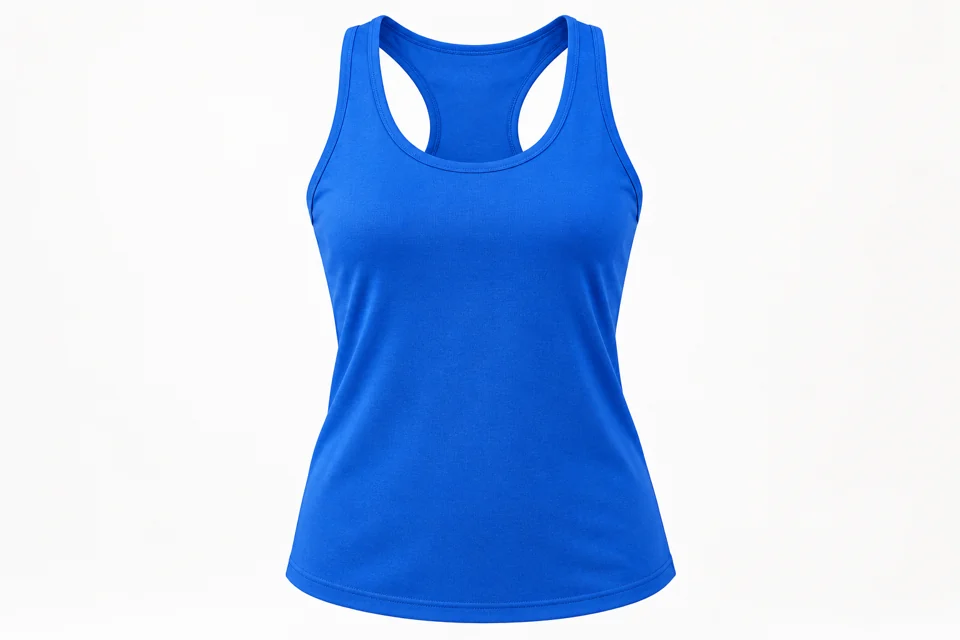
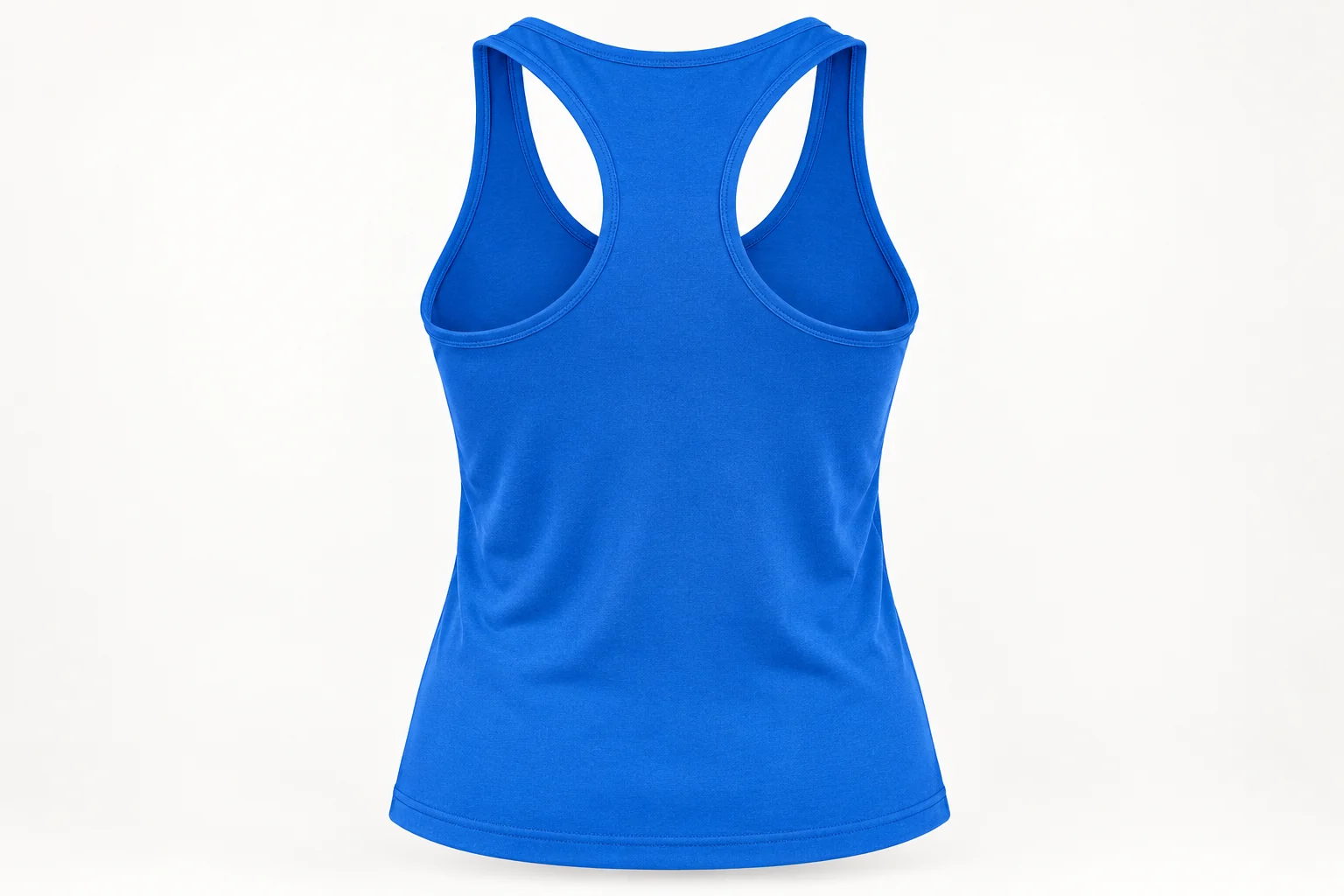
A smaller upper-back panel does not automatically make a racerback top cheaper to cut than a broader tank. The outline may create different gaps in the marker, while the long curved edges still require their specified finishing material. CottonWorks describes marker making as arranging actual pattern pieces efficiently. Apply that principle to the complete racerback assembly: front, shaped back, straps or strap extensions and any separate binding. Ask the cutter to use the approved design instead of estimating consumption by subtracting a rectangle from a conventional tank pattern.
CottonWorks: Garment Construction — Marker Making — Marker planning arranges actual pattern pieces to use fabric efficiently. The racerback component discussion is an original application; the removed-area calculation is explicitly hypothetical arithmetic, not measured yield or a supplier width offer.
Keep the offered weight attached to its material identity
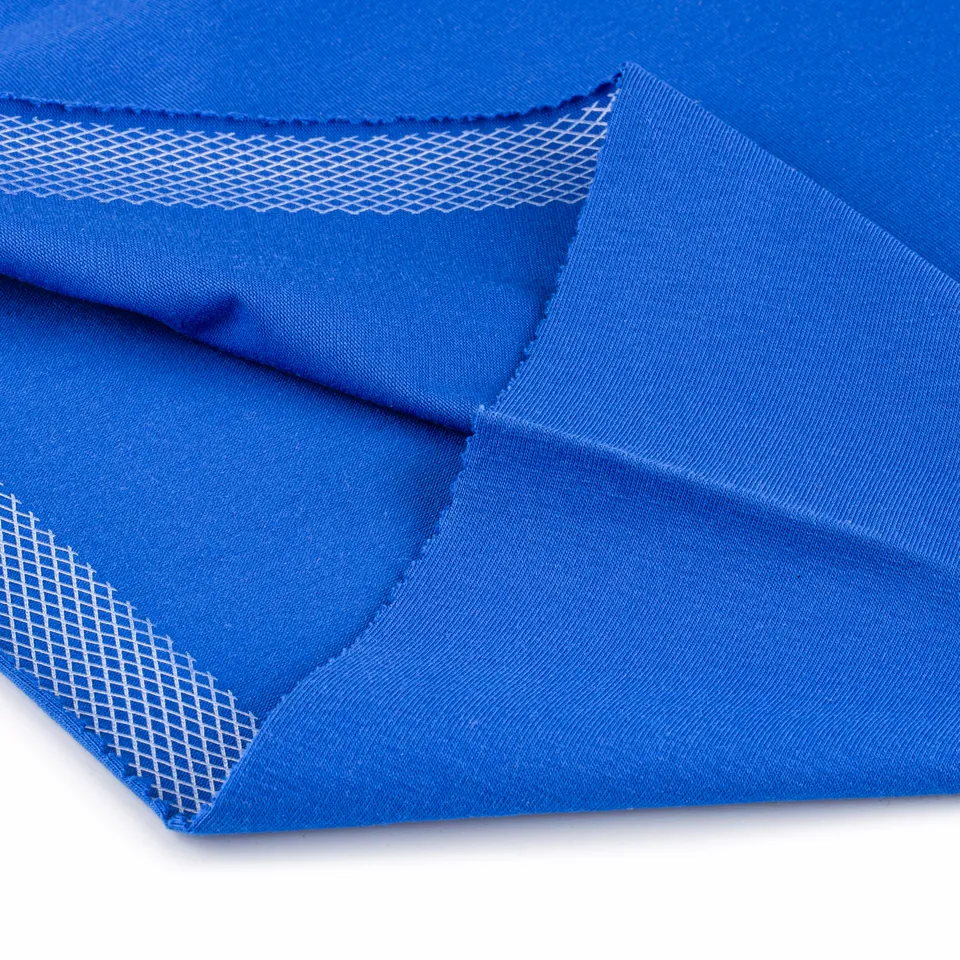
The SJ-102 record lists 170, 180, 190, 200 and 210 g/m² for 95% cotton and 5% elastane single jersey, enzyme and compacted. PF-121 lists 130, 142, 154, 166 and 178 g/m² for 92% recycled polyester and 8% elastane, labelled Moisture management + quick dry. Ask which exact option is available for the proposed sample. The range is not a quotation, and the functional label does not establish a performance result. A cost comparison should identify both material routes precisely rather than treating every stretch jersey as equivalent.
Distinguish removed area from a real marker saving
For an illustrative design exercise, removing 0.025 square metres from a broader back would remove 4.5 grams of fabric at a hypothetical 180 g/m². That arithmetic says nothing about the purchased length saved. The revised curved piece may occupy the same length of a constrained marker, or another component may use the newly available space. Neither figure is a measured racerback yield. Ask the marker planner to compare the actual two pattern versions at the confirmed usable width before representing the narrower back as a commercial saving.
Show straps and binding in their permitted directions
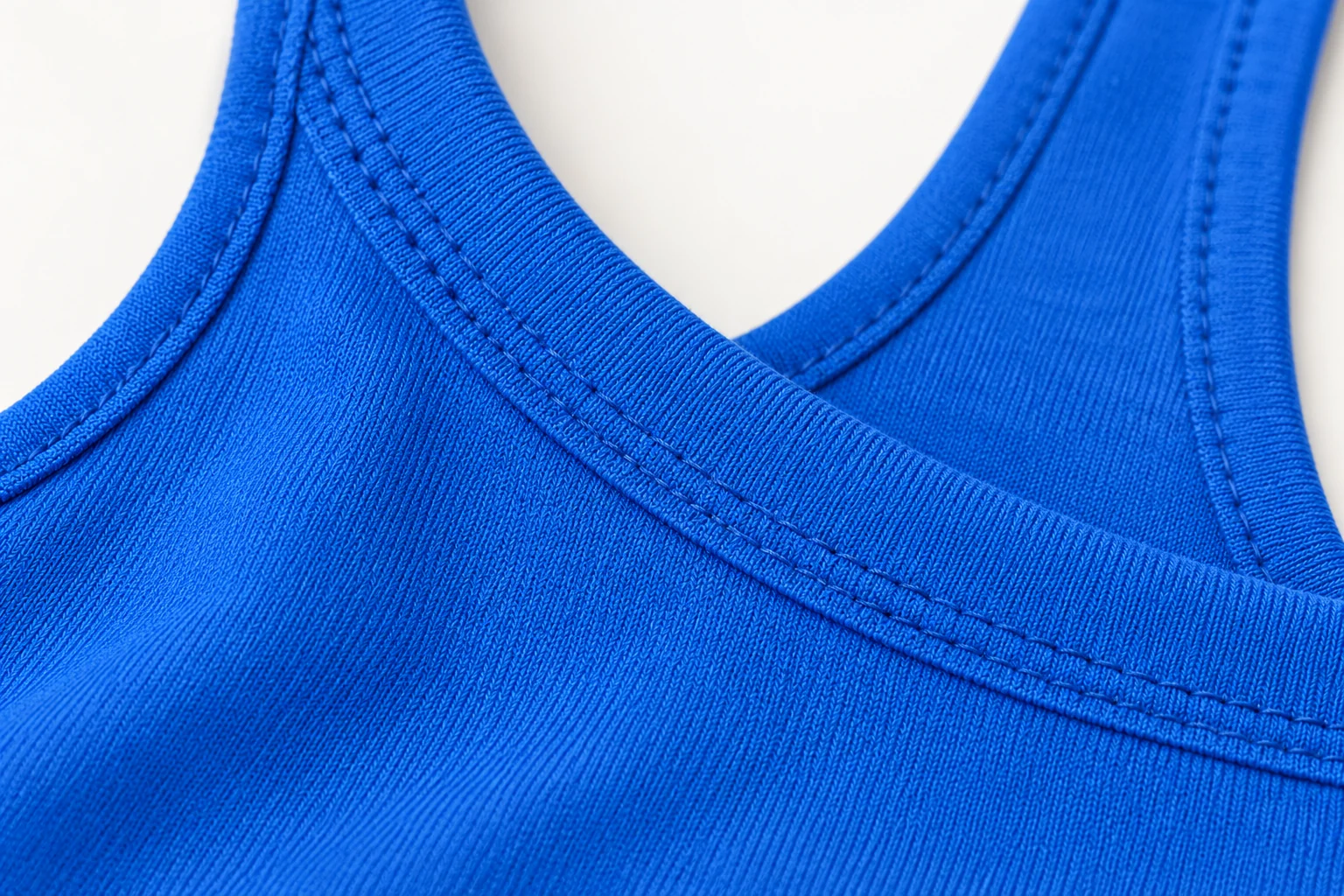
Tell the cutter which pieces are separate and which are extensions of the body pattern. Include the intended fabric orientation at the narrow back and each strap. A strip placed in a convenient gap may be unacceptable if its direction differs from the approved edge assembly. Request the binding supply route and cut-width assumption, including whether another material is used. Keep that quantity separate where it is purchased separately. A body-only marker can be useful during development, but it must not be presented as complete garment consumption while the edge specification remains undecided.
Get usable width and format into the quotation
Ask the supplier for usable finished width, supply format and the measurement convention used. If the material is tubular, have the dimension explained before using it in an open-width calculation. The narrow back does not excuse an uncertain width assumption because the front and graded sizes still constrain the layout. Give the marker maker the actual size ratio and surface-direction restrictions. Review the widest or most awkward pattern components, not only a sample-size back that happens to fit neatly into a gap.
Recheck consumption when fitting changes a curve
A revised back width, deeper armhole or altered strap junction can change both body shape and edge length. Request an updated pattern and marker after such a change. Ask the maker to distinguish pattern ease, agreed dimensional allowances, marker loss and additional purchasing allowances. Do not use a generic waste percentage to hide an unresolved edge-material quantity. If the estimate is provisional, say which open decision could change it and who will provide the revised calculation. That information is more useful than a falsely precise quantity based on yesterday's outline.
Compare the cost of two complete proposed assemblies
The offer sheet should show article, precise GSM, finish, confirmed width and format, pattern revision, size ratio, body consumption and separate edge requirements. Put the price basis and commercial quantity beside those assumptions. Ask for current minimums, sample charges and timing for the actual request. A lighter material or narrower panel may produce a useful route, but the buyer still needs a viable sewn top. Compare costs after the strap junction and binding decisions are clear enough to describe the assembly being purchased.
Technical background and scope
This is a structured editorial draft. Garment-specific development advice is paired with existing catalogue records; compatibility must be established by sampling. AL KUMAŞ supplies fabric. Cutting, sewing and finished-garment production are separate unless explicitly agreed.