



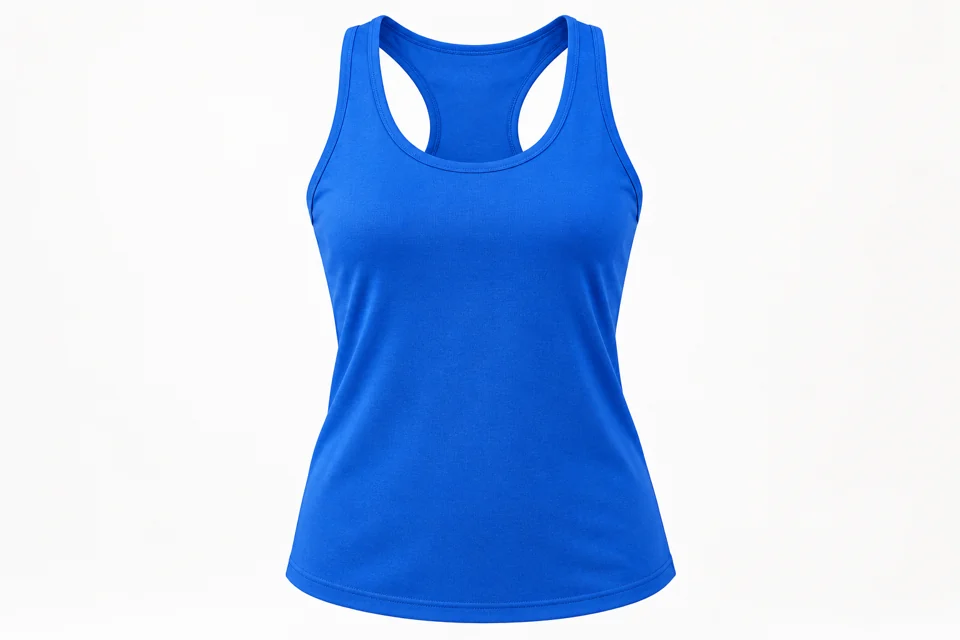

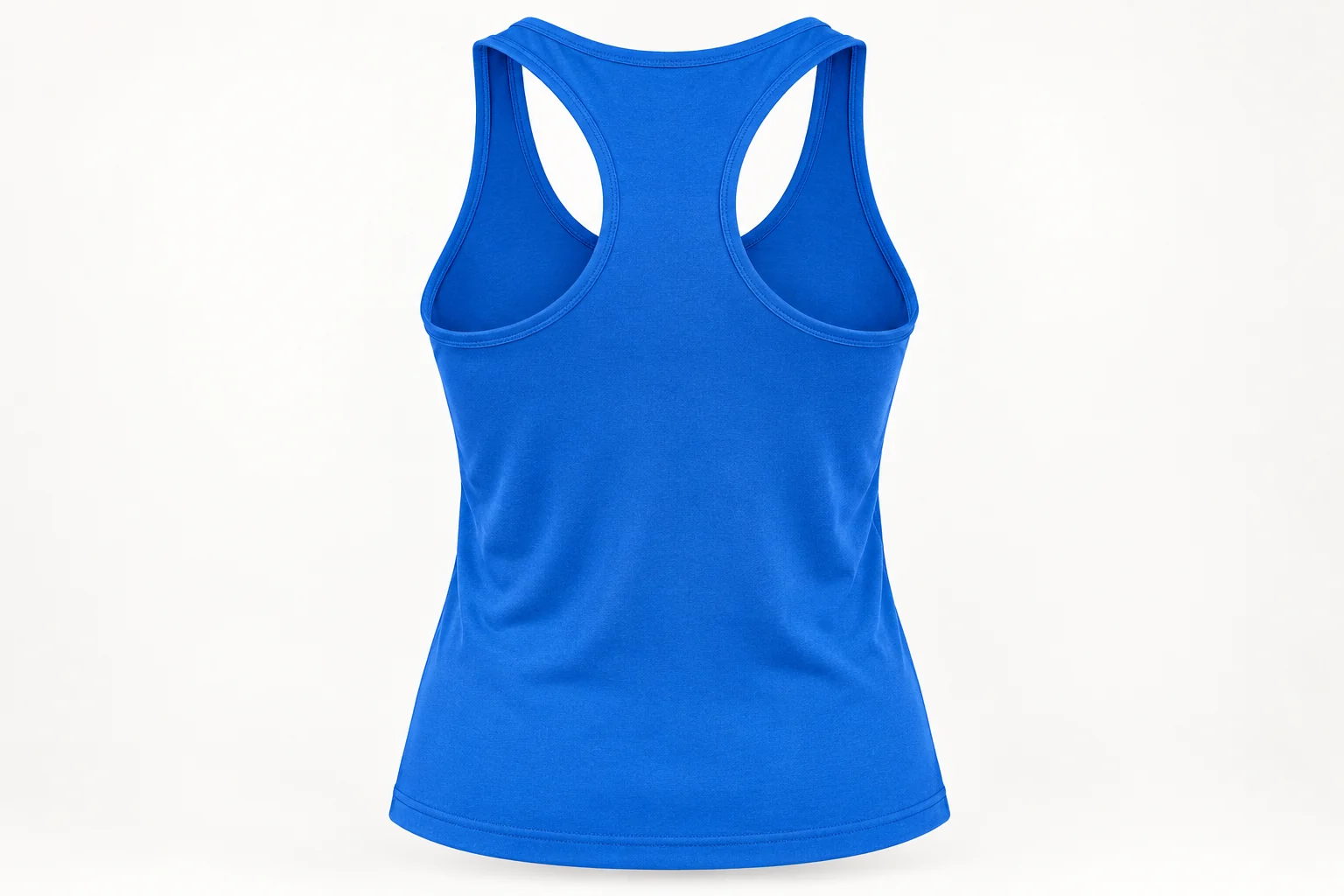
Set up a back-focused review with identifiable landmarks
Record the narrow-back width at specified points, strap-junction positions, armhole shape and relevant body dimensions before fitting. Photograph the relaxed sample from the front and back with its pattern version identified. Explain the movements and coverage the design is intended to accommodate, including any underlayer that belongs in the programme. The aim is to trace the narrow back's position and edge behaviour, not to infer performance from its racerback name. A sample that looks symmetrical on a hanger can still need a different review once its straps and body are worn together.
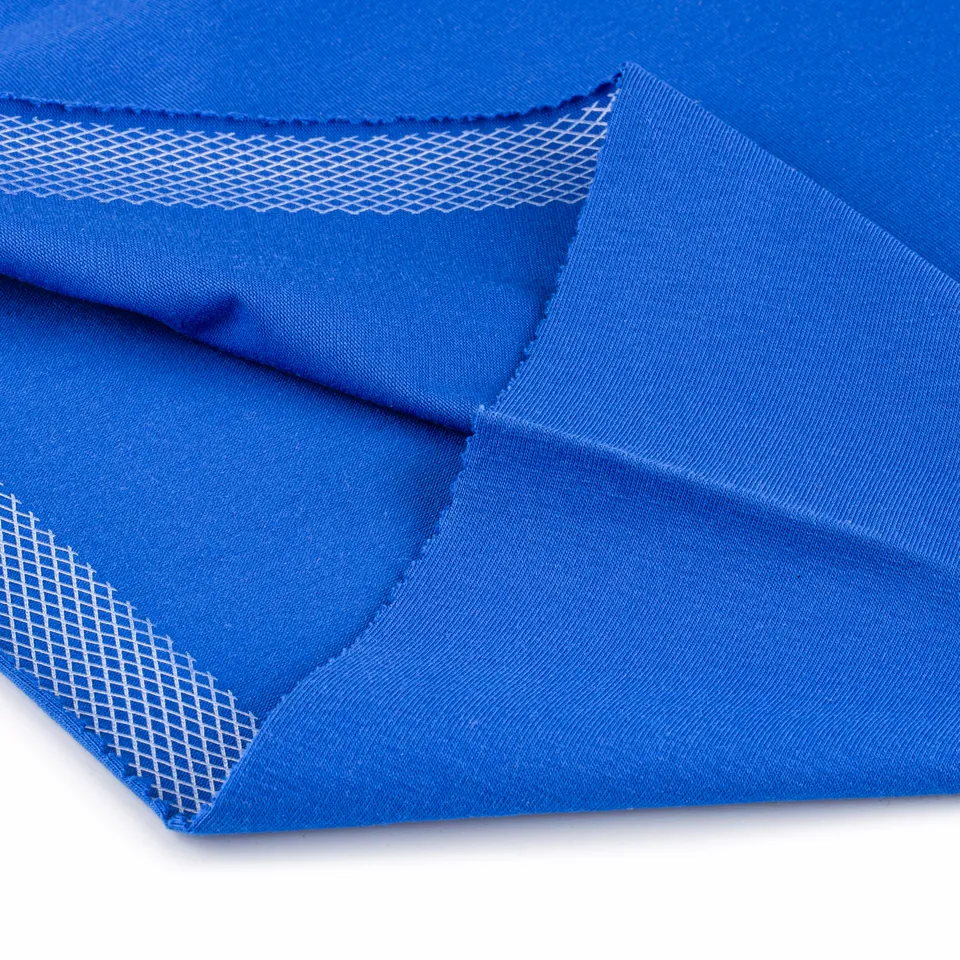
Control the sample's actual material combination
SJ-102 offers 170, 180, 190, 200 and 210 g/m² in 95% cotton and 5% elastane single jersey with an enzyme and compacted finish. PF-121 offers 130, 142, 154, 166 and 178 g/m² in 92% recycled polyester and 8% elastane, with the finish label Moisture management + quick dry. Identify the precise sampled option and binding material. A substitute cutting or changed edge component creates a different assembly. No recovery, opacity, support or moisture test result follows from either composition or finish label; evidence for required claims remains a separate request.
Observe shoulder-blade movement without repositioning the straps
Agree a repeatable sequence such as reaching forward, raising the arms and returning to a neutral position. Note the starting back-panel position, then record where it finishes before the wearer adjusts it. Observe whether an edge lifts or the panel moves asymmetrically. These are design-development observations, not a universal laboratory protocol or evidence of unrestricted sports movement. Repeat them in relevant sizes and conditions. If the design requires another layer beneath the top, use that actual layer rather than changing it between samples and obscuring the comparison.
Investigate twisting at each strap junction
If a strap turns or the narrow back spirals, inspect the cut orientation, piece shape, junction allowances, edge construction and assembly record. Ask the maker to compare the intended pattern with the actual sewn piece before changing the body article. A construction change should identify which variable was altered and retain the earlier sample as a reference. Do not attribute every twist to insufficient elastane or assume a new fibre blend will correct an unbalanced junction. The useful outcome is a specific, repeatable correction supported by the revised assembly's observed behaviour.
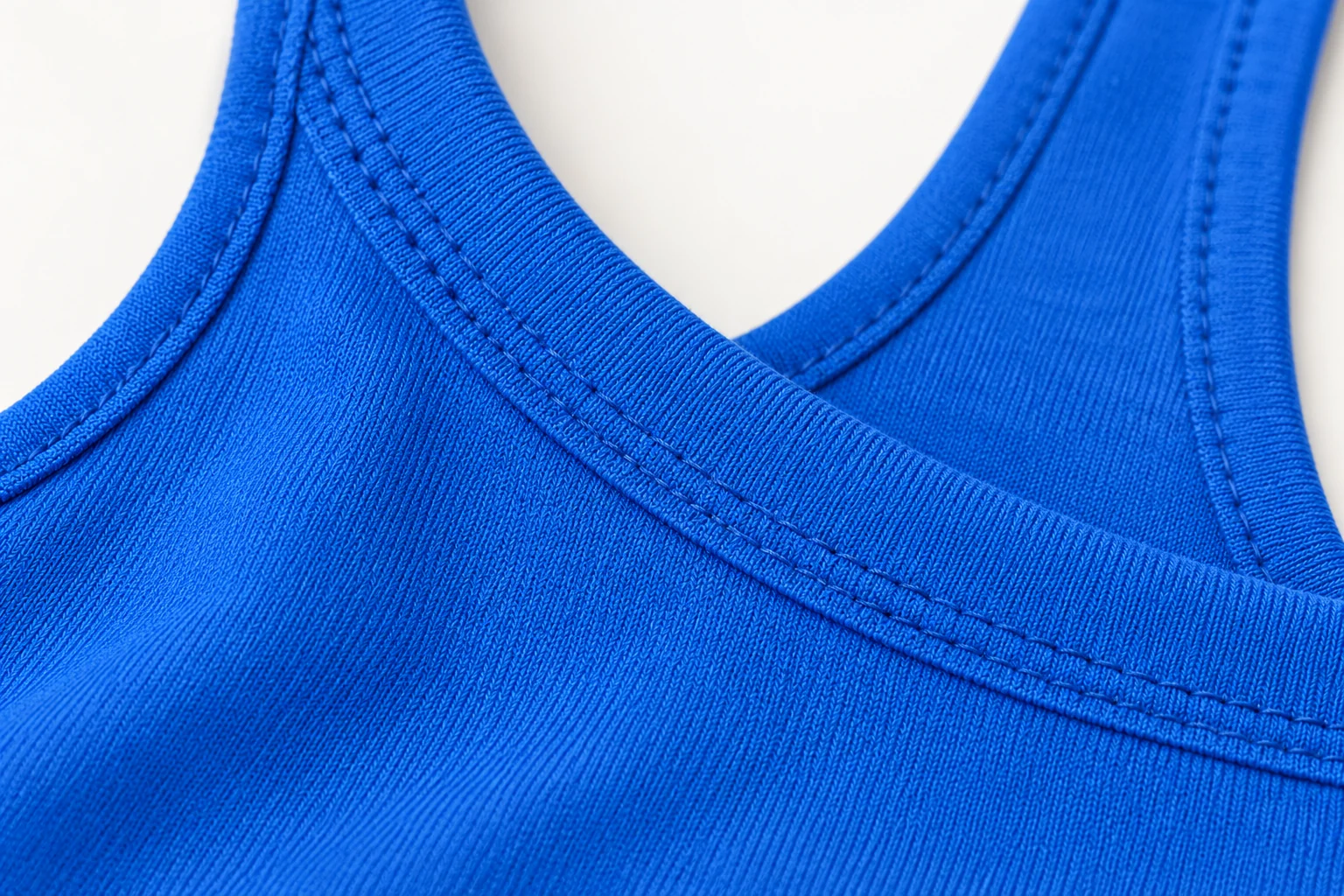
Inspect the binding after the movement sequence
Compare the long back edges and shorter neck region laid flat and worn. Record gaping, rippling, pressure or local distortion only where observed, with photographs that include the surrounding panel. Ask the sewing specialist to review attachment, seam and material direction together. A tighter binding can disguise one gap while pulling the junction into a new position, so recheck the complete upper back after a correction. Treat dressing access as another observation rather than assuming that an opening which sits neatly at rest will necessarily be practical to use.
Follow the shape through an agreed care trial
Mark the same back and strap landmarks before care, record the procedure and measurement preparation, then compare like conditions afterwards. AATCC lists garment dimensional changes and appearance after home laundering separately; the testing provider should confirm the current applicable method and requirements. Check the panel's position in the worn garment again as well as its flat dimensions. A small local change at one strap junction can matter to the line of the back even when overall body length appears similar. Keep those findings separate from untested durability or recovery claims.
AATCC: Standard Test Methods and Procedures — Public index lists garment dimensional changes and appearance after home laundering separately. Applicable current methods and requirements need qualified selection; the shoulder movement observations are not represented as an AATCC protocol.
Release a narrow-back assembly rather than a general fabric verdict
Close the review with the accepted material, offered weight, finish, binding, junction construction and pattern revision. State which observations were accepted and what remains unresolved. If the next sample changes back width, edge material or attachment, identify the checks that need repetition. Keep the scope of any supplied report visible and do not add compression, support or medical effects to the conclusion. The sample record should allow the garment maker to reproduce the approved shape and let purchasing recognise substitutions that would reopen the back-panel decision.
Technical background and scope
This is a structured editorial draft. Garment-specific development advice is paired with existing catalogue records; compatibility must be established by sampling. AL KUMAŞ supplies fabric. Cutting, sewing and finished-garment production are separate unless explicitly agreed.