




Request a junction construction proposal at actual scale
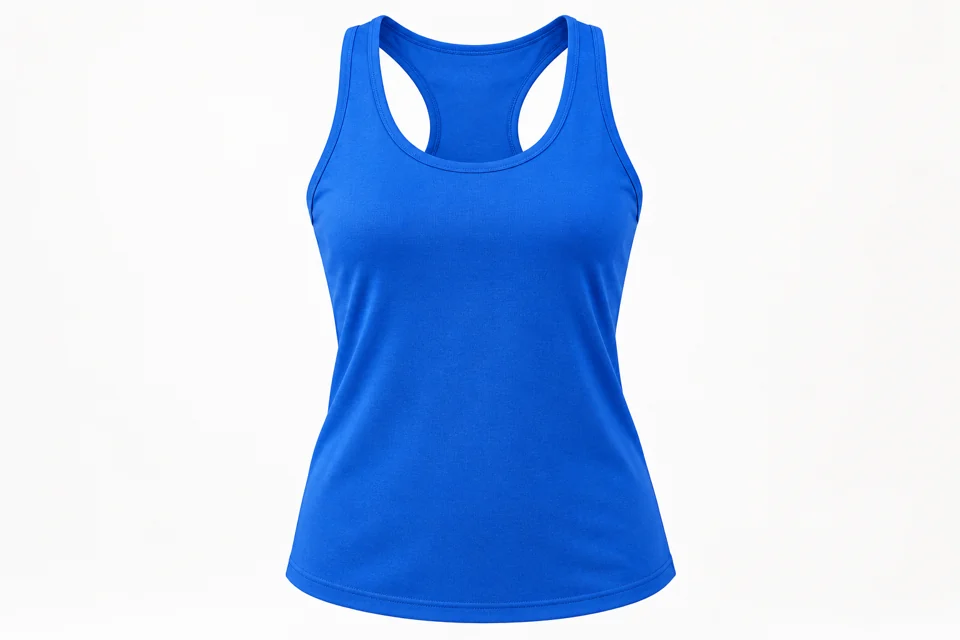
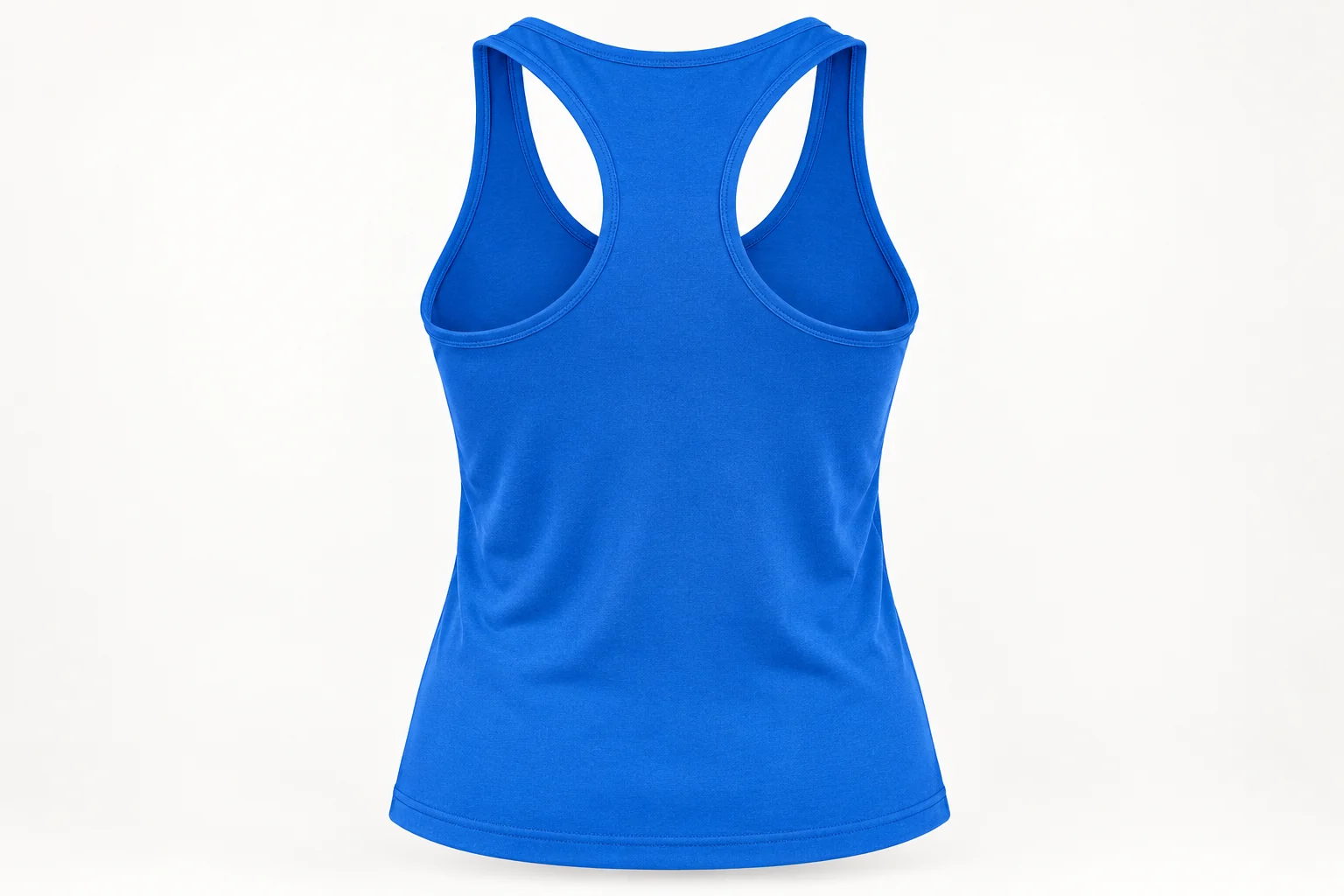
Ask the garment developer for an actual-scale construction proposal showing where the two shoulder paths converge into the narrow back. The handoff should distinguish a back cut as one continuous piece from separate straps joined to a back panel; these are different assemblies, not interchangeable drawings of the same silhouette. State which route the prototype represents. The buyer needs to decide whether that junction can be reproduced with the intended finished outline and acceptable bulk, rather than receive a general assurance that the proposed jersey stretches enough for a racerback.
Show finished geometry separately from cutting geometry
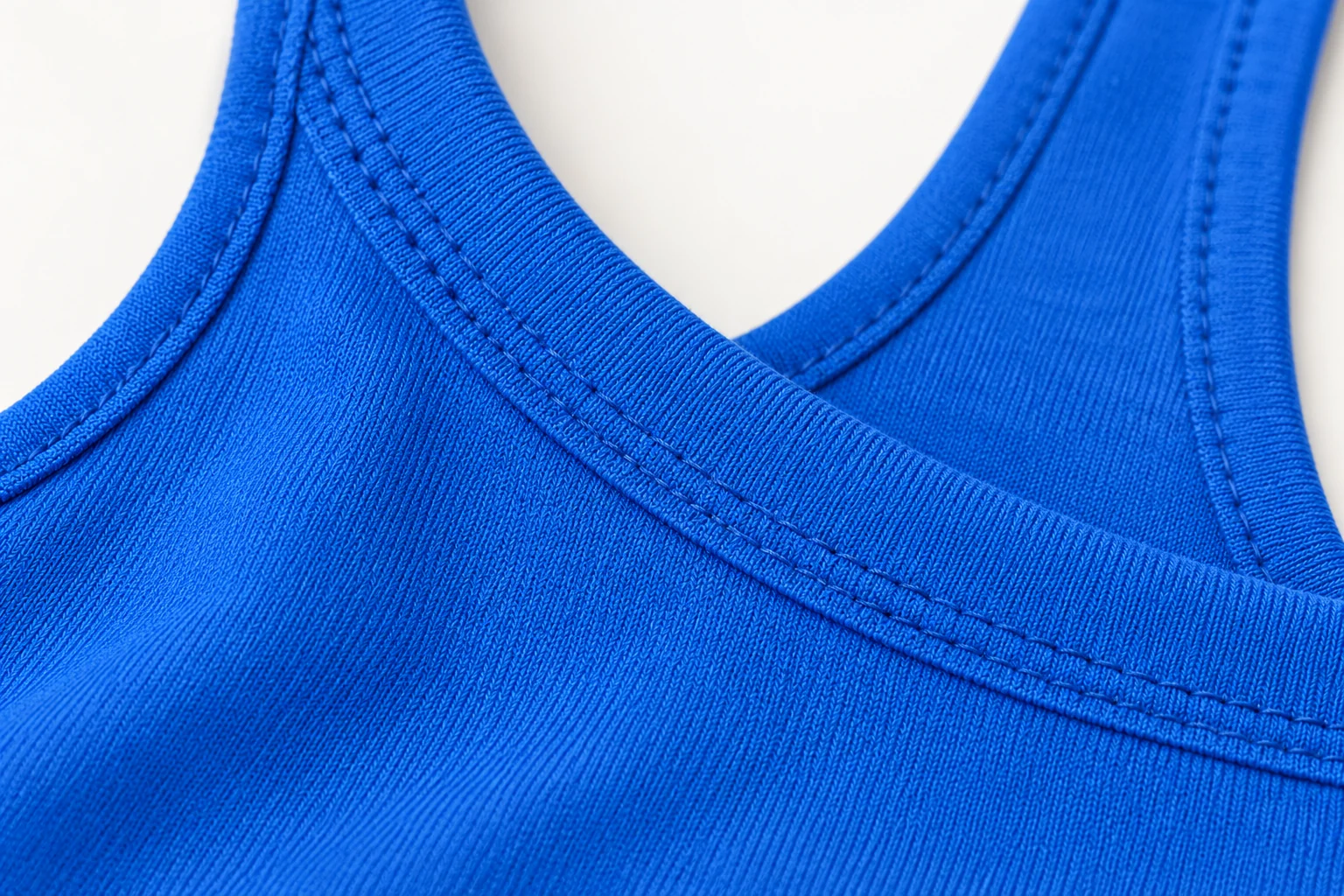
Require the maker to show the finished strap widths, joining position and narrow-back outline alongside the corresponding cut components and allowances. A narrow-looking back on a sketch does not reveal how much space its actual attachment consumes. Identify where edge finishing ends or passes through the junction and whether a binding join is deliberately kept elsewhere. Leave exact dimensions to the developed pattern rather than inventing a universal minimum width. If the original outline cannot accommodate the proposed construction, ask for the visible change needed and its reason before approving a wider junction by default.
Choose the join sequence that the next sample will reproduce
Have the maker demonstrate the proposed junction with the real layers and edge components, including any reinforcement actually intended. A local sewn example can reveal the assembly sequence, but retain a complete top for the resulting garment assessment. American & Efird supports specifying assembly with seam drawings and stitch details; use those details to communicate the chosen construction without prescribing a universal stitch setting. Ask which edge is finished first and where the remaining operation lands. The output must distinguish an intentional layered junction from an accidental accumulation of binding ends.
American & Efird: Stitches and Seams — Assembly can be communicated with seam drawings and stitch details. The actual-scale racerback junction proposal is original editorial guidance; no minimum strap width, universal joining sequence or machine setting is sourced here.
Test the chosen geometry through the complete narrow back
Assess the adult sample with its actual shoulder paths, neckline and intended underlayer. CottonWorks includes garment fitting in final knit development, supporting this step beyond a local material trial. Observe the junction's position and appearance during the ordinary movements selected for the product brief, then identify whether another geometry proposal is needed. A flatter local join is not approval if the whole top's shoulder relationship changes unintentionally. Keep the issue focused on the actual narrow-back construction; this review establishes neither a support function nor a general athletic performance qualification.
CottonWorks: Designing Knit Textiles — Final knit material development includes garment fitting. The narrow-back geometry and junction observations are original development requests, not measured junction recovery or athletic performance claims.
Make the cutting and operation consequence visible
Once the junction route is selected, ask the cutter to identify the actual one-piece back or separate strap components, material directions and any reinforcement pieces represented in the estimate. A separate strap route can alter the component count and operations even if its drawn body area is smaller; the actual layout determines consumption. If a proposed correction adds a joining allowance or changes strap length, request that specific revision's material and assembly consequence. Do not price an unjoined silhouette and then silently supply a multi-part junction, or assume that a narrow back guarantees savings over another tank pattern.
Catalogue material identities for the developed junction
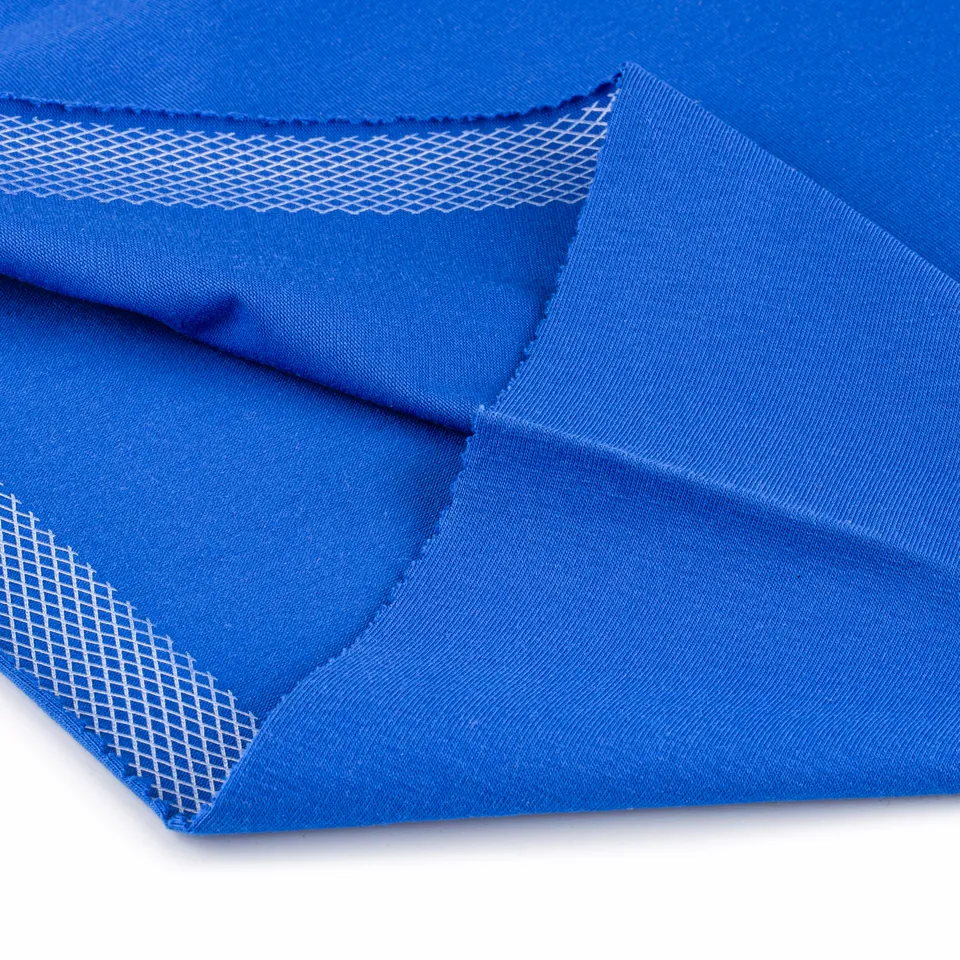
SJ-102 is 95% cotton and 5% elastane single jersey, Enzyme + compacted, with 170, 180, 190, 200 and 210 g/m² options. The PF-121 alternative records 92% recycled polyester with 8% elastane, 130, 142, 154, 166 and 178 g/m², and the label Moisture management + quick dry. No listed weight is identical across these two routes. Confirm the actual offered weight, finish and usable width behind the prototype. Neither elastane content nor the functional label qualifies junction recovery, finished-garment moisture performance, a support claim or verified recycled-content marketing evidence for the actual supply.
Authorise a reproducible junction rather than an outline alone
The buyer should return a decision on the demonstrated construction: accept the identified continuous-back or joined-strap route, request a named geometry correction, or require missing assembly evidence. Retain the actual-scale construction, pattern revision and complete sample that support that decision. If the material or binding changes later, identify which junction details need reassessment instead of inheriting acceptance from the racerback name. A subsequent commercial offer must describe the selected material and assembly scope honestly. This handoff makes the narrow-back design reproducible while keeping outstanding care, claim and supply questions visible rather than promising untested performance.
Technical background and scope
This is a structured editorial draft. Garment-specific development advice is paired with existing catalogue records; compatibility must be established by sampling. AL KUMAŞ supplies fabric. Cutting, sewing and finished-garment production are separate unless explicitly agreed.