



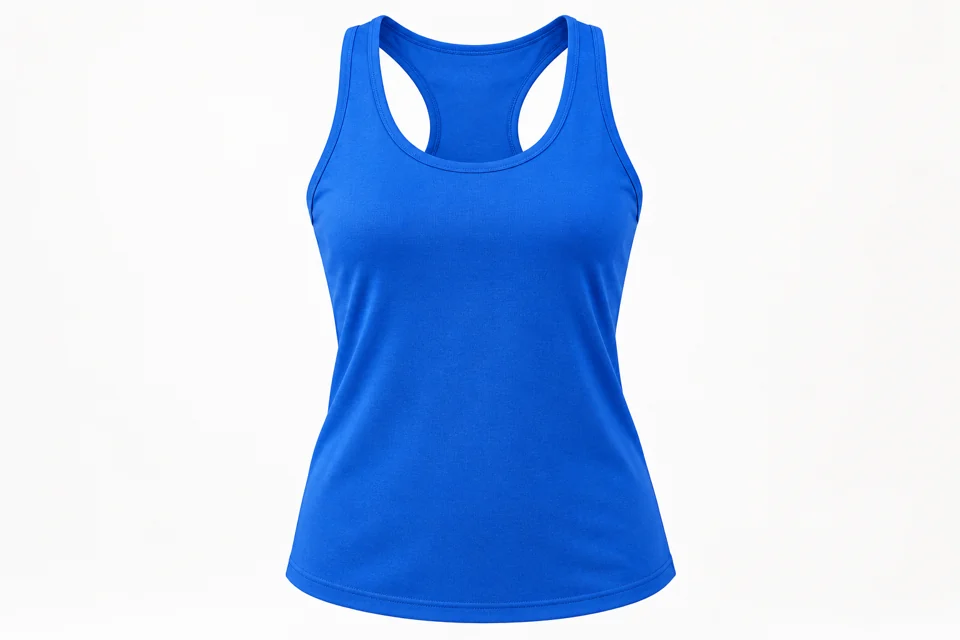

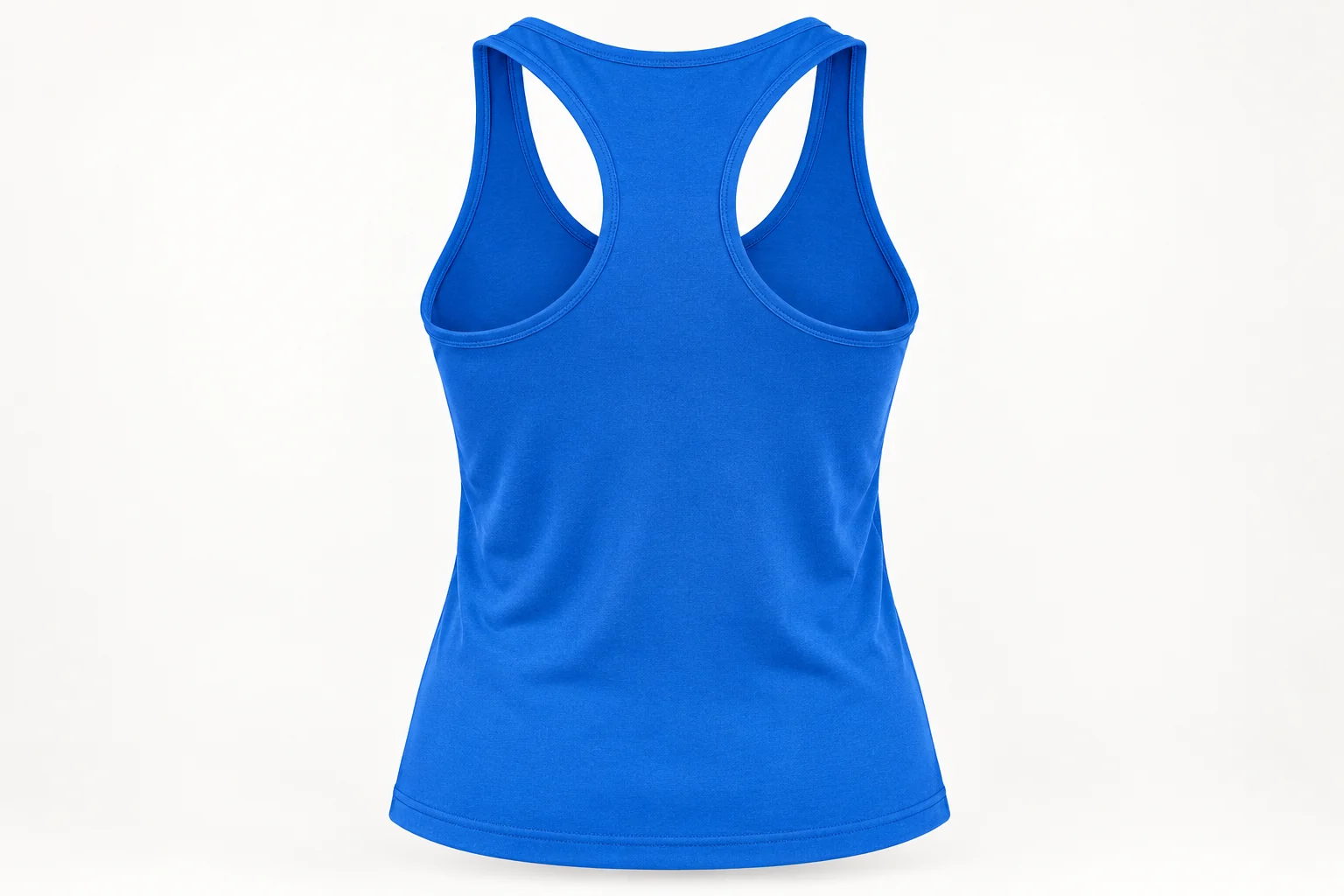
Use the narrow back as a defined graphic area
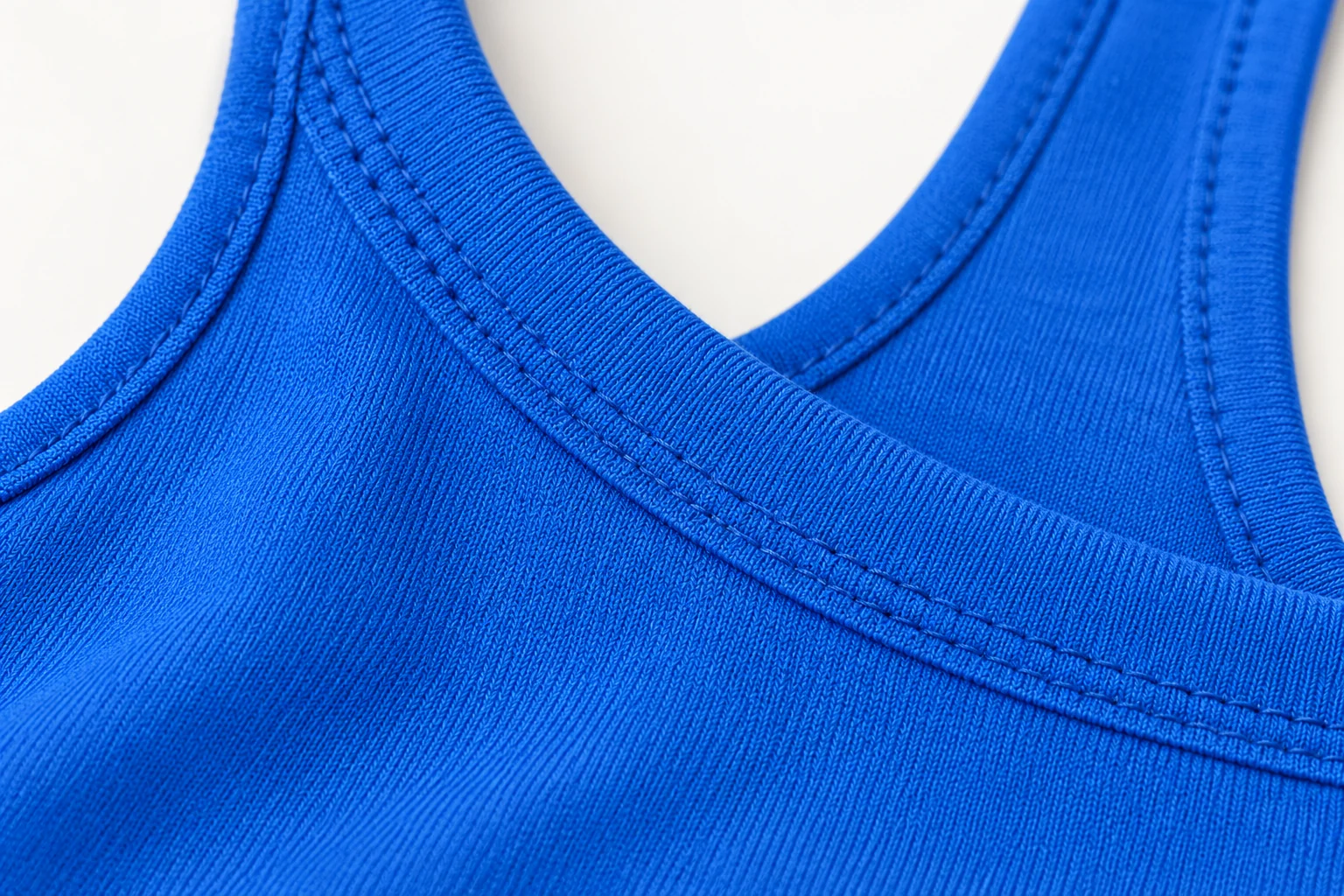
The upper back of a racerback top can leave little room for a logo between its bound edges and strap junctions. Start with the actual graded panel outline and mark the area that remains visible when worn. Decide whether the graphic belongs on the narrow back, lower body or front instead of centring it in an unscaled photograph. A rear placement should be measured from an identifiable finished landmark. Keep the edge construction in the drawing so the decorator does not put part of the design into an allowance that will be folded or stitched.
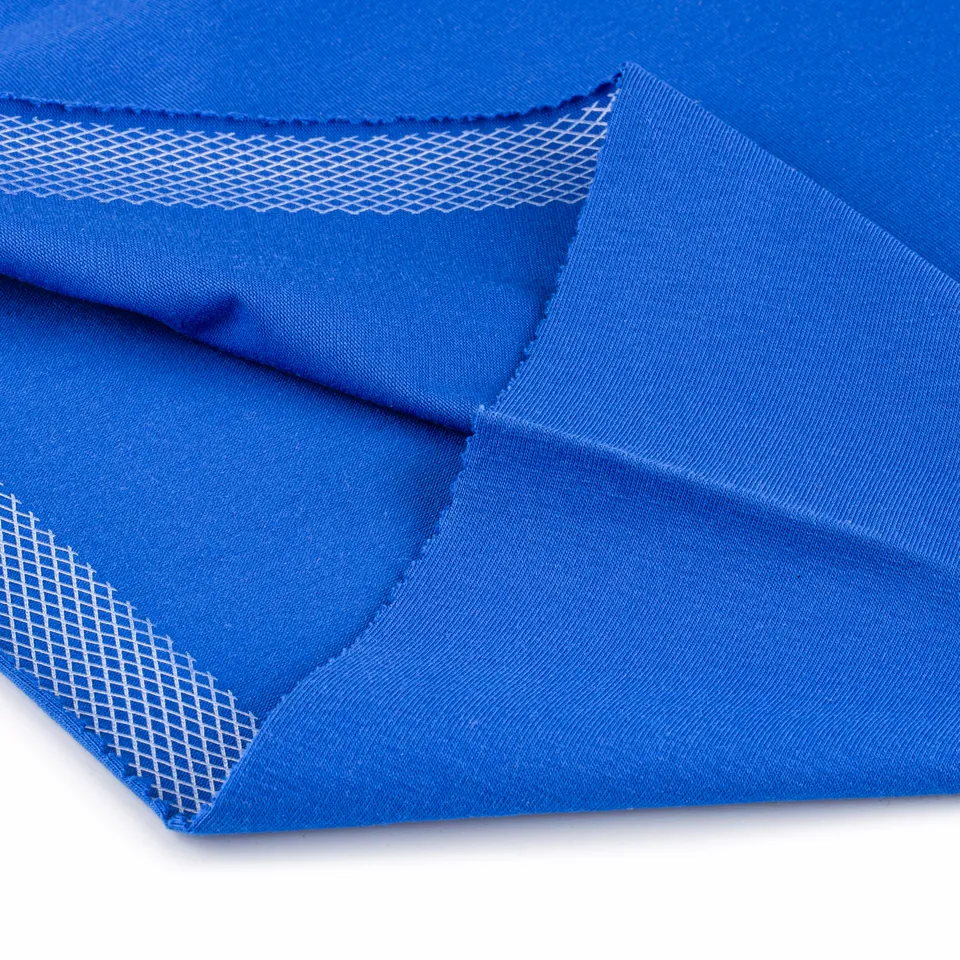
Identify the substrate before discussing decoration
SJ-102 is recorded as 95% cotton and 5% elastane, enzyme and compacted, at 170, 180, 190, 200 and 210 g/m². PF-121 is 92% recycled polyester and 8% elastane at 130, 142, 154, 166 and 178 g/m², with a Moisture management + quick dry label. Ask the decorator what application it can evaluate on the exact offered material and finish. Neither a composition nor that functional label confirms print-process availability, compatible curing conditions or finished appearance. An application approved on one route should not automatically release the other.
Make binding colour part of the back design
The binding may frame much of the visible upper back, so specify whether it should match, contrast or form part of a colour-block arrangement. Review the actual body and binding together at the intended attachment and extension. A match between relaxed swatches can look different once the narrow assembly is sewn. If a separate binding article is used, give it an identity and governing reference rather than calling it matching trim. Record which component needs correction if the relationship is unacceptable, instead of changing both colours without a common approval target.
Review artwork where the back panel moves
Ask for a decorated sewn trial and observe the placement during the agreed reaching and arm-raising sequence. Note whether the logo enters a fold, tilts as the panel shifts or appears too close to one finished edge. The team should decide whether the issue calls for a pattern correction, a placement change or another application trial. A flat cutting cannot settle all three. Keep the intended viewing state explicit: a deliberately off-centre design is different from an apparently centred graphic pulled sideways by an unresolved garment assembly.
Check placement across the size range
A single graphic width may fit the largest back but leave inadequate visual space on a smaller graded panel. Ask the designer and garment maker to agree whether artwork scale, position or both change with size. Include neck and binding landmarks in that instruction. CottonWorks connects visual design with construction choices; the racerback-specific grading decision must still be made on its own pattern. Do not promise that one transfer or screen size serves the entire programme until the actual design and application constraints have been reviewed.
CottonWorks: Designing Knit Textiles — Designing the Fabric — Construction and visual design are connected development choices. Back-panel graphic grading and placement remain programme-specific decisions requiring the actual sewn sample and decorator advice.
Keep colour acceptance separate from fastness evidence
AATCC's public method index identifies rubbing, perspiration and laundering colourfastness as separate assessment categories. Have a qualified provider select appropriate current procedures and requirements for the programme. A visually accepted body shade or printed mark is not a report showing that either article has passed those checks. Include a contrasting binding or underlayer in the relevant colour-transfer discussion. Keep any evidence tied to the actual substrate, finish, colour and application, especially if a change is proposed to make the graphic work on the narrower back.
AATCC: Standard Test Methods and Procedures — Public index separately identifies colourfastness to rubbing/crocking, perspiration and laundering. No procedures, thresholds or actual article/garment results are supplied.
Release the decorated back with its construction reference
Retain the material and finish, offered weight, physical colour reference, binding identity, artwork version and graded placement drawing with the accepted sewn sample. State whether the decision covers body shade only, the complete colour relationship or the decorated application as well. Identify unresolved testing or placement questions. A future change to back width, strap junction or binding can affect the approved graphic area and should trigger the relevant review. The release should preserve an intentional racerback design, without implying that a sports-looking logo establishes athletic performance.
Technical background and scope
This is a structured editorial draft. Garment-specific development advice is paired with existing catalogue records; compatibility must be established by sampling. AL KUMAŞ supplies fabric. Cutting, sewing and finished-garment production are separate unless explicitly agreed.