



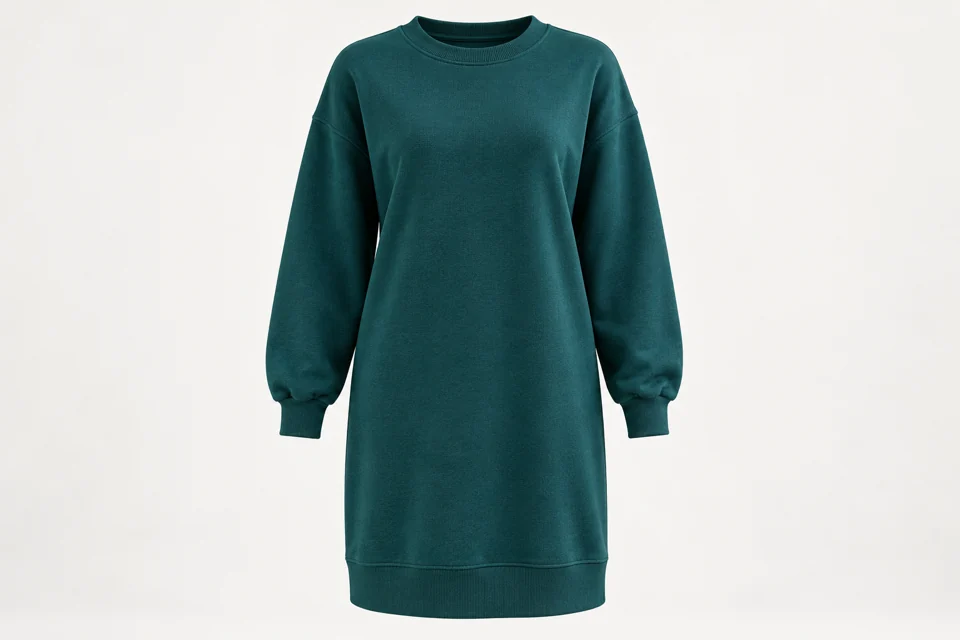


Develop the substantial body as a complete dress
A sweatshirt dress carries a longer body below its shoulder and neckline construction, so selecting it is not simply approving a crew-neck sweatshirt and extending the hem. Define the actual dress length, ease through the hip, sleeve arrangement and lower-edge treatment. Show whether the design includes pockets and identify their construction rather than assuming a standard package. The first material comparison should represent that complete body and the intended ordinary use. A small cutting or an upper-body sample cannot establish the long panel's hang, hem balance or effect on the shoulder area.
Catalogue starting points
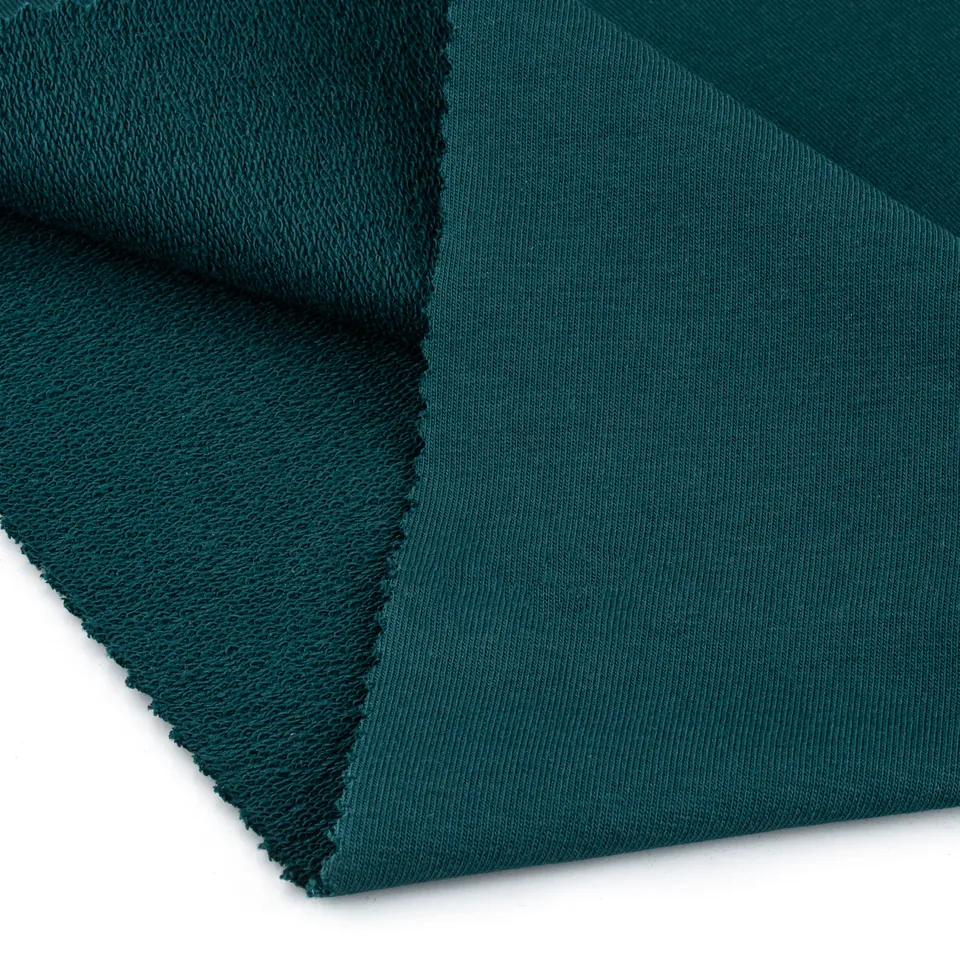
FT-601 records 70% cotton 30% polyester at 240, 260, 280, 300, 320 g/m² with Unbrushed + silicone finishing. FT-603 records 65% cotton 35% polyester at 320, 345, 370, 395, 420 g/m² with Brushed + anti-pilling finishing. The comparison changes blend, recorded finish and much of the weight range, not only surface feel. Anti-pilling is a finish designation, not a supplied test rating or promise that pills never form. Confirm the exact offered option and usable width. Neither entry supplies a sweatshirt-dress hanging, pocket-distortion, coverage or after-care result.
Inspect the inside finish without predicting the whole garment
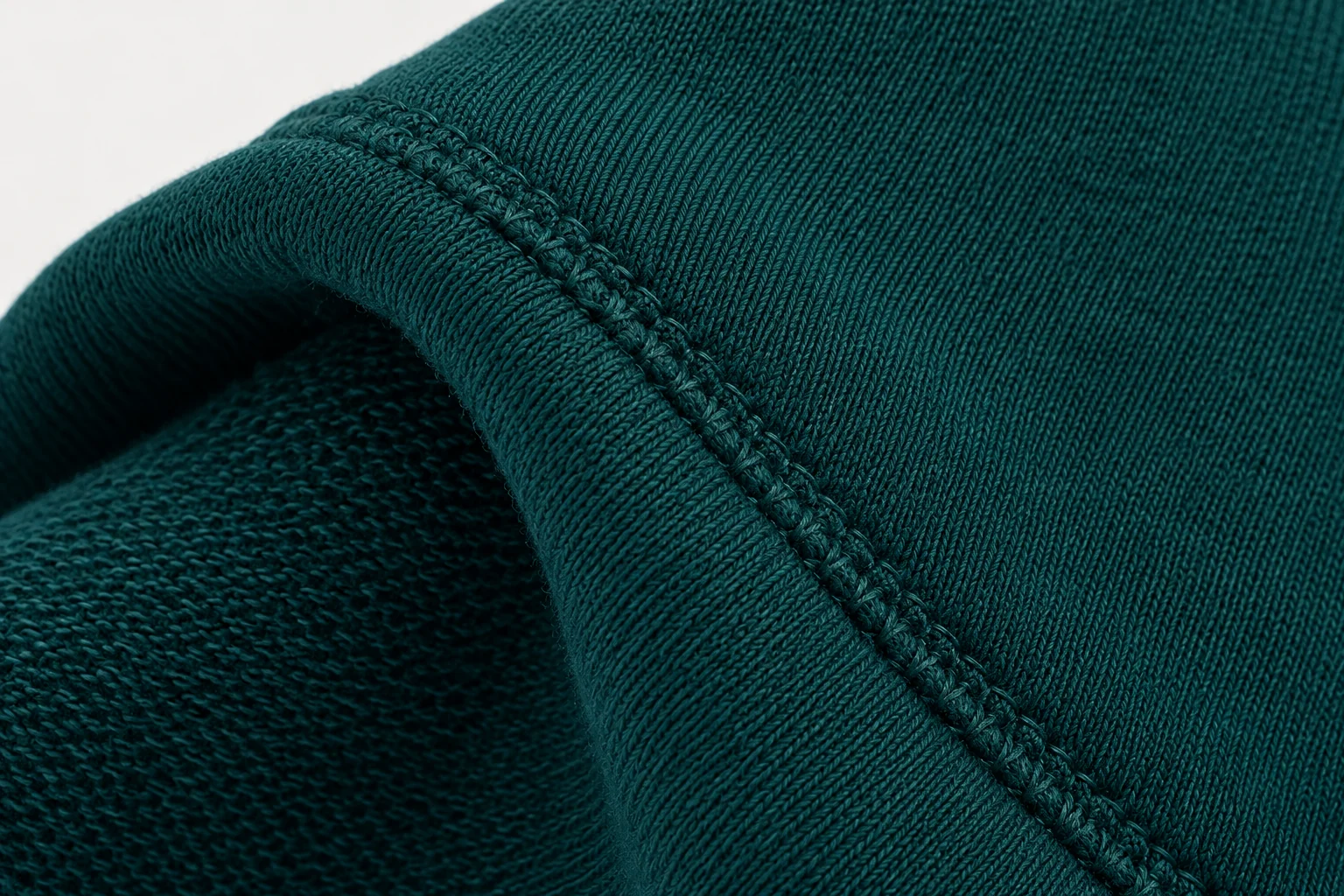
Compare the actual offered face and reverse and identify which side will be outward in the design. CottonWorks distinguishes unbrushed French-terry-type material from fleece whose reverse is napped. That background explains why the finish descriptions matter, but does not prove warmth, durability or the hand of this particular dress. Review the chosen material in the intended assembly and layer arrangement. If the buyer prefers one inside surface, record that preference separately from evidence about dimensional behaviour, seam bulk and the way the full body settles on the wearer.
CottonWorks: Single & Double Knits — French terry and fleece — General distinction between unbrushed French-terry-type construction and a napped fleece reverse. No thermal rating, article hand, pilling grade or hanging result is inferred for FT-601/FT-603.
Watch the shoulder and neckline carry the full body
Ask the garment maker to sample the actual shoulder, neckline and any specified support with the full intended length attached. Observe their position while the wearer stands and moves normally, without pulling the hem down for the photograph. If an opening changes position, identify whether the next trial concerns pattern balance, seam construction or the material proposal. More reinforcement is not automatically a finished solution. The accepted configuration should retain the intended hand and dressing access, with the actual component and operation recorded rather than an inferred standard for heavier sweatshirt fabrics.
Treat pockets as part of the hanging comparison
Where pockets are specified, assess their position, attachment and effect on the long body in the actual design. Review the empty state and any intended use condition agreed by the development team, without inventing a capacity or strength claim. A patch pocket and a pocket inserted into a seam are different assemblies. Observe whether the body or hem changes appearance and whether the pocket opening remains as intended. If the pocketless trial was accepted first, do not assume it also approves a later pocket-bearing version merely because the main material and dress length stay unchanged.
Resolve the lower edge in the seated and standing silhouette
Identify whether the hem is folded, banded or another actually specified finish and assess it on the full garment. Check its relationship with hip ease and any actual walking opening during ordinary sitting and movement. A lower band can create another silhouette from an unrestricted folded edge, so comparisons should not disguise that construction change as a fabric-only result. If a lining or other inner component is proposed, include it explicitly in the relevant trial. Judge the actual appearance and coverage under agreed conditions rather than using weight alone as a guarantee.
Select the body, pockets and upper support together
Retain the accepted material identity, pattern, length, shoulder and neck assembly, lower edge and pocket conditions in one selection record. Note which findings are provisional, including any after-care review still outstanding. If the brand later adds pockets, changes the hem band or lengthens the body, identify which hanging and fitting observations need repeating. This produces a reproducible sweatshirt-dress configuration and an honest comparison between the offered routes, while keeping untested stability, warmth, pilling resistance and coverage promises outside what the sample and catalogue actually establish.
Technical background and scope
This is a structured editorial draft. Garment-specific development advice is paired with existing catalogue records; compatibility must be established by sampling. AL KUMAŞ supplies fabric. Cutting, sewing and finished-garment production are separate unless explicitly agreed.