



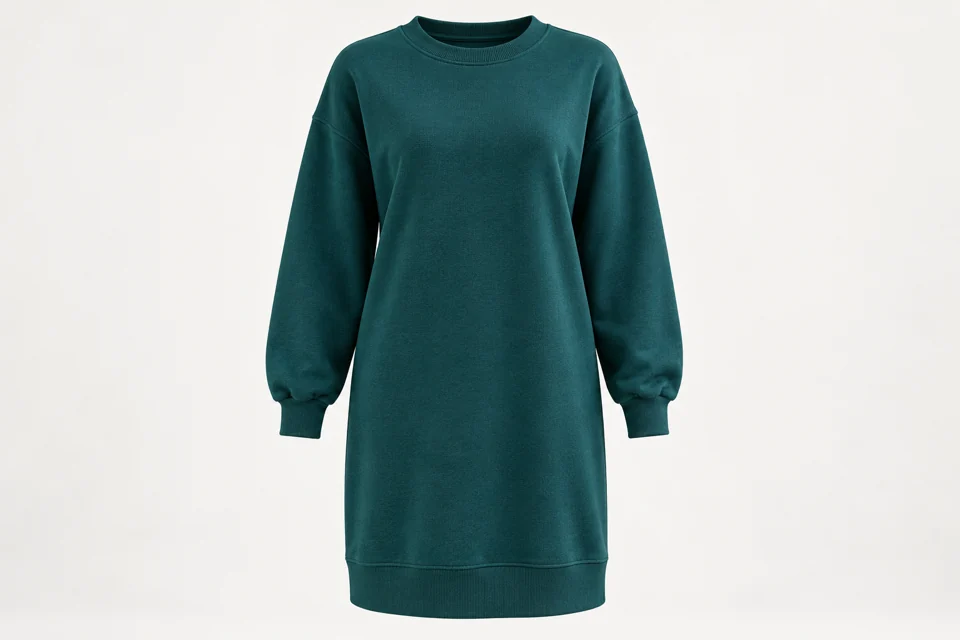


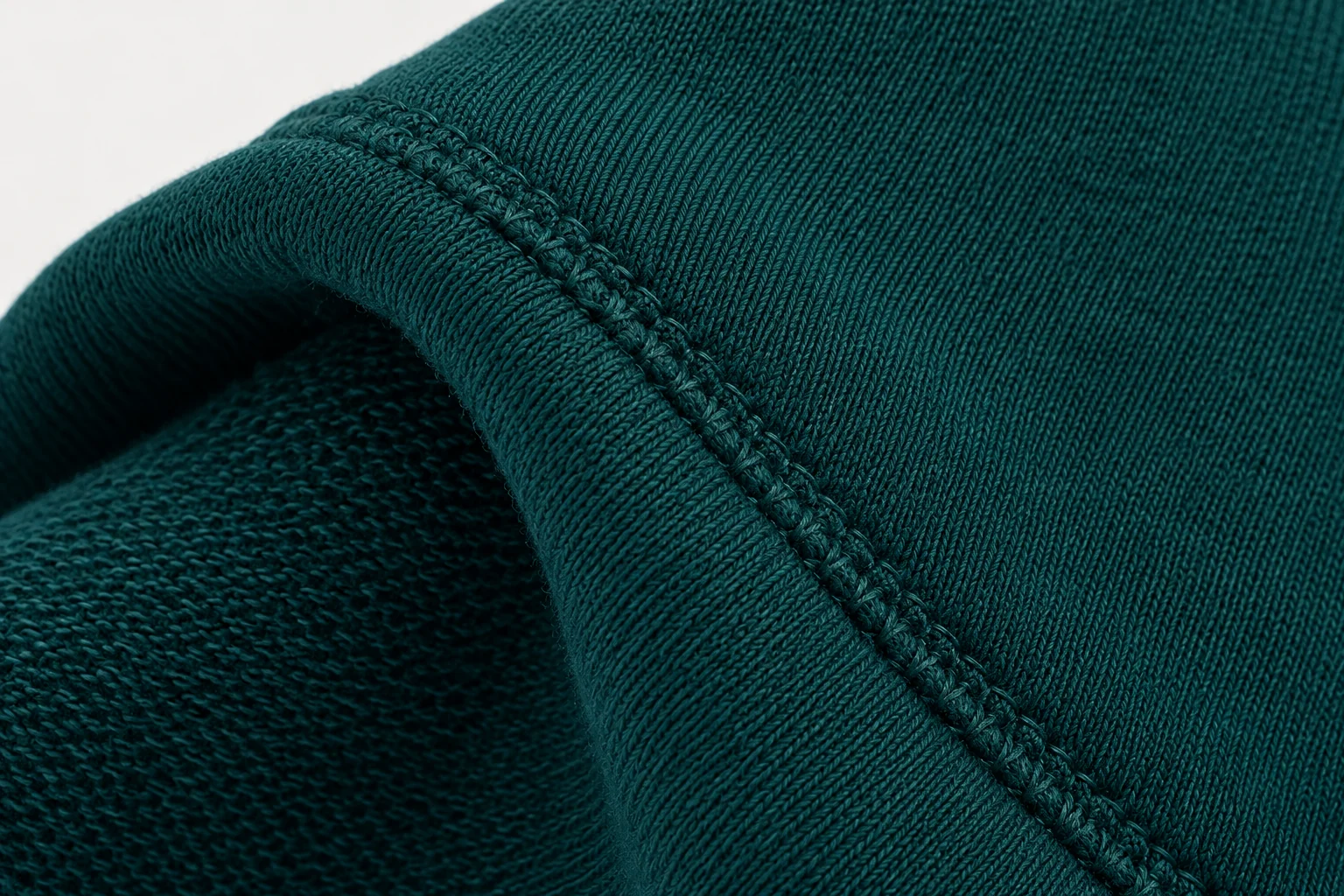
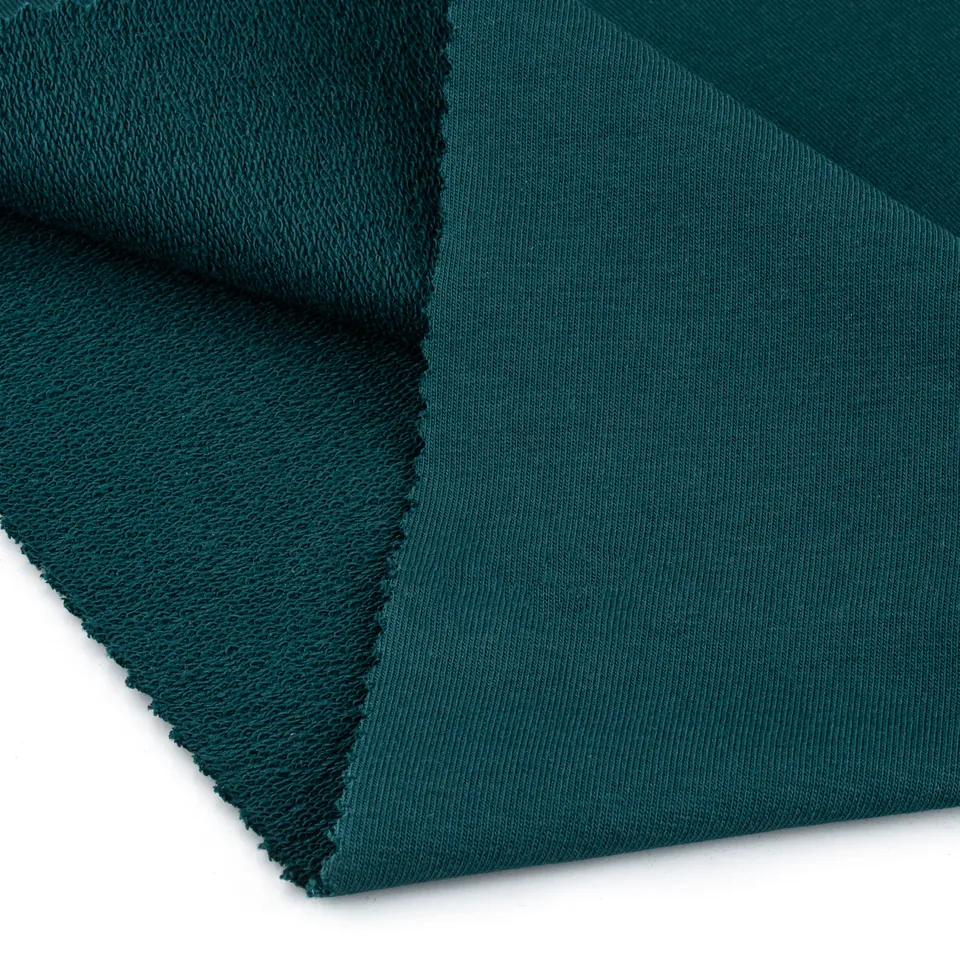
Compose graphics for the complete sweatshirt-dress body
A graphic placed well on a short sweatshirt can occupy another visual position on a longer dress. Show the actual neckline, waist reference, hip area, hem and any pockets on the artwork drawing. Decide whether the design belongs high on the body, spans a longer region or should remain deliberately restrained. Review the complete front and back, not only a cropped upper torso. The artwork decision should respect the developed dress shape rather than use a familiar crew-neck placement as proof that the same design is balanced at every longer length.
Make the pocket relationship an intentional visual choice
Where the design has pockets, identify whether artwork should avoid them, sit on them or deliberately cross a junction. A patch pocket can interrupt a motif through its position and attachment, while a seam pocket presents another boundary. Ask the decorator and garment maker to review the actual construction and agree the usable application region. There is no universal graphic clearance distance supplied by these fabric records. Keep the placement measured from stable pattern landmarks so a pocket-position correction cannot quietly leave the artwork specification referring to the earlier garment.
Review the offered surface and actual decoration route
Ask the responsible decorator to assess the exact article, weight and finish proposed, including the intended face. CottonWorks explains that fabric type affects print-process considerations; the actual decorated trial remains necessary for these sweatshirt-dress materials. Neither record confirms a printing service or a successful process for the chosen graphic. Inspect the application beside an unaltered area and in the full garment where relevant. Do not treat a brushed reverse or an anti-pilling finish designation as proof that every decoration will have the desired appearance, hand or care performance.
CottonWorks: Cotton Textile Printing Basics — fabric type — Fabric type affects printing considerations. Does not establish an offered print service, successful graphic application or fastness on either sweatshirt-dress article.
Keep body, neck and lower-edge colour references distinct
If another material forms the neckline, cuff where specified or hem band, compare the actual component with the body rather than approving colour names separately. A matched band is not included automatically with a body article. Identify which surfaces are intended to remain visible and how the inside finish appears at an actual opening or turn. Review the assembled relationship under agreed viewing conditions. A deliberate contrast can be an accepted design choice, but a nearly matched component still needs its physical reference rather than an assumption based on screen colour or fibre composition.
Catalogue starting points
The catalogue's FT-601 record specifies 70% cotton 30% polyester, 240, 260, 280, 300, 320 g/m² and Unbrushed + silicone finishing. Its FT-603 record specifies 65% cotton 35% polyester, 320, 345, 370, 395, 420 g/m² and Brushed + anti-pilling finishing. These descriptions do not identify a matched trim, graphic-process approval or colourfastness report for the dress. Keep the actually offered material and finish beside each visual trial. A common product-family name cannot justify transferring the artwork or shade acceptance between these differing blend and finish routes.
Assess the design when the dress is worn and used as intended
Review graphic position standing and seated, including the specific pocket use condition agreed for development where relevant. Observe whether folds or local distortion alter an important part of the visual. Decide whether the next correction belongs to placement, pocket construction or the dress pattern instead of rejecting the print without locating the issue. Ask the quality team to define the required care and colour assessments separately. A pleasing initial image does not establish wash, rubbing or other fastness, and a visibly clean surface is not a laboratory pilling rating.
Retain a full-body colourway decision
The visual release should identify artwork revision, actual dress length, pattern, pocket position, component shades and accepted worn views. Include the offered body reference and trial, with technical evidence status stated separately. If the brand changes the lower band, pocket arrangement or garment length, revisit the affected composition and decoration questions. Marketing can explain the intended substantial silhouette and coordinated graphic without converting a finish name, inside-surface preference or static sample photograph into untested claims of warmth, pilling resistance, stable hang or universal coverage.
Technical background and scope
This is a structured editorial draft. Garment-specific development advice is paired with existing catalogue records; compatibility must be established by sampling. AL KUMAŞ supplies fabric. Cutting, sewing and finished-garment production are separate unless explicitly agreed.