





Ask which full-body condition the supplier response must support
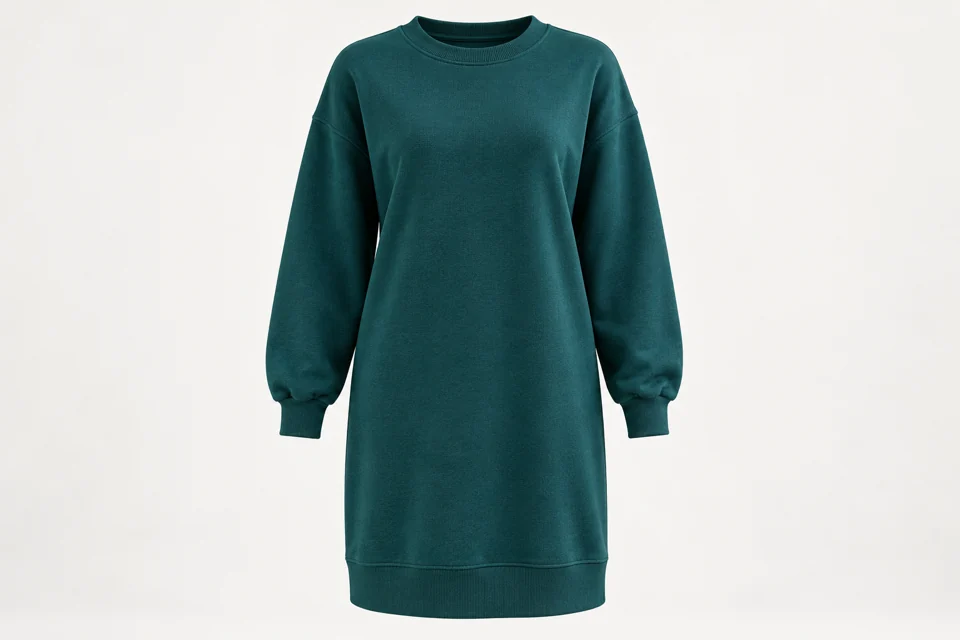
Frame the enquiry around a decision about the substantial dress in use, not a request for an automatically suitable sweatshirt fabric. State the intended body length, shape, shoulder and neckline construction and actual pocket arrangement. Ask the garment maker to assess the empty dress and the specifically intended pocket condition separately. A pocketless option, if still being considered, should remain a distinct configuration. The useful response must explain what was demonstrated and which material or construction proposal addresses the unresolved hanging question, rather than treating a favourable fabric hand as full dress approval.
Catalogue starting points
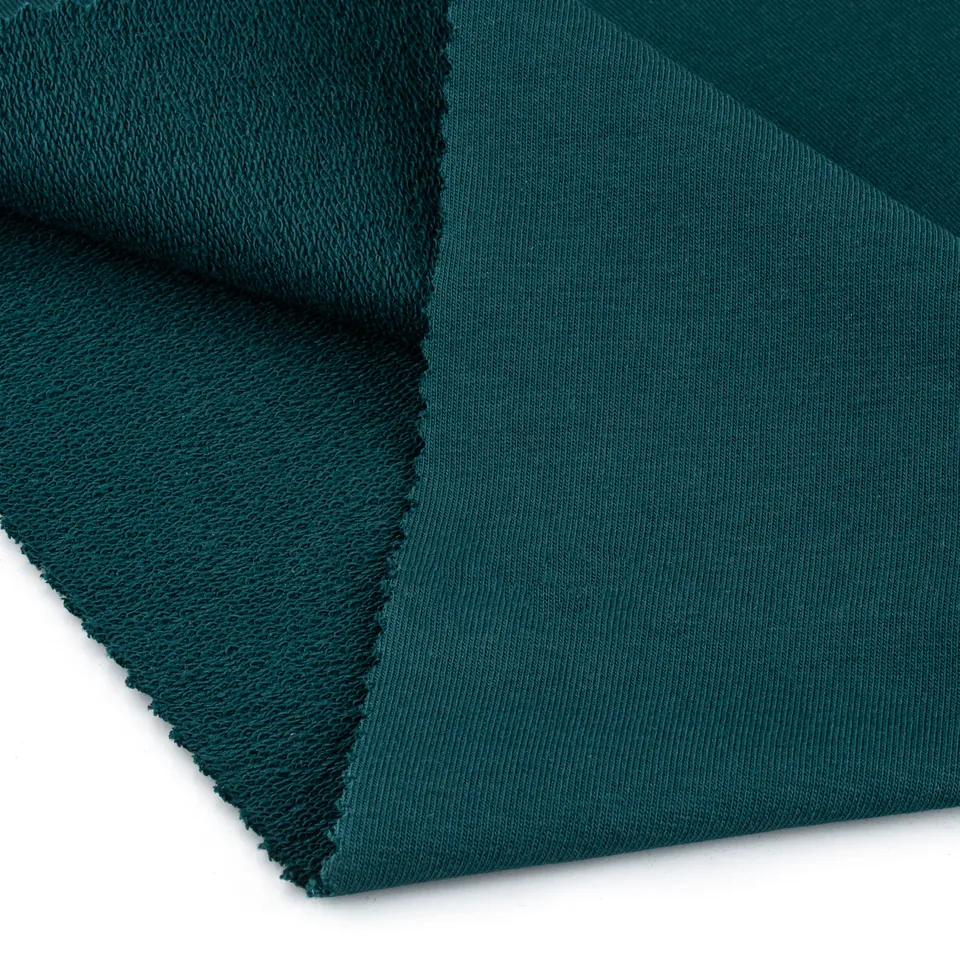
Identify the actual comparison supplies. FT-601 records 70% cotton 30% polyester, 240, 260, 280, 300, 320 g/m² and Unbrushed + silicone finishing. FT-603 records 65% cotton 35% polyester, 320, 345, 370, 395, 420 g/m² and Brushed + anti-pilling finishing. Their differing blend and finish should remain visible even if samples share the one common nominal weight. Request the offered option and width behind each trial. No current stock, garment service, pocket capacity or pilling result is established by those records; anti-pilling remains a finish designation rather than a release finding.
Specify separate hanging and worn reference states
Have the sample team identify the full pattern, trial material and actual finished components, then document how the garment is presented for each observation. An empty garment on a hanger and a dress on its intended fit wearer are different reference states and should not be compared as though only fabric changed. Record the support used, footwear or layer reference where relevant and the actual observation conditions. Do not prescribe a universal hanging duration. The recipient should be able to reproduce the relevant state without pulling the hem or moving the shoulder to match a preferred photograph.
Define the pocket-bearing comparison without inventing a rating
For actual pockets, ask the development team to state the ordinary condition it needs assessed, then record empty and intended-use views with the same body reference. Identify pocket type, opening, attachment and relevant dimensions. If an item is part of the intended use, document the actual assessed item or its pertinent specification; do not translate that into an unrestricted carrying capacity. Return observations at the opening, attachment, neighbouring panel and hem together. This tells the maker where a correction is needed and avoids a report that merely calls the pocket strong or the dress stable without supporting evidence.
Connect after-care observations to a material or assembly question
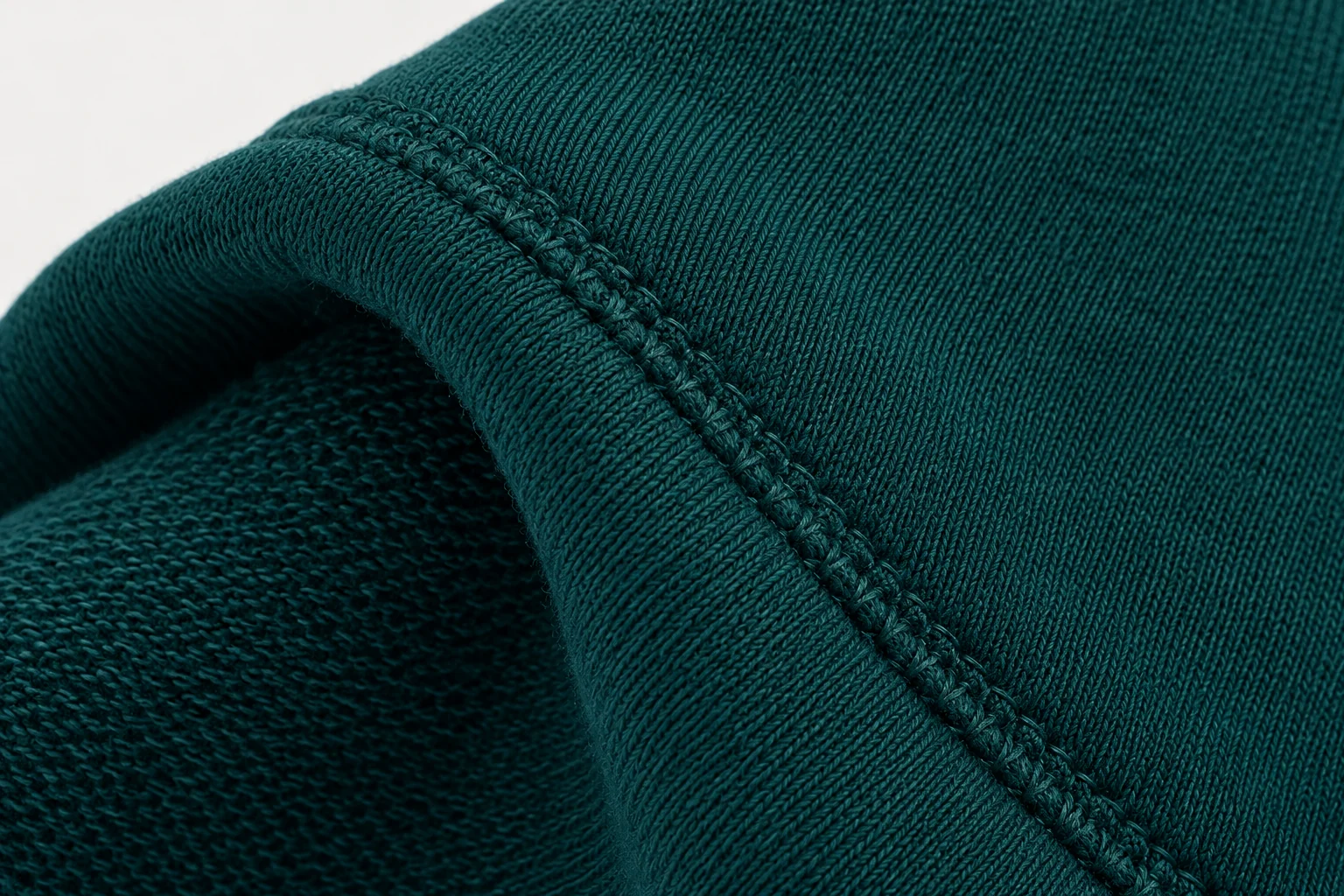
Ask the quality specialist to define the relevant procedure and repeat the chosen empty and intended-use conditions afterwards. Retain pre- and post-trial body and pocket measurements with comparable views of neckline, shoulders and hem. CottonWorks describes dimensional stability as relevant to fit and appearance; that general concern does not identify the cause of this dress's changed line. Send the actual supply and finish references with any material-evidence request. Ask the pattern or sewing team to identify a proposed construction correction separately, keeping an unverified cause labelled as a question rather than a finding.
CottonWorks: Quality Testing — dimensional stability — General relevance of dimensional stability to fit and appearance. Does not identify the cause of changed dress hang or establish accepted pocket loads, limits or laboratory methods; those require the actual technical programme.
Request a costed correction that changes the relevant condition
If a pocket attachment or body-panel revision is proposed, identify the affected pieces, support and operations and ask the maker what material and work the next trial requires. A shoulder or lower-edge change may need different follow-up observations from a relocated pocket. Keep that targeted sample cost separate from any subsequent bulk-pattern or component-cost change, and ask the cutter to recalculate only where panel geometry or layout actually changed. The response should explain what the buyer pays to resolve the observed condition instead of adding an undefined heavier-dress allowance to the fabric offer.
Hand over a condition-bound sweatshirt-dress instruction
The final decision should name the offered material, full pattern and length, shoulder and neckline assembly, lower edge, pocket construction and actual conditions accepted before and after the agreed trial. Attach the relevant views and unresolved questions to the confirmed commercial scope. If a later material weight, pocket or hem component changes, identify which condition must be reviewed again. This gives the garment maker a specific accepted hanging and use proposition while keeping untested pocket strength, pilling resistance, warmth, coverage and permanent dimensional stability outside what the buyer has actually approved.
Technical background and scope
This is a structured editorial draft. Garment-specific development advice is paired with existing catalogue records; compatibility must be established by sampling. AL KUMAŞ supplies fabric. Cutting, sewing and finished-garment production are separate unless explicitly agreed.