





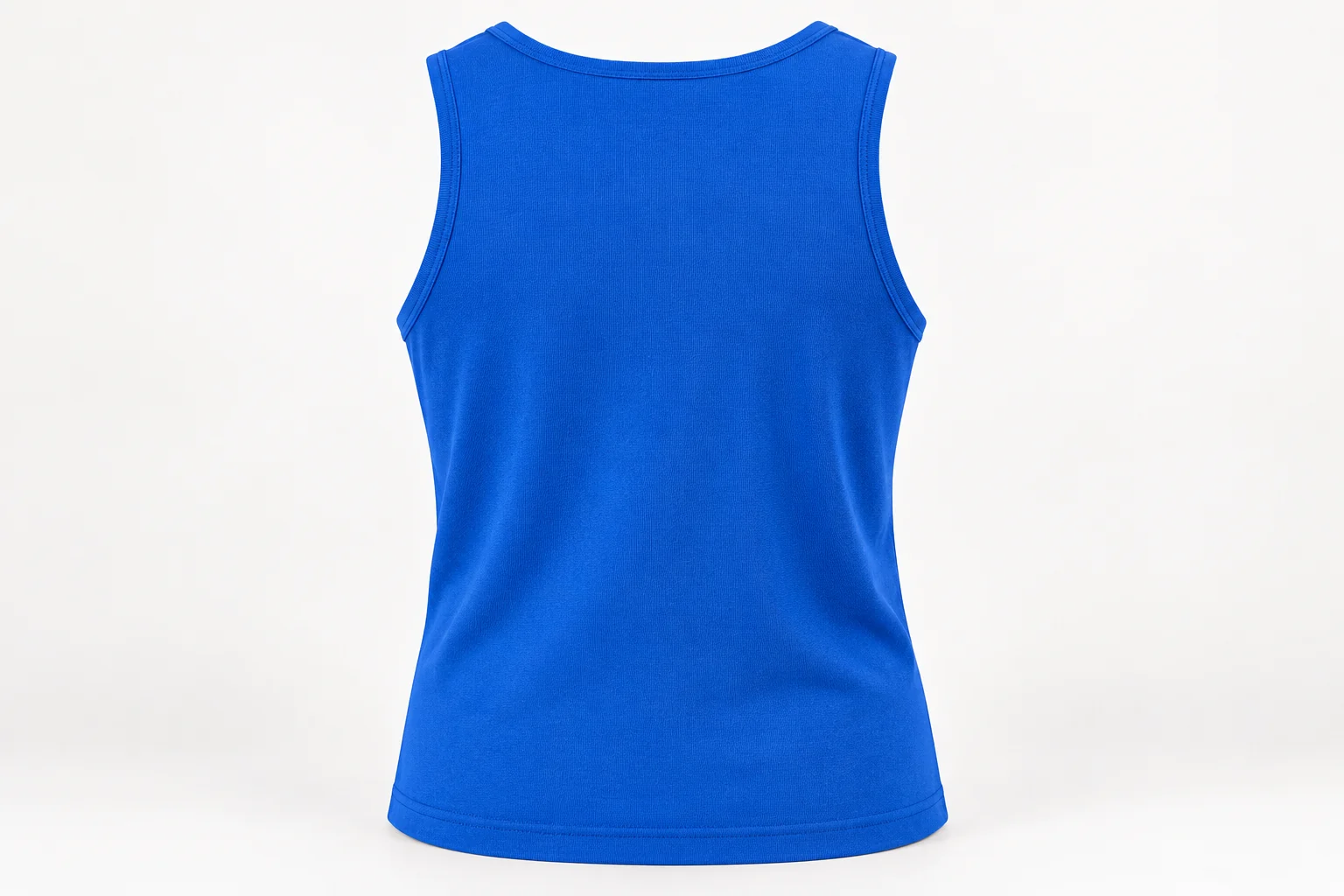

Treat the armhole as the central design decision
A tank top exposes more of its edge construction than a sleeved basic. The body material, strap shape and armhole finishing are visible at once, so selecting a pleasing swatch is only the beginning. Decide whether the design is a loose summer layer, a close everyday tank or a piece intended to sit underneath another garment. Sketch the front and back openings and show the desired underarm coverage. Those drawings make it possible to discuss why a material candidate should be sampled instead of assuming that all sleeveless jersey shapes need the same stretch or weight.
Compare fit routes without letting fibre names decide
The listed candidates change composition and weight together. SJ-102 contains elastane and begins at a heavier catalogue weight than SJ-101, which is recorded as cotton without stated elastane. Make the first comparison around an intended fit, not a promise that one route is automatically closer fitting or more secure. Ask the pattern team whether both cuttings can be meaningfully assessed in one trial pattern or need separately documented patterns. CottonWorks places garment fitting alongside fabric development; that is particularly useful where an unsupported opening can reveal a mismatch between material and pattern.
CottonWorks: Designing Knit Textiles — The fabric must be evaluated in the final garment fitting; pattern and fabric development interact. The tank-specific armhole and binding trials are original editorial development proposals, not sourced mill performance results.
Develop binding and strap width together
The visible strap consists of the body area between neckline and armhole plus the chosen edge finishes. A broad-looking flat pattern can become visually narrower once both bindings are sewn. Put the intended finished strap width on the drawing and sample the actual binding construction. Compare a bound edge with another proposed finish only when the sewing room records what changed. Neither SJ-102 nor SJ-101 specifies a binding attachment ratio. Let the maker trial the actual strip material, seam and tension rather than importing a fixed percentage from an unrelated garment.
Use a coverage problem to guide the next sample
Imagine an editorial development example in which the armhole looks neat on a hanger but stands away when the wearer reaches forward. A tighter binding is one possible trial, not an automatic cure. Ask whether the armhole shape, side-seam position, strap balance or edge construction is causing the effect. Keep the body and neckline unchanged while testing the selected correction so the result can be interpreted. Review the back opening as well as the front; increasing front coverage alone may shift the appearance without resolving the intended movement requirement.
Check the complete edge before choosing the fabric
Use the proposed body, binding, stitching and label arrangement in a sewn trial. Inspect the two shoulder joins and the underarm junction, where finishing operations meet. Ask the wearer whether the finished edges feel acceptable in the intended use rather than treating a soft body cutting as proof of whole-garment comfort. Review the sample after its agreed care procedure too. The aim is a tank whose opening geometry and edge construction work together; there is no article-specific recovery or comfort result in the present catalogue that can replace that assessment.
Catalogue starting points
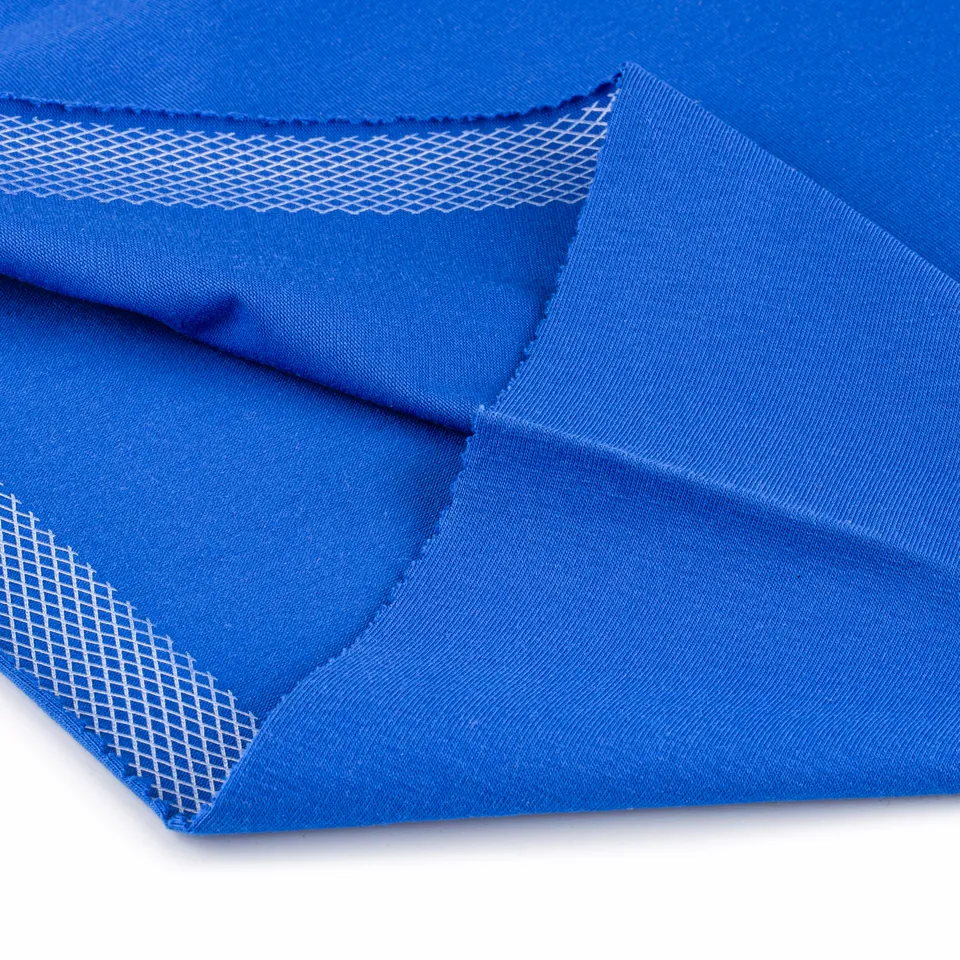
SJ-102 is listed as 95% cotton 5% elastane, with options of 170, 180, 190, 200, 210 g/m². SJ-101 is listed as 100% compact combed cotton, with 130, 140, 150, 160, 170 g/m² options. Confirm the offered finish, usable width and exact sample identity for each route. The catalogue numbers do not establish how an armhole will lie, whether a binding will recover or which coverage a particular tank pattern will provide. They help identify the materials being compared, while the garment trial supplies the missing design evidence. The finish fields record Enzyme + compacted for SJ-102 and Enzyme + silicone for SJ-101; these labels are not measured evidence of edge performance.
Approve the opening combination, not just the body swatch
Record the accepted neckline depth, armhole shape, finished strap width and binding details beside the selected body article. If one feature is unresolved, make the next sample answer that issue explicitly instead of requesting an undefined improvement in fit. Retain the earlier trial for a side-by-side comparison. A buyer can then explain which coverage and edge decisions justify the material choice. This is a stronger basis for a repeatable tank-top programme than approving a composition label and expecting the garment maker to infer the finished appearance.
Technical background and scope
This is a structured editorial draft. Garment-specific development advice is paired with existing catalogue records; compatibility must be established by sampling. AL KUMAŞ supplies fabric. Cutting, sewing and finished-garment production are separate unless explicitly agreed.