





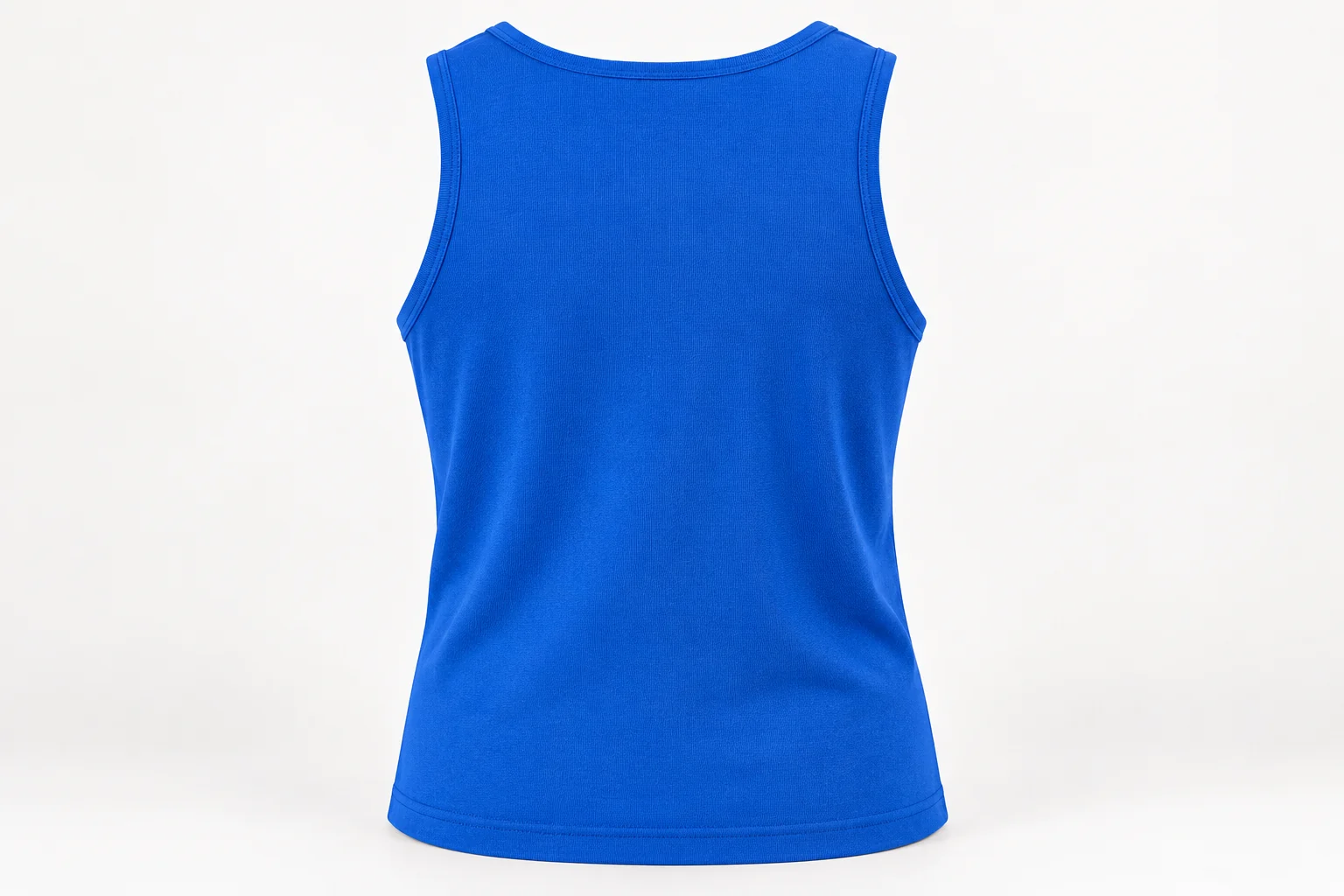

Judge the openings in use, not only on the hanger
The main sample question for a tank top is how the exposed edges behave around a moving body. A hanger can show symmetry but cannot reveal whether an armhole stands away during reaching, whether a strap moves or whether the intended underarm coverage remains. Prepare a sample sheet that separates body fit, opening geometry and edge construction. Label the tested body material and finish, the pattern revision and the binding details. That record lets a technical team distinguish a material problem from a pattern or sewing decision when the review produces conflicting observations.
Define a short, repeatable movement sequence
Choose actions that match the planned use, such as reaching forward, raising the arms and sitting. Have the wearer return to a neutral position between observations so reviewers can compare the edge before and after movement. Record front, side and back views with the same landmarks visible. These are development observations devised for the product, not a named test method or proof of sports performance. If the tank is intended for a demanding end use, agree which additional assessment and evidence are required instead of treating a few comfortable movements as complete qualification.
Trace the strap and underarm junction
Measure the finished strap width where the drawing specifies it and inspect how the two bound edges meet at the shoulder. At the underarm, look at seam bulk, binding alignment and the side-seam position. Ask the wearer about pressure or rubbing without diagnosing comfort from fabric softness alone. If an edge rolls or pulls, photograph the exact location and record the construction used. Try a controlled correction to the problem area rather than simultaneously changing the binding material, body article and armhole depth, which would make the next result difficult to interpret.
Treat size grading as a separate coverage review
Check more than the convenient development size. The distance between neckline and armhole, and the depth of the opening beside the body, may need different grading decisions from overall chest width. Compare representative sizes chosen by the technical team and document what coverage is intended in each. If the smallest size exposes a graphic or seam differently, review the pattern and decoration together. Do not describe a tank as universally secure or supportive because one person liked one sample; the assessment applies to the tested construction, size and stated use.
Review after-care dimensions with appropriate expertise
Include opening depth, body length and strap-related measurements in the proposed care review. AATCC TM150's public scope concerns garment dimensional changes after home laundering and notes that some stretch fabrics may fall outside its applicability. Ask the laboratory which current method suits the offered tank material and intended evaluation. A wash undertaken by the sample room can provide useful development observations when its procedure is documented, but should not be labelled a compliant laboratory result automatically. Agree the acceptance criteria for this product instead of borrowing an unexplained percentage from another style.
AATCC: TM150 Test Method for Dimensional Changes of Garments after Home Laundering — The public 2025 purpose/scope addresses garment dimensional change after laundering and warns of limited applicability to certain stretch fabrics. Only that public scope was read; no paid procedure or universal pass limit is reproduced.
Catalogue starting points
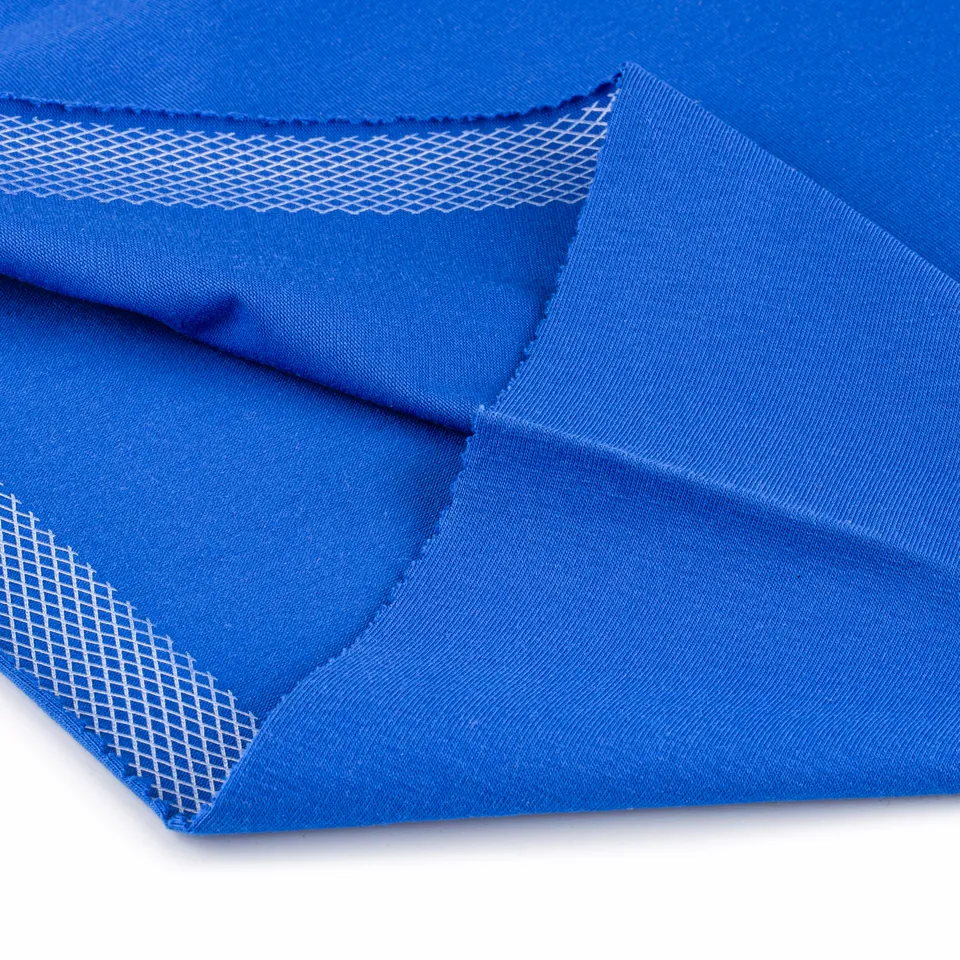
SJ-102 has the local specification 95% cotton 5% elastane and 170, 180, 190, 200, 210 g/m² options. The comparison, SJ-101, is 100% compact combed cotton with 130, 140, 150, 160, 170 g/m² options. The catalogue has no tank-top opening, recovery, coverage or comfort report for either record. Identify the exact offered cutting and assess it with the approved binding. If the trial material differs from the intended production offer, keep that limitation beside the sample result rather than describing the style as fully approved. Catalogue finish labels are Enzyme + compacted for SJ-102 and Enzyme + silicone for SJ-101; neither label substitutes for the documented garment-care assessment.
Close the review with an edge-by-edge decision
State whether neckline, right and left armholes, shoulder joins and hem are accepted, require another trial or remain provisional. Attach the movement views and measurement sheet to the same sample identifier. An accepted body fit should not hide an unresolved underarm finish. When a later change affects opening shape or binding construction, name the observations that must be repeated. This creates a practical release record for a seemingly simple garment whose quality is concentrated in a small number of highly visible edges, while preserving the distinction between an internal fit review and independently tested performance.
Technical background and scope
This is a structured editorial draft. Garment-specific development advice is paired with existing catalogue records; compatibility must be established by sampling. AL KUMAŞ supplies fabric. Cutting, sewing and finished-garment production are separate unless explicitly agreed.