






Explain the finished openings before asking for a body offer
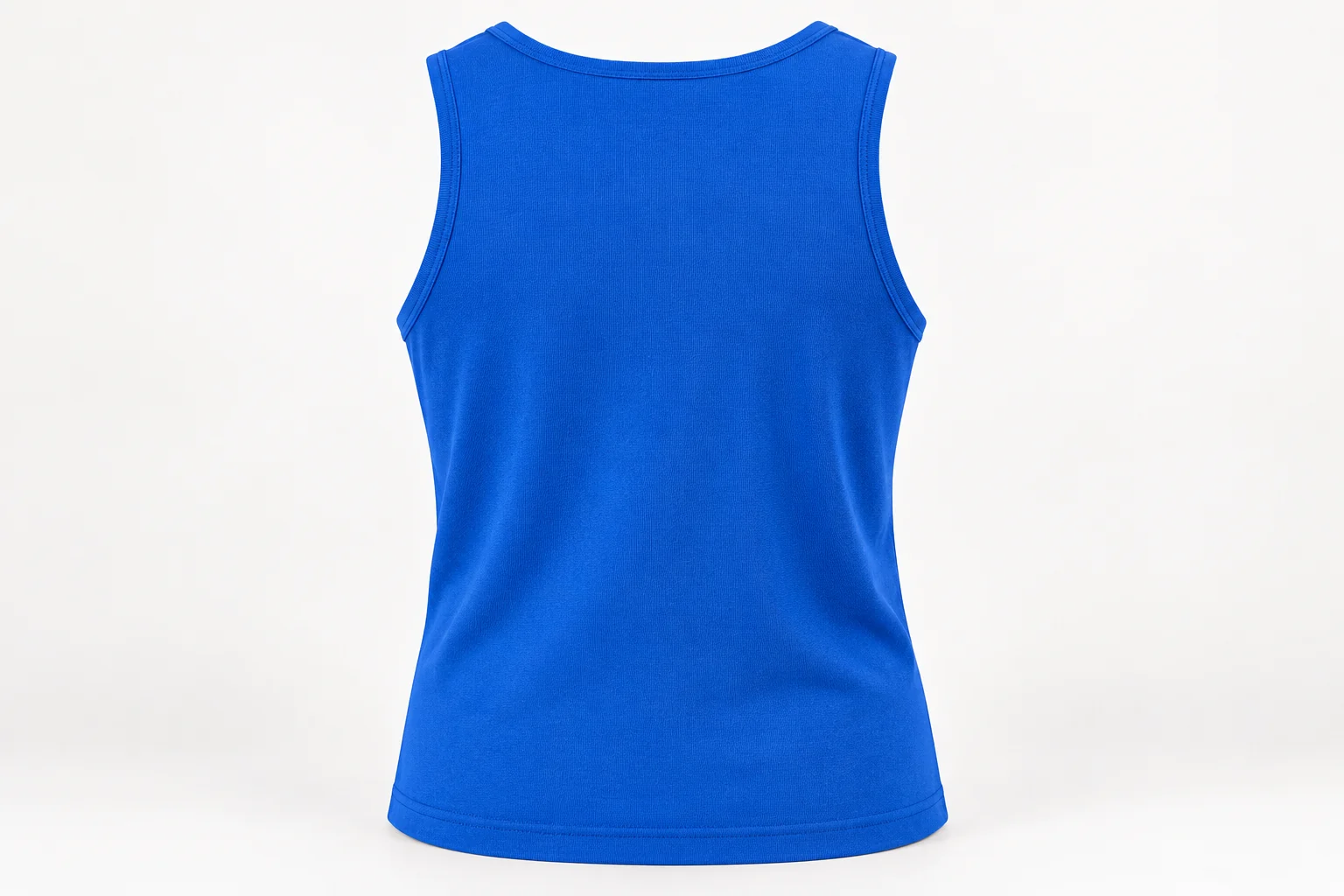
A tank-top enquiry should describe more than a sleeveless silhouette. Send front and back drawings showing neckline depth, armhole shape and intended strap width, together with the proposed fit and end use. Identify whether the buyer wants a loose outer layer, a closer everyday piece or a garment for layering. The supplier can then discuss the body material against a specific design instead of guessing what the word tank means. Include a clear note about which dimensions are still under development so an early drawing is not mistaken for a frozen production pattern.
Name the responsibility for binding development
Ask the garment maker which material and construction are proposed for neckline and armhole finishing. Tell the fabric supplier whether those strips are expected from the body article or sourced separately. If a separate binding is planned, identify who will obtain it, compare the colour and organise the sewn trial. A fabric enquiry alone does not appoint a cutting or sewing service. Keep the interfaces explicit: the mill supplies the offered material information, while the appointed garment team develops the pattern and edge combination unless another scope is actually agreed.
Make the colour and size forecast usable
Break the forecast into colours and the garment size ratio, then distinguish garment units from fabric kilograms or metres. The cutting team must translate the forecast into material requirements using the actual pattern, width and binding arrangement. A small contrast-binding quantity may create a separate purchasing question from the main body colour. Ask how the supplier proposes to handle that request rather than assuming body and binding have identical commercial minimums. If the figures are exploratory, mark them as estimates and identify the decision needed before committing to an order quantity.
Request samples that answer the edge questions
Rather than asking vaguely for samples, explain what the sewing room must make: front and back panels, complete bindings and any relevant decorated area. Ask the supplier which sample quantity and offered finish can support that trial, and request confirmation of charges and timing. An editorial example could compare two body routes while keeping one documented armhole pattern; if the maker instead adapts the pattern for each route, record that difference. CottonWorks emphasises assessing fabric at the garment fitting stage, which supports using sufficient material for an actual tank rather than relying only on handle swatches.
CottonWorks: Designing Knit Textiles — The source distinguishes fabric development from assessment in the sewn garment and final fitting. Sampling quantities, binding responsibilities and commercial questions are original buyer guidance, not statements of supplier terms.
Keep the commercial reply separate from design acceptance
Request the offered finished weight, usable width, supply format and finish with the price basis, relevant minimums, delivery terms and validity of the quotation. Provide the destination and desired schedule so the supplier can respond to the real programme. A sample being available does not establish that bulk supply can meet the same timing. Likewise, a good quotation does not approve armhole coverage or binding behaviour. Keep those open design decisions listed beside the commercial questions, making it clear which party needs to provide the next response.
Catalogue starting points
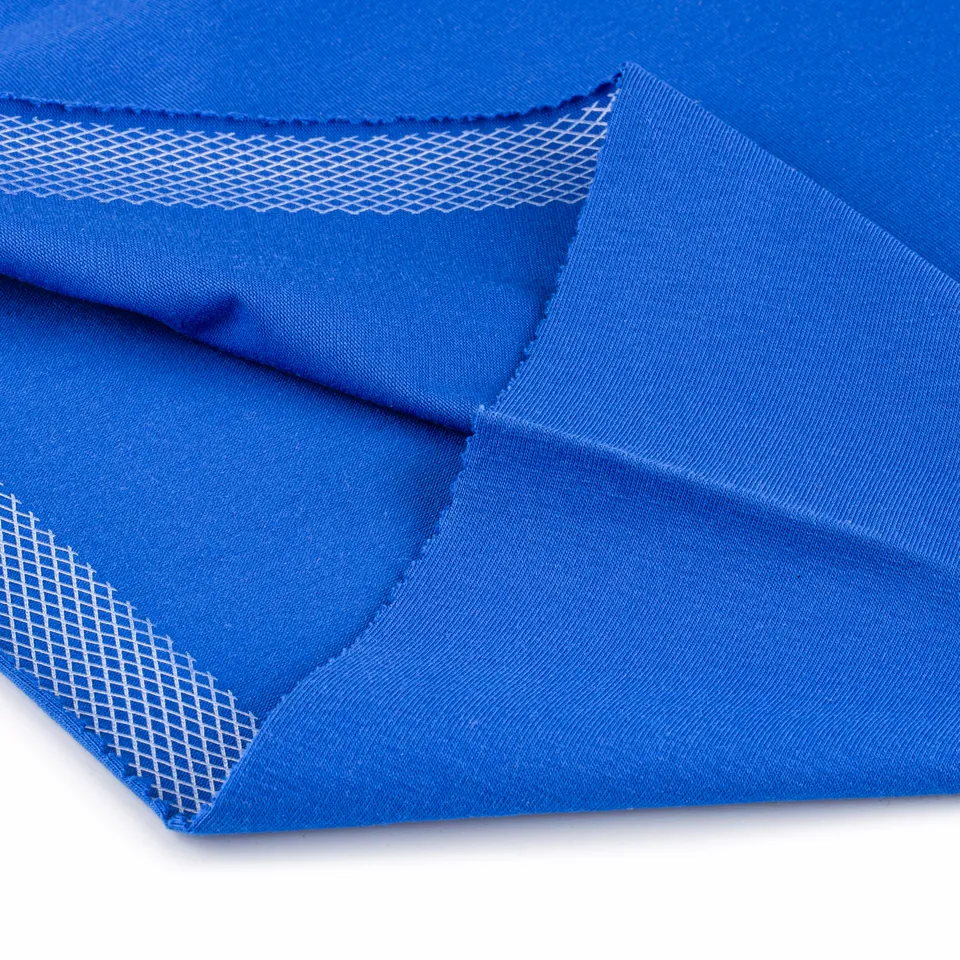
Identify SJ-102 as the recorded 95% cotton 5% elastane route, with 170, 180, 190, 200, 210 g/m² options. Identify SJ-101 as the 100% compact combed cotton alternative, offered in the local record at 130, 140, 150, 160, 170 g/m². Ask which exact version is proposed for this enquiry, since the list does not confirm current availability or finished width. Do not attach unsupported support, opacity, recovery or certification claims to either code; a tank-specific requirement needs appropriate evidence for the actual supply. Also put the recorded Enzyme + compacted finish for SJ-102 and Enzyme + silicone finish for SJ-101 on the enquiry, and ask the supplier to identify any change.
Send a concise first request with a defined next step
A practical closing instruction is to request labelled cuttings and the missing finished-width information, then identify who will choose the material for the bound-edge trial. Attach the opening drawings, quantity assumptions and any colour references with consistent revision labels. Ask the supplier to list substitutions rather than silently treating another weight or finish as equivalent. After the response, reconcile the selected material and sample plan before issuing a bulk brief. This keeps the enquiry focused on the tank's defining construction decisions while giving the commercial team enough information to prepare a meaningful offer.
Technical background and scope
This is a structured editorial draft. Garment-specific development advice is paired with existing catalogue records; compatibility must be established by sampling. AL KUMAŞ supplies fabric. Cutting, sewing and finished-garment production are separate unless explicitly agreed.