





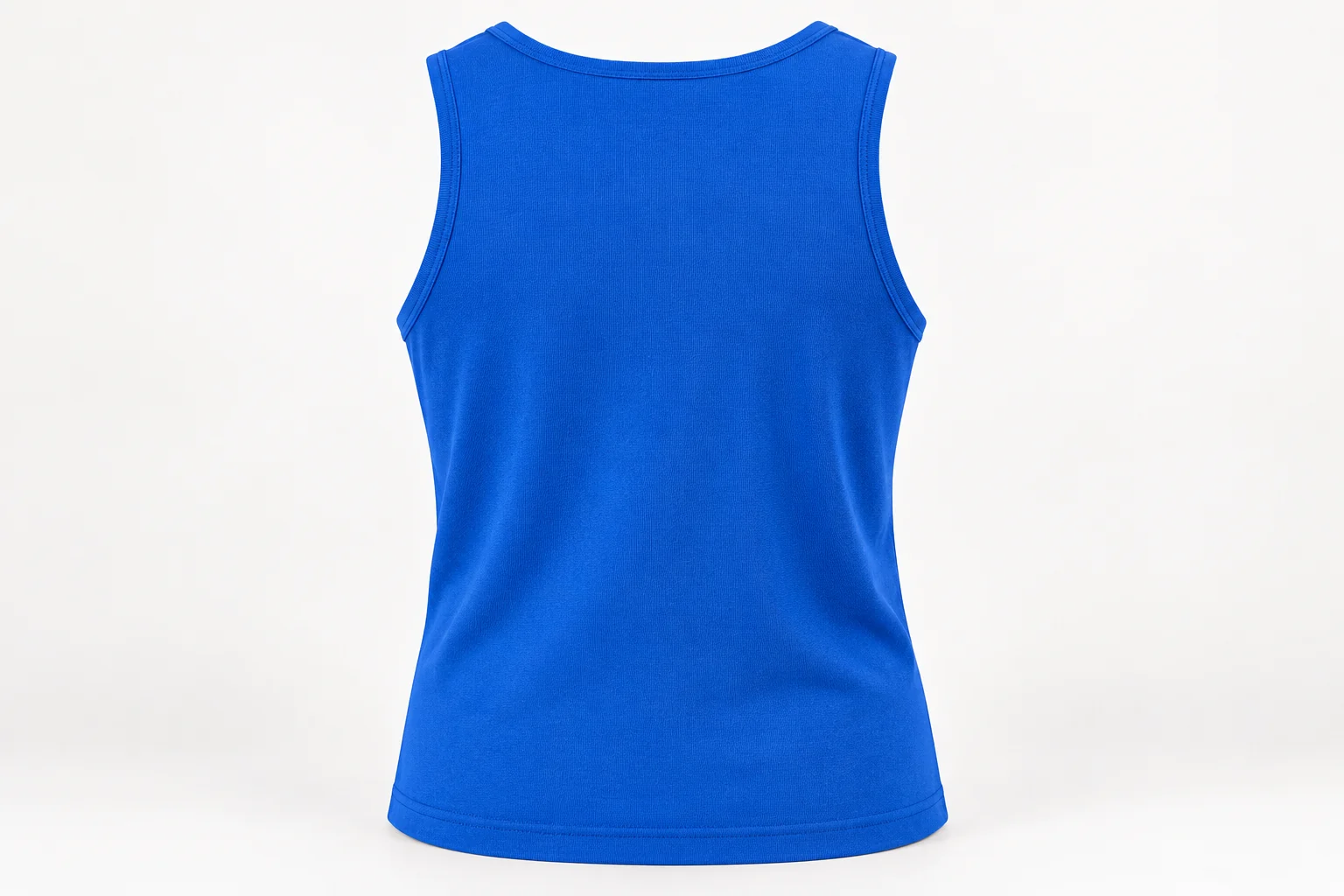

Give the tank's narrow upper body its own artwork plan
A tank leaves less uninterrupted fabric near the shoulders than many sleeved tops. A graphic that appears comfortably placed on a flat drawing may approach an armhole binding once the sample is worn. Start the colour and artwork brief with the approved front and back outlines, not a generic rectangular print area. Identify whether the design uses a small emblem, broad chest graphic, contrast edging or an all-over pattern. Each choice creates a different relationship with the openings, and the approval process should make that relationship visible.
Keep artwork clear of the actual finishing construction
Ask the garment maker and decorator to agree a printable region with the proposed binding and seams shown. The clear region is a project decision, not a universal margin supplied by this guide. Include artwork dimensions and the landmarks from which placement is measured. For a graphic intended to sit between the upper armholes, show how the design looks on the smallest and largest patterns. Decide whether artwork changes size, moves or remains fixed across the range. A single centre-front mark cannot answer every grading question.
Resolve contrast binding on the real body fabric
For a contrast-edge tank, identify the governing body colour and edge colour separately. A digital sketch can explain the intention but cannot settle the physical appearance of two different materials. Request a component comparison on the offered body article and actual binding material, then view the sewn junction at the shoulder and underarm. If a near-match rather than deliberate contrast is wanted, say so explicitly. Keep those colour decisions attached to the selected construction so the purchasing team does not replace a visually important edge material without reopening the approval.
Separate print chemistry from the design approval
CottonWorks' printing guidance distinguishes fibre-dependent dye choices from textile pigments that attach with a binder. That distinction is a reason to ask the decorator about the proposed substrate and process, not evidence that any particular process is available from AL KUMAŞ. Approve a printed sample on the offered article and finish. For a stretch-containing body, ask how the decorated region will be evaluated in the intended fit. A clean print seen unstretched does not establish its appearance when the tank is pulled over the body or worn in movement.
CottonWorks: Cotton Textile Printing Basics — Dye choice is related to fibre composition, while pigments use a binder. This supports asking about the proposed process and substrate; it does not confirm mill printing capability or printed stretch performance.
Use a boundary problem as a sample decision
Consider an illustrative tank with a large motif placed close to one armhole. In the first sewn sample, part of the motif disappears into the binding and the result looks uneven. Before changing the fabric, compare the artwork position with the pattern, cut placement and finishing allowance. The correction might be a smaller motif, a moved placement or a revised panel, depending on the design intent. Ask for one revised sewn view with the selected change. Do not approve only a corrected artwork file when the failure occurred in the assembled garment.
Catalogue starting points
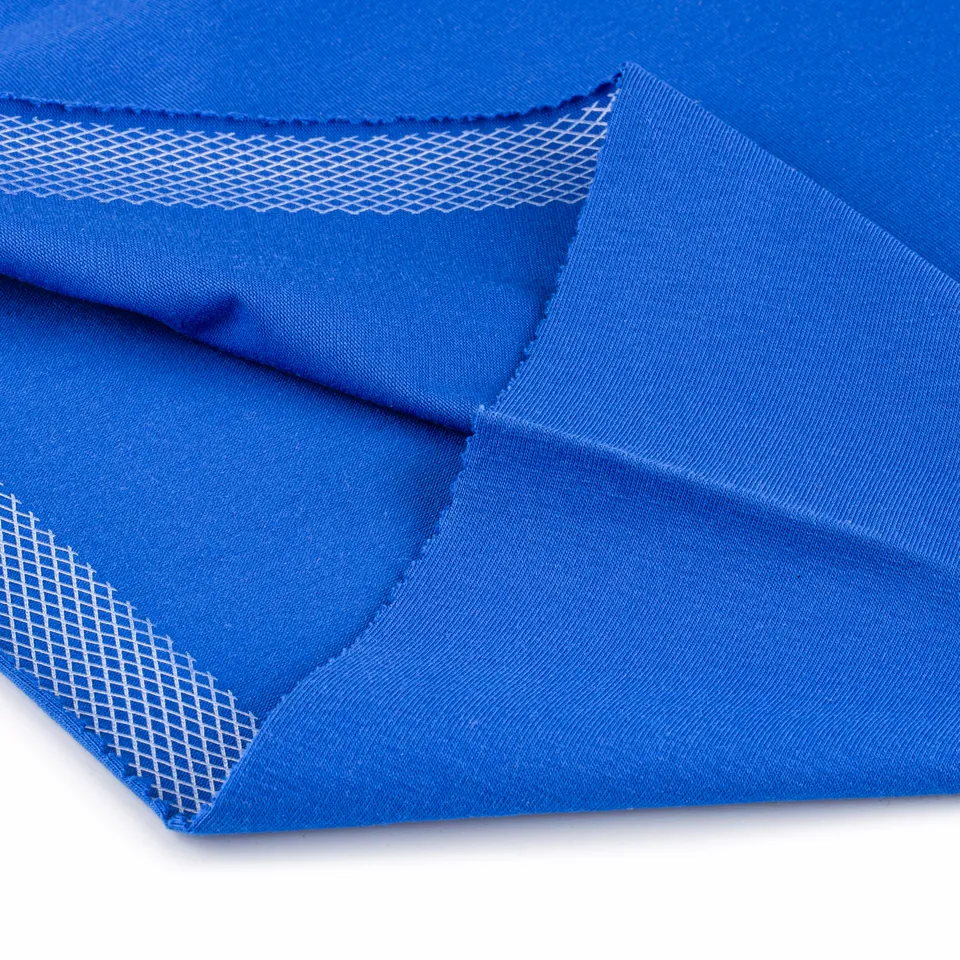
For this tank comparison, SJ-102 records 95% cotton 5% elastane with 170, 180, 190, 200, 210 g/m² choices; SJ-101 records 100% compact combed cotton with 130, 140, 150, 160, 170 g/m² choices. These compositions and weights identify potential body substrates, not approved decorated products. Neither record specifies a print-service offer, binding match or care-performance result. If the buyer moves from one route to the other after the first strike-off, ask the decorator which sample stages need repeating before carrying the graphic approval forward. The recorded finishes differ: Enzyme + compacted on SJ-102 and Enzyme + silicone on SJ-101. Include the offered finish when requesting the decoration trial.
Record colour, placement and care outcomes independently
Keep three decisions visible: the colour reference accepted, the placement accepted in the sewn tank, and the result of the agreed care or movement assessment. One may be accepted while another remains open. Retain the approved front and back drawings, artwork revision, component samples and labelled garment so future comments can be traced. For a repeat order, compare the new material proposal against these records rather than a retail photograph. The result is a decoration brief that addresses the tank's actual openings without inventing process capabilities or promising an untested printed finish.
Technical background and scope
This is a structured editorial draft. Garment-specific development advice is paired with existing catalogue records; compatibility must be established by sampling. AL KUMAŞ supplies fabric. Cutting, sewing and finished-garment production are separate unless explicitly agreed.