




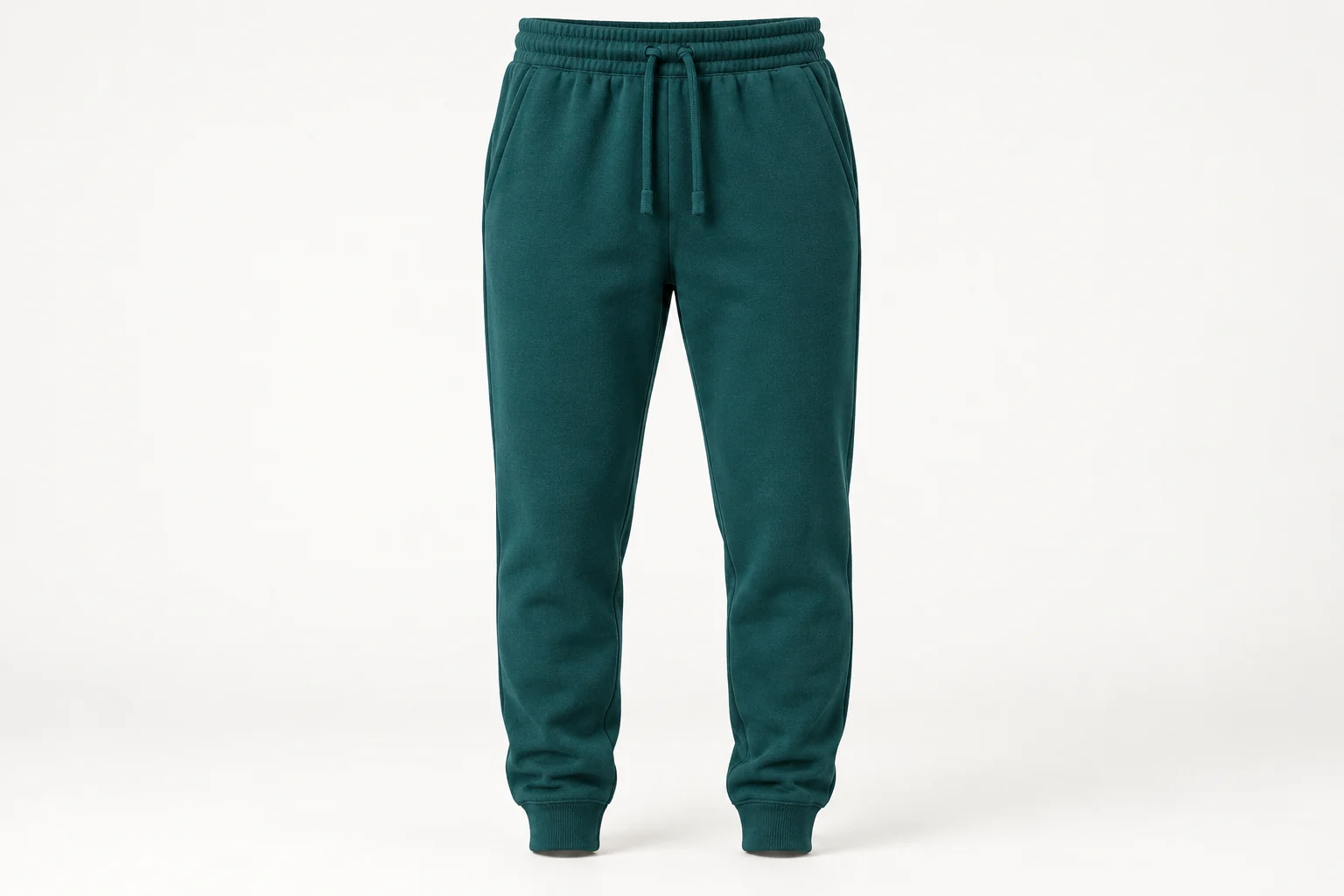
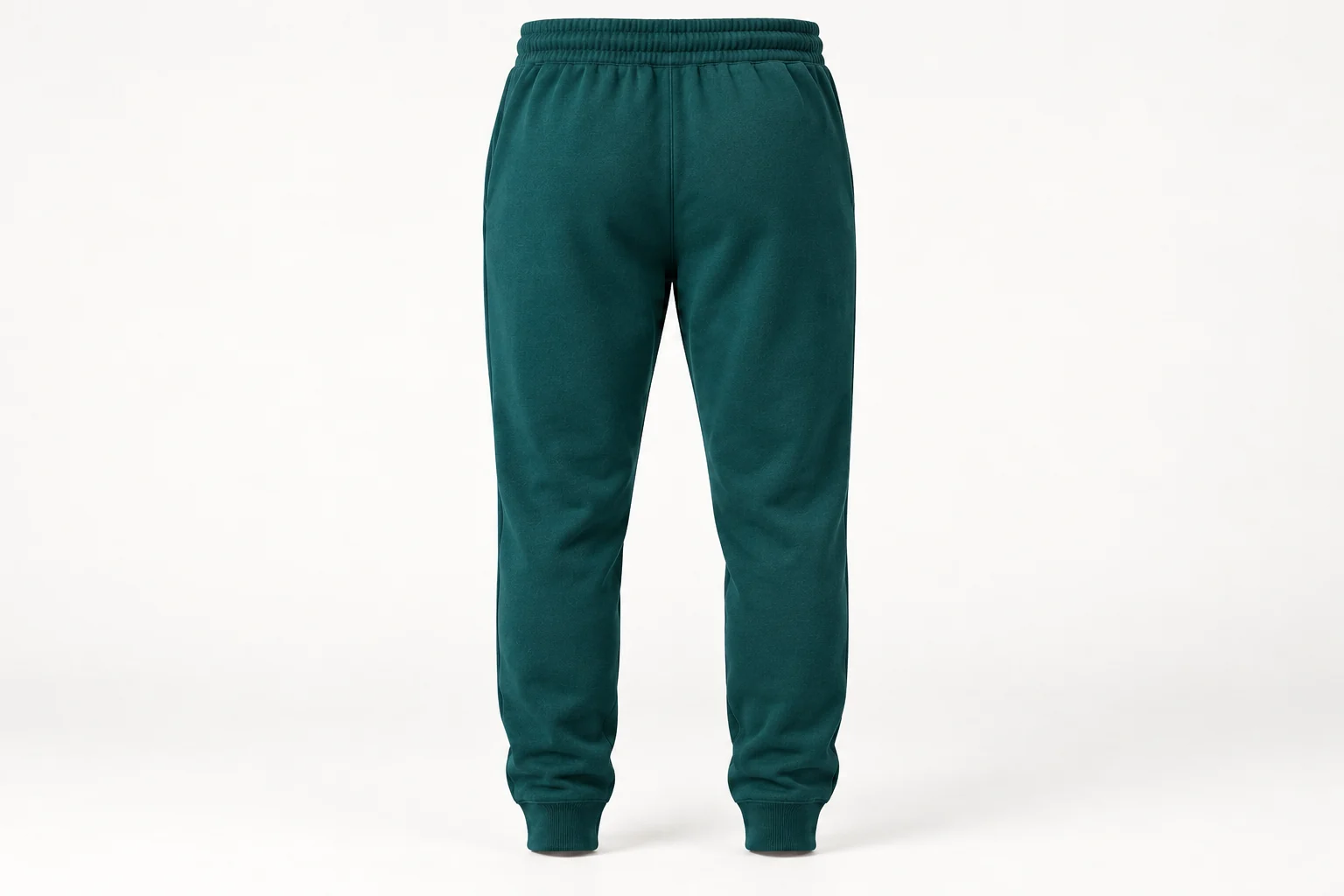

Select a garment for the intended transition into and out of activity
Warm-up joggers may be worn on the way to a session, during a defined preparatory routine or over other kit before removal. State which of those situations belongs to the design instead of inferring a thermal benefit from the name. CottonWorks places end use and required function at the beginning of knit development. For this product, ask what the pockets must carry, how the ankles are used during dressing and whether another layer is worn underneath. Those practical transition decisions should drive the material-and-pattern comparison, not a generic preference for a heavier sports-looking cutting.
CottonWorks: Designing Knit Textiles — Defining the Product — End use and required function belong at the beginning of development. The change-of-kit, pocket and ankle observations are original programme guidance, not measured retention, recovery, thermal or athletic results for FT-601 or FT-602.
Read the two unbrushed candidates accurately
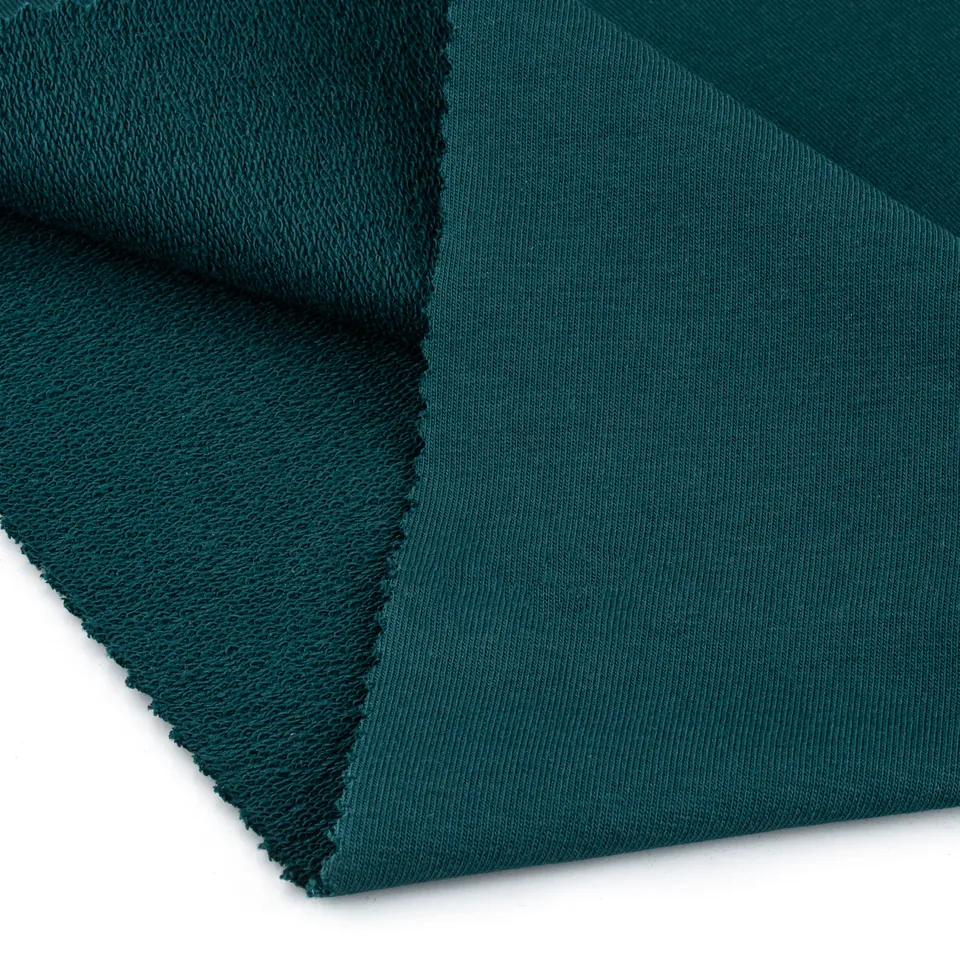
FT-601 is recorded as 70% cotton and 30% polyester two-thread French terry, unbrushed and silicone finished, at 240, 260, 280, 300 and 320 g/m². FT-602 has the same blend in three-thread unbrushed and compacted material at 300, 325, 350, 375 and 400 g/m². Ask for the exact offered sample option. The common recorded 300 g/m² weight can frame a comparison, but construction and finish still differ. Neither description supplies warmth, recovery, athletic or pocket-retention results. The candidates need evaluation in the actual garment rather than approval from the shared cotton-polyester percentage.
Decide whether the jogger must sit over another layer
If the programme includes wearing the jogger over specified shorts or leggings, use that kit during the first fitting and identify its size and construction. Observe seat, knee and ankle room through the intended normal movements. A pattern comfortable as a single layer may present a different question over another garment. Do not enlarge every dimension without identifying where the interference occurs. If the jogger is intended to be worn alone, retain that scope rather than adding an unnecessary layering requirement and rejecting useful material routes against a different product brief.
Develop pocket retention as an assembly question
Specify the items the pocket is intended to accommodate using representative objects with recorded dimensions and mass. Ask the maker to compare the actual pocket opening, bag, attachment and any closure included in the drawing. Observe the intended transitions and record displacement or an item leaving the pocket only if it occurs. A substantial body fabric does not establish retention, and a closure name is not proof of a secure result. Ask for defined assessment where the programme requires quantified performance; do not turn an informal sample observation into a guarantee that belongings cannot be lost.
Choose ankle access for the actual dressing sequence
State whether footwear is removed before taking the jogger off. If removal over footwear is an explicit requirement, have the maker propose and evaluate a suitable opening assembly rather than assume a tight cuff can perform it. A zip or another opening is not part of the design until specified. Review the proposed construction at the ankle when worn as well as during the intended change. A generous access route can alter the desired taper, so compare the complete leg line rather than accepting an isolated opening measurement as the finished silhouette.
Observe waist and knee behaviour through the agreed routine
Use the complete pocket and ankle assembly, with the intended representative load and layers where relevant. Record waist movement and the knee's appearance before and after the stated sequence, then inspect it under the agreed resting conditions. These are development observations, not a recovery grade or a physiological warm-up claim. If the pocket load changes the fit, discuss its attachment and waist construction before changing the body material. Ask a specialist for article-specific evidence where measured extension, recovery or surface durability is genuinely required.
Select the route that reproduces the intended change-of-kit behaviour
Retain material, offered GSM, finish, pattern, pocket construction, waist and ankle details with the actual transition observations. State which layers, objects and dressing sequence were reviewed and what remains unresolved after care. Confirm current supply separately from sample acceptance. If a component or body article changes later, identify which original decision it affects rather than inherit approval from the warm-up label. The useful selection describes a reproducible jogger for this routine without promising guaranteed retention, unrestricted sports movement, warming effects or shape return unsupported by evidence.
Technical background and scope
This is a structured editorial draft. Garment-specific development advice is paired with existing catalogue records; compatibility must be established by sampling. AL KUMAŞ supplies fabric. Cutting, sewing and finished-garment production are separate unless explicitly agreed.