





Place identity marks around the real transition components
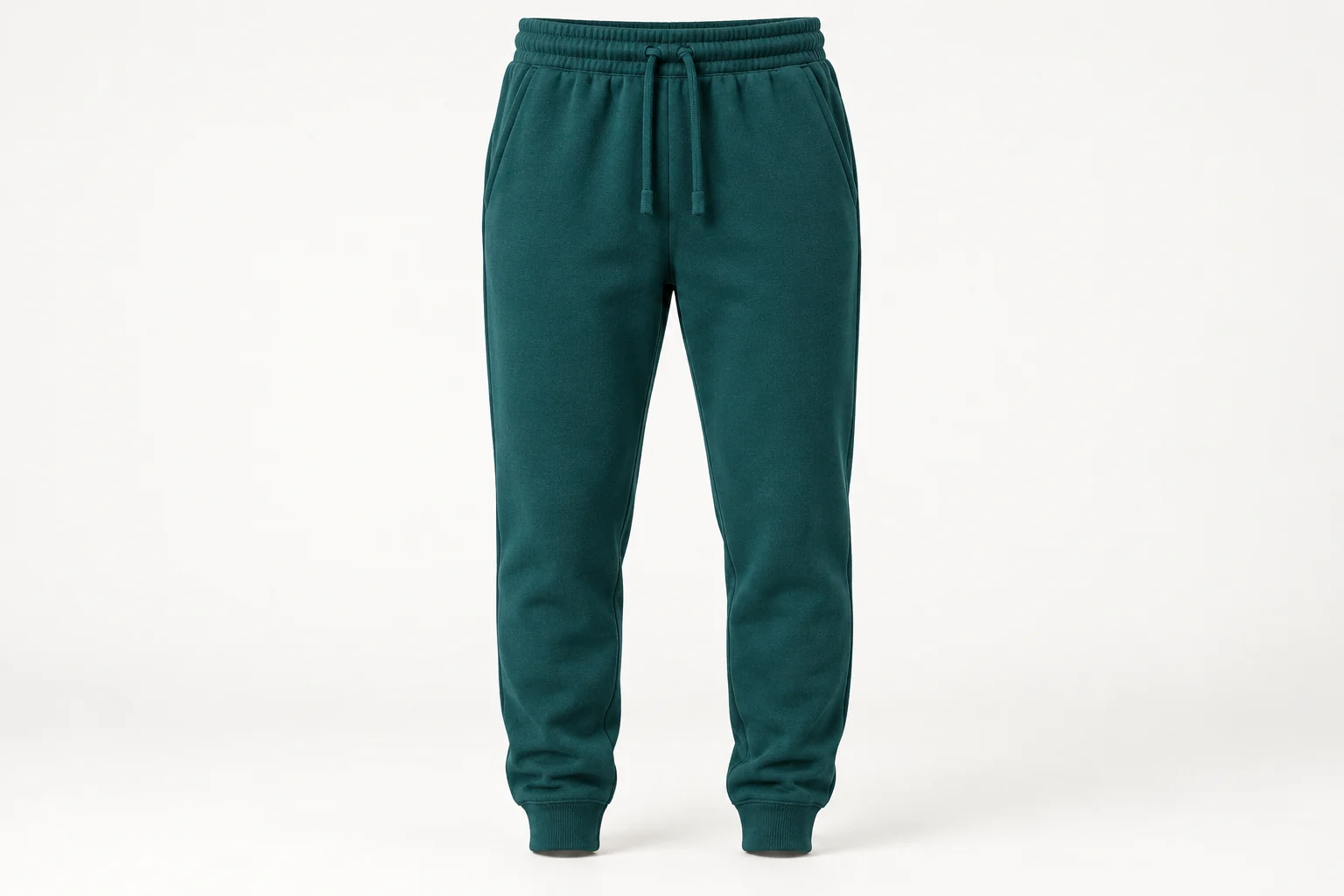
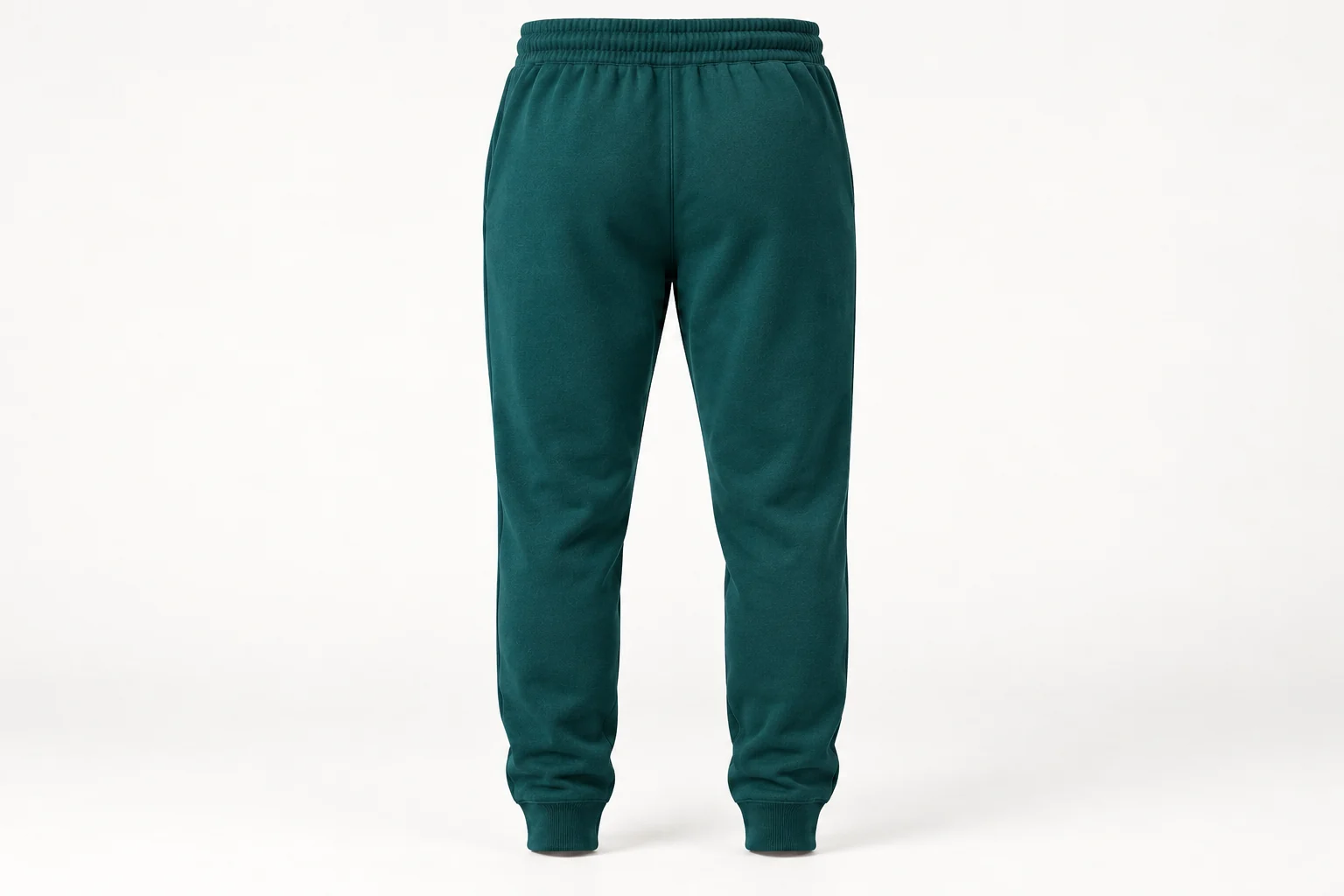
Plan logos and colour blocks on the actual jogger drawing, including pockets, ankle openings and any closures specified for the intended routine. A mark may be visible when standing but covered by a loaded pocket fold or changed by the way the ankle is opened during dressing. Decide which worn view governs the design rather than promise that every temporary fold will preserve the same graphic. The warm-up name should not imply team certification, visibility protection or measured sports performance. Begin with an intentional appearance for the actual garment and its normal use.
Identify the offered unbrushed substrate for each application
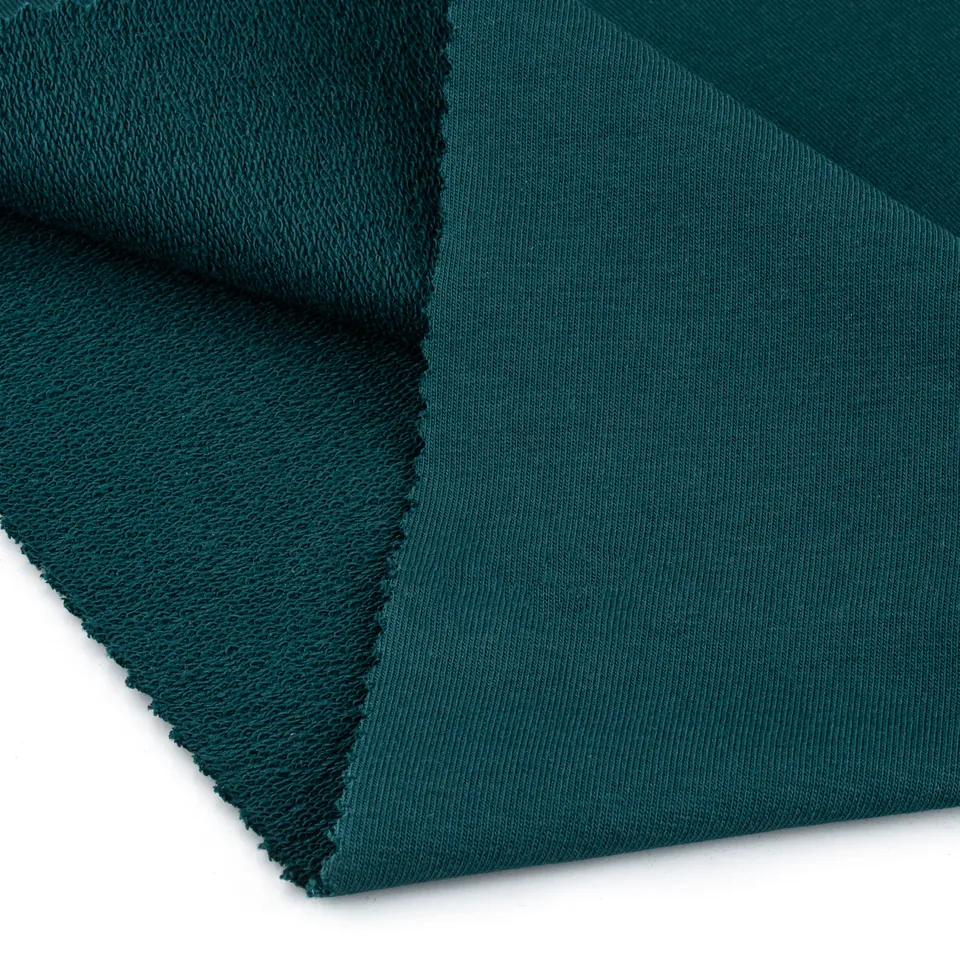
FT-601 is 70% cotton and 30% polyester two-thread French terry, unbrushed and silicone finished, at 240, 260, 280, 300 and 320 g/m². FT-602 is the same blend in three-thread unbrushed and compacted material, at 300, 325, 350, 375 and 400 g/m². Ask the decorator to evaluate the precise offered article and finish. These records do not establish print-process availability, application compatibility or fastness results. A graphic approved on one cotton-polyester route should not automatically release the other, particularly when the pocket or ankle assembly also changes the available design area.
Review the graphic with the pocket in its intended use state
Mark artwork from finished seam and pocket landmarks and review it with the actual representative item or empty-pocket condition the programme specifies. Decide whether gathering or an item outline entering the image is acceptable styling or a reason to change placement. Ask the designer and maker to distinguish that decision from a pocket-retention correction. Moving a logo does not prove that the pocket works, and moving a pocket can alter both the appearance and the cutting instructions. Retain the intended state so later photographs do not quietly approve an easier empty version.
Keep lower-leg artwork clear of the proposed access operation
Where an ankle assembly is designed to open for dressing, mark its actual seam, fold, fastening and reinforcement region on the artwork drawing. Identify whether the design should align when closed or whether another relationship is intended. If the drawing has no opening feature, do not add one to solve an artwork placement problem without approval. A revised taper or cuff depth can move a graphic relative to the ankle, so review the placement across the relevant sizes and lengths rather than carry one sample-size image into every cutting instruction.
Coordinate with kit without importing a matching-set requirement
If the buyer wants the jogger to coordinate with an activity top or another layer, identify the actual reference and whether the relationship is a close match, a tone or a contrast. Compare the body, specified pocket components and ankle materials together under agreed viewing conditions. CottonWorks connects visual design with construction choices; this particular combination still needs a sample decision. Do not treat coordination as permission to substitute whichever unbrushed article shares the colour name, and do not assume a full tracksuit match when the programme only asks for a deliberately contrasting transition layer.
CottonWorks: Designing Knit Textiles — Designing the Fabric — Visual design and construction are connected choices. The kit-coordination and pocket/ankle artwork decisions require programme-specific samples and do not establish matching or decoration capability.
Separate visual acceptance from colour-transfer evidence
Ask for relevant evidence for the actual body, decoration and contrasting components. AATCC's public index distinguishes rubbing, perspiration and laundering colourfastness categories; a qualified provider should choose current applicable procedures and requirements. Those listings supply no result for these garments. Include components that meet the pocket contents or another layer in the appropriate technical discussion. A visually accepted mark is not evidence of durable application or colour transfer resistance, and a sports-looking graphic does not establish a protective or physiological function. Keep the tested identities and report scope clear.
AATCC: Standard Test Methods and Procedures — Colourfastness — Public index distinguishes rubbing/crocking, perspiration and laundering colourfastness categories. Qualified selection of applicable current methods and requirements remains necessary; no result for the proposed assembly is supplied.
Release appearance with the functional construction version
Retain material, offered GSM, finish, colour reference, artwork file, placement and pocket and ankle identities with the accepted worn views. State which item-load, layer and adjustment conditions informed the visual approval. If a functional correction moves a pocket, changes a lower-leg opening or adds a component, revisit the affected artwork before another instruction is issued. The final file should reproduce the intended warm-up-jogger appearance while leaving unresolved process availability, fastness and performance evidence explicit. A polished launch image should not imply those technical questions have already been answered.
Technical background and scope
This is a structured editorial draft. Garment-specific development advice is paired with existing catalogue records; compatibility must be established by sampling. AL KUMAŞ supplies fabric. Cutting, sewing and finished-garment production are separate unless explicitly agreed.