




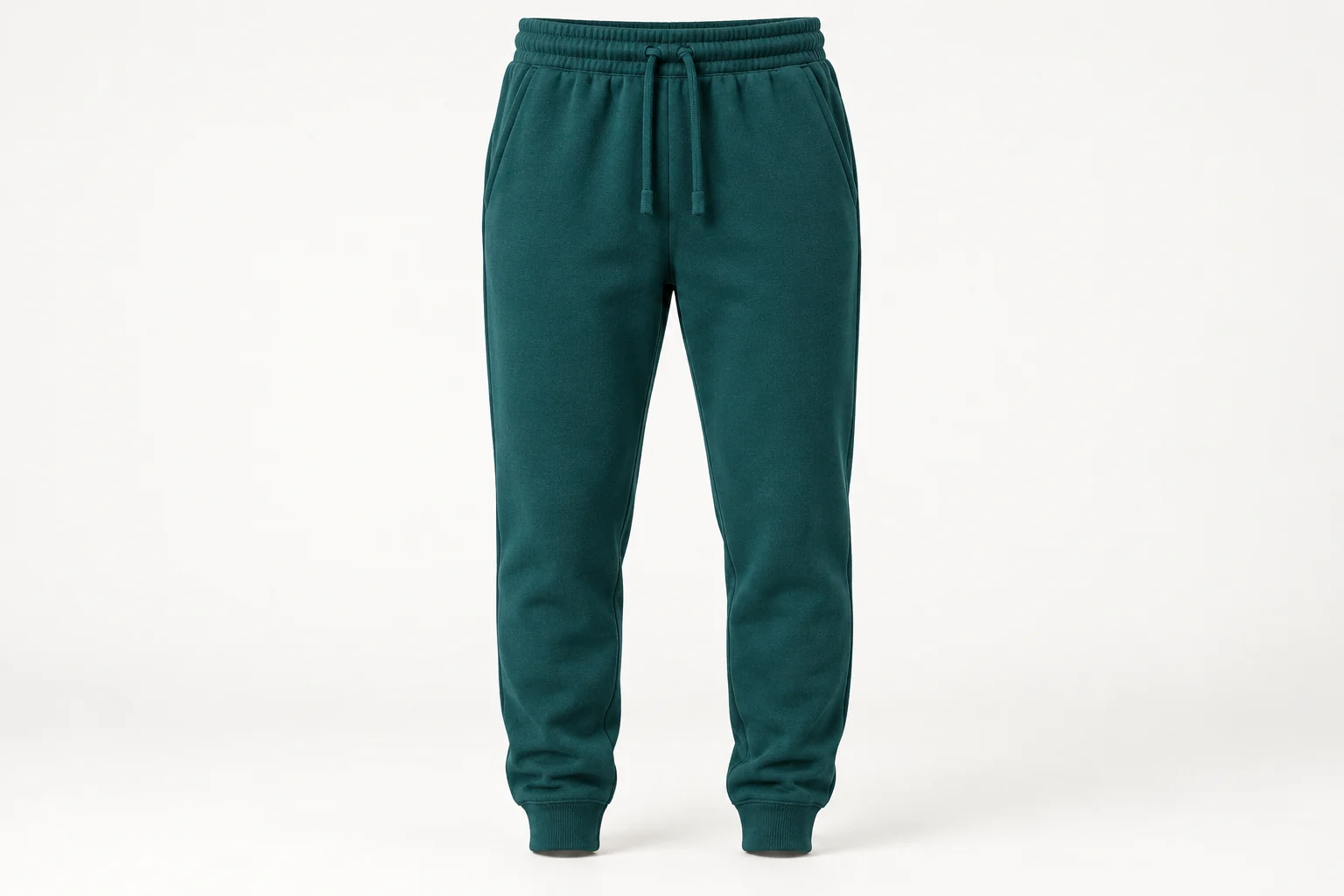
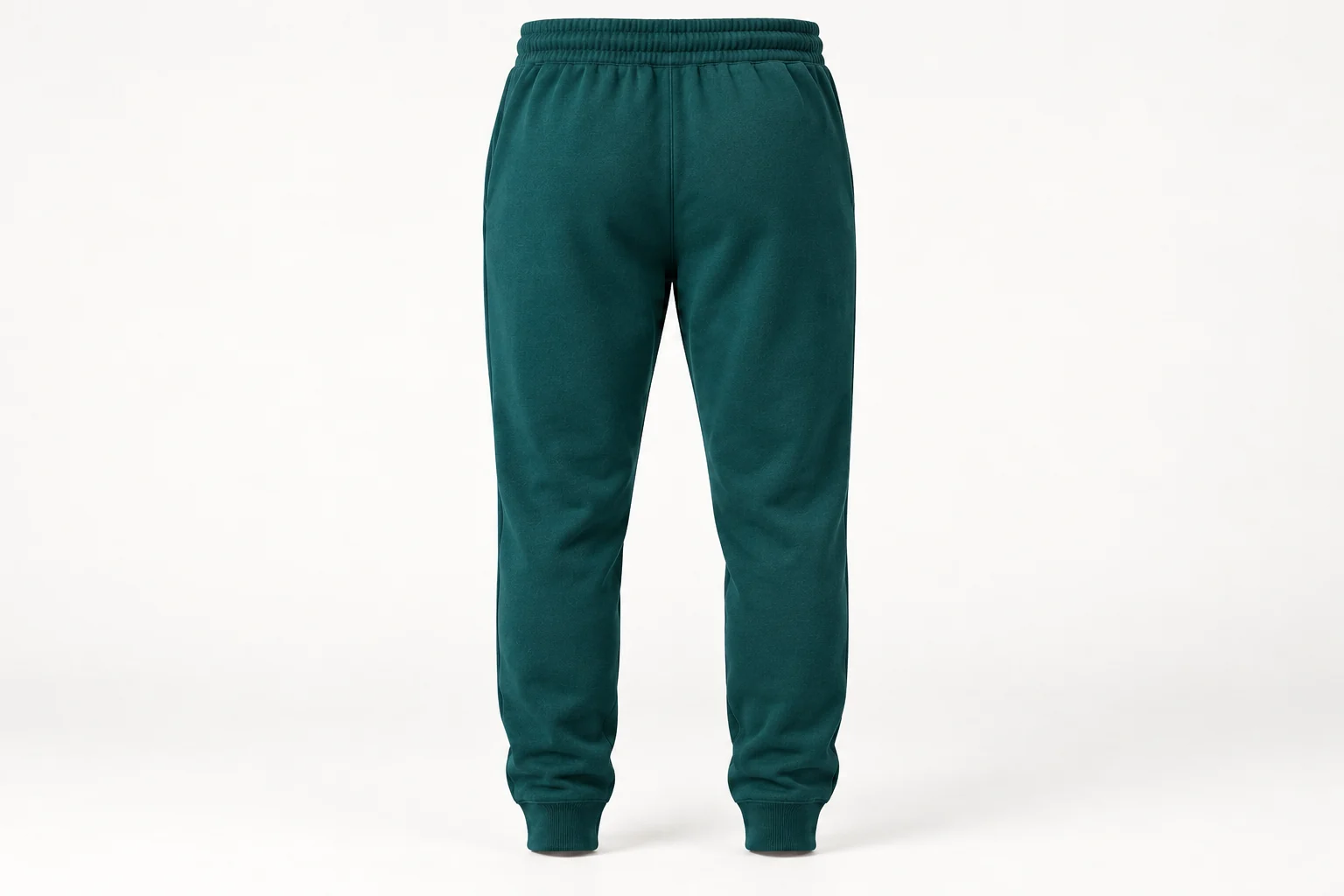

Define the transition sequence as a garment observation plan
State when the warm-up jogger is intended to be worn, what kit lies beneath it if relevant, which items are carried and how dressing or removal is expected to occur. Record a manageable sequence of normal transitions that the revised sample can repeat. This is not a prescribed exercise programme, thermal test or proof of injury prevention. Identify sample size, pattern, waist and ankle construction before review. The purpose is to discover how the complete garment handles its own intended routine, rather than approve a standing fit while the pocket and change-of-kit questions remain unobserved.
Track actual material and component identities
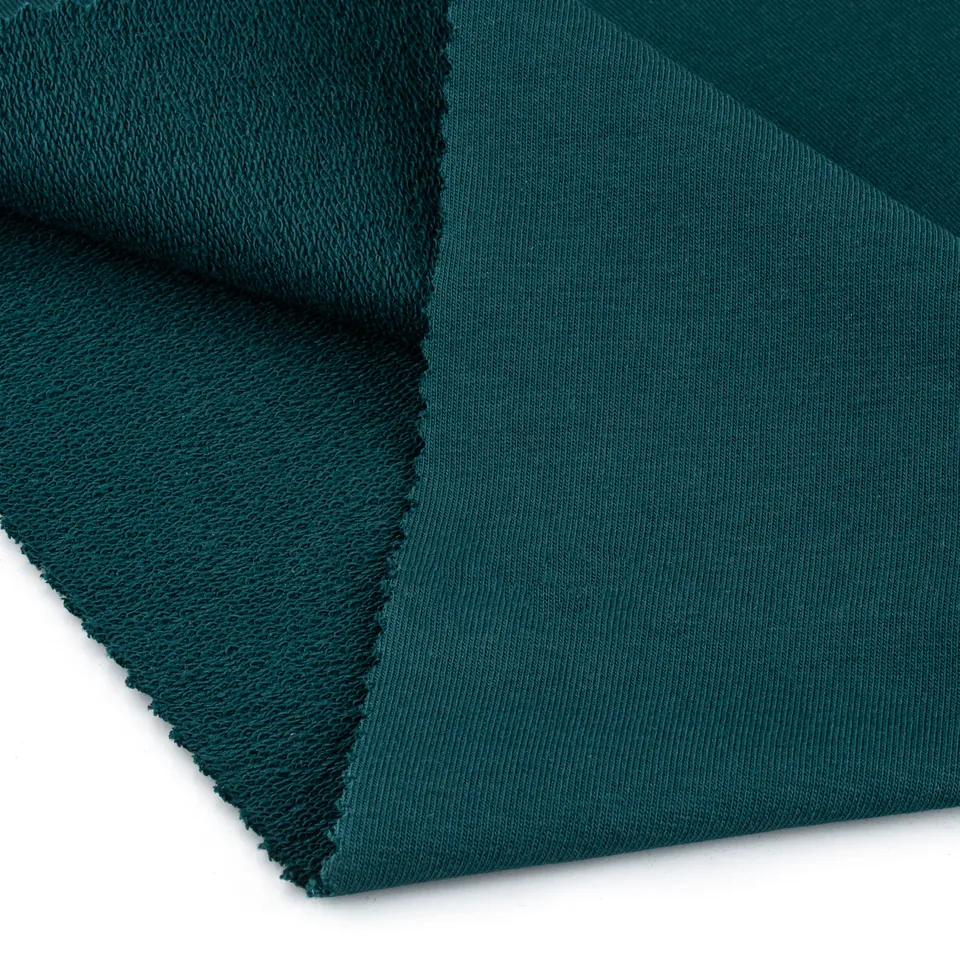
FT-601 offers 240, 260, 280, 300 and 320 g/m² in 70% cotton and 30% polyester two-thread French terry, unbrushed and silicone finished. FT-602 offers 300, 325, 350, 375 and 400 g/m² in the same blend, three-thread unbrushed and compacted. Record the offered sample option, colour, orientation and all relevant pocket, waist and ankle materials. Neither record supplies measured knee recovery or pocket security. A substituted closure, cuff or body cutting needs identification before its result can be attributed to the original proposal rather than to an unrecorded assembly change.
Observe pocket behaviour with defined representative contents
Use a suitable representative object with dimensions and mass recorded instead of an unspecified pocket load. Observe its position during the actual intended normal transitions and record movement or an item leaving the pocket where seen. Ask the maker to inspect opening angle, bag depth, attachment and any specified closure. Do not describe one successful observation as a guarantee that belongings cannot be lost. If a quantified retention or durability requirement belongs to the programme, have a specialist define the assessment. An empty-pocket photograph cannot settle the question a carried-item design was supposed to answer.
Check ankle access against the declared footwear sequence
If the user is expected to remove footwear first, assess that sequence rather than demand another function afterwards. If the design expressly requires removal over footwear, use the proposed opening assembly and the relevant reference footwear without forcing an unsuitable sample. Note where material, seams or components interfere. Ask for a correction that preserves the intended worn taper and length, then repeat the relevant observation. A large enough isolated opening is not proof that the whole lower-leg assembly works as intended, and an opening feature belongs in the assessment only when the design specifies it.
Follow knee and waist appearance after the routine
Record the initial waist position and knee shape, the immediate post-sequence appearance and any later observation under the agreed resting arrangement. Keep preparation and timing comparable between proposed samples. Note visible change without inventing a recovery percentage or claiming a physiological warm-up effect. If pocket contents pull the waist or alter the leg balance, inspect those components before blaming body recovery. Ask a competent provider for an appropriate measured assessment where required. A fit observation can direct a development correction while still leaving the material property unresolved.
Repeat useful functional observations after defined care
Agree the care procedure and measurement preparation, tracking relevant waist, pocket, leg and ankle dimensions separately. AATCC distinguishes garment dimensional changes from appearance after home laundering; the provider should confirm current applicable methods and requirements. Revisit the intended pocket and dressing observations on the cared sample rather than approve only an overall leg-length figure. A component can change its relationship to the body while that number remains similar. Identify what the actual trial demonstrated and avoid describing it as universal durability, security or guaranteed return to shape.
AATCC: Standard Test Methods and Procedures — Garment Care — Public index separately identifies garment dimensional changes and appearance after home laundering. Transition, pocket and ankle observations are original development guidance, not an AATCC retention or thermal test protocol.
Release a documented routine and assembly scope
Record accepted observations, requested corrections and missing evidence against material, offered weight, finish, pattern, components and actual layers or objects used. State which transition sequence and care conditions informed the decision. A changed pocket, ankle opening or material should trigger the affected review rather than inherit approval from the same jogger name. Keep any laboratory report tied to its actual scope. The result should let the maker reproduce the reviewed assembly and let purchasing see unclosed questions, without promising safe retention, thermal benefit or universal sports suitability from a successful sample.
Technical background and scope
This is a structured editorial draft. Garment-specific development advice is paired with existing catalogue records; compatibility must be established by sampling. AL KUMAŞ supplies fabric. Cutting, sewing and finished-garment production are separate unless explicitly agreed.