




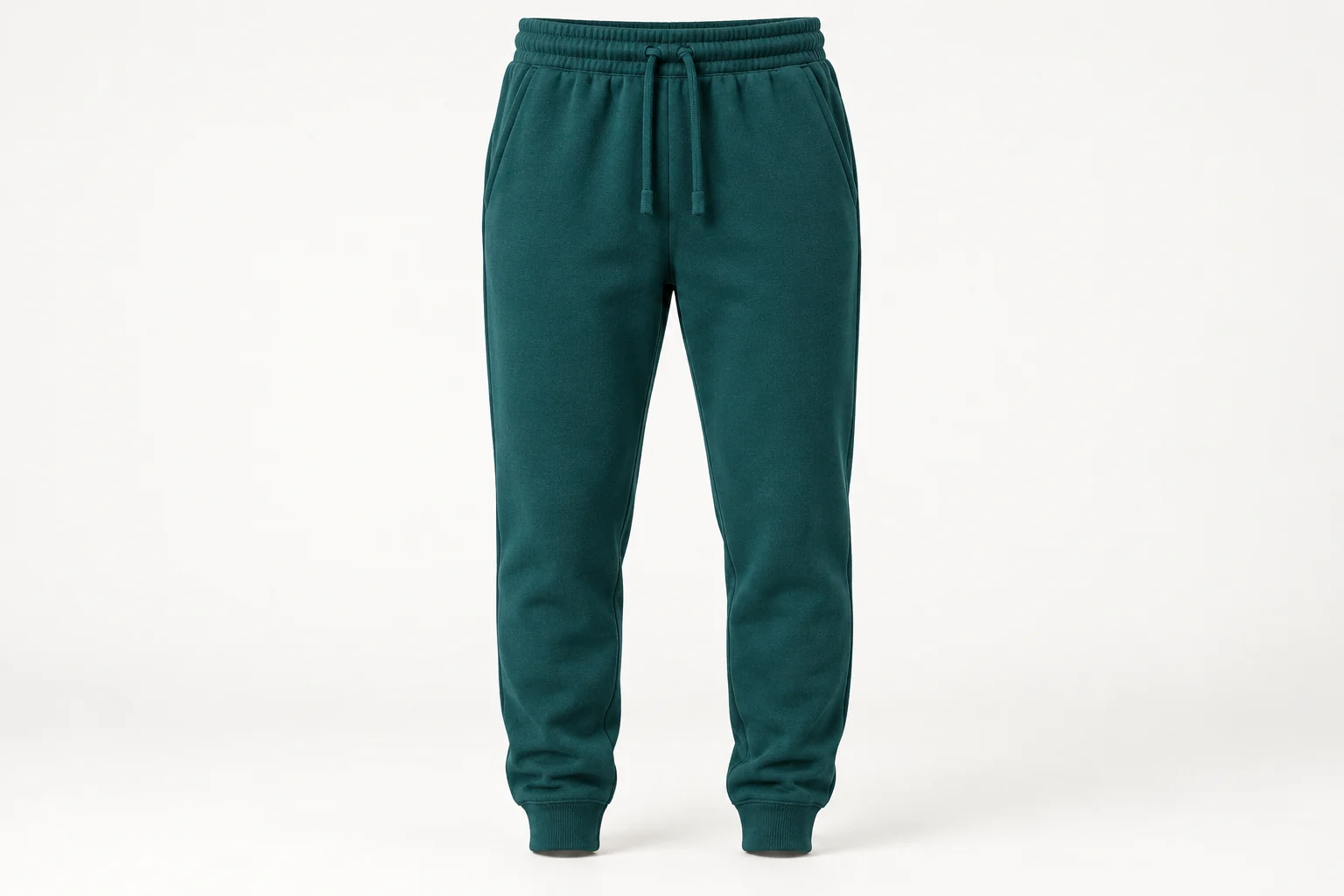

Cost the transition version rather than a generic jogger
A jogger intended to be removed before activity can need a different ankle assembly from one worn throughout a stated routine. A pocket used only for an empty-pocket fitting is also a different proposal from one developed around specified carried items. Identify the actual version before requesting consumption. CottonWorks describes marker making as arranging real pattern components efficiently. Give the cutter the body, pocket and opening pieces that belong to the accepted transition design instead of assuming another jogger's marker covers the new functional decisions at no cost.
CottonWorks: Garment Construction — Marker Making — Markers arrange actual garment components efficiently. Routine-specific pattern and component costing is an original application; the pocket-area example is explicitly hypothetical arithmetic, not a production specification or measured supplier yield.
Keep body construction and finish beside the precise weight
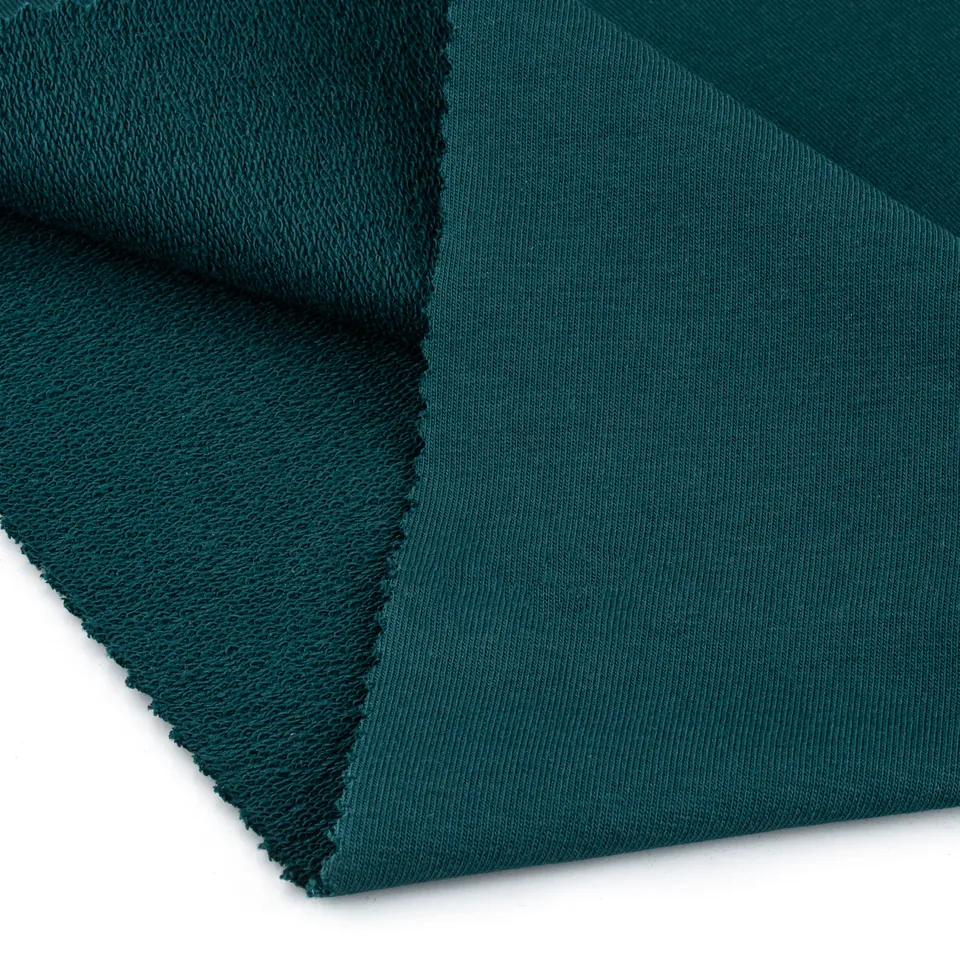
The FT-601 catalogue lists 240, 260, 280, 300 and 320 g/m² in 70% cotton and 30% polyester two-thread French terry, unbrushed and silicone finished. FT-602 lists 300, 325, 350, 375 and 400 g/m² in the same blend, three-thread unbrushed and compacted. Request exact offered options for the samples and quote. Neither range represents a single fixed garment cost or a thermal rating. If the lighter and heavier routes require different pocket support or leg patterns, show those developments rather than treat the body materials as interchangeable kilograms.
Calculate what a pocket revision actually adds
For illustration, suppose a revised pocket requires two additional fabric pieces of 0.025 square metres each per garment. The combined addition is 0.05 square metres; at a hypothetical 300 g/m², that area represents 15 grams of fabric before other considerations. This is not a real pocket specification, retention result or consumption offer. Ask the maker whether the actual proposal uses body material or a separately sourced pocketing. Its marker arrangement, attachment and any closure can change cost in different ways, so the area calculation should explain one input rather than stand in for the complete estimate.
Show ankle-opening components in their own supply routes
If the approved design includes a separate cuff, facing or specified fastening, identify its actual pattern, material and purchasing units. Do not assume that an opening proposed for removal over footwear is supplied merely because the body article is called French terry. Ask which pieces enter the body marker and which components are bought separately. A changed access assembly may alter lower-leg shape, reinforcement or garment-making operations. Keep those consequences visible so a cheaper body quote is not compared with a complete proposal whose ankle details have already been costed.
Confirm the width and size ratio behind the layer allowance
Obtain usable finished width, supply format and the measurement convention for the offered material. Give the marker planner the pattern developed for the actual underlayer, if one is specified, and the intended size distribution. Additional room through a region is a pattern decision, not an unexplained percentage added to fabric demand. Ask the cutter to identify the revised pieces and marker when that room changes. A layout for a single-layer reference should not silently remain the costing basis after fitting has produced a different over-kit silhouette.
Separate pattern changes from care and purchasing allowances
If the transition review changes pocket size, knee room, waist construction or ankle access, update the affected pattern and component quantities. Distinguish those intentional changes from agreed dimensional allowances, marker loss and other purchasing allowances. A closure correction may change operations without the same body-area increase; a wider lower leg can change both. Ask the maker to explain which case applies. Keep unresolved recovery or after-care evidence outside a falsely final consumption figure, and state which sample decision is required before the estimate can be confirmed.
Compare viable routine-specific assemblies
Put body article, exact offered weight, finish, confirmed width and format, pattern, size ratio, pocket and ankle component identities beside the marker and quantity outputs. Ask for current price basis, minimums and terms for the actual programme. Preserve any difference between a single-layer route and an over-kit route. A lower kilogram price is useful only if the proposed garment still answers its pocket and dressing brief. The buyer should be able to trace a cost difference to an identifiable body, component or operation decision instead of accepting a vague premium for warm-up functionality.
Technical background and scope
This is a structured editorial draft. Garment-specific development advice is paired with existing catalogue records; compatibility must be established by sampling. AL KUMAŞ supplies fabric. Cutting, sewing and finished-garment production are separate unless explicitly agreed.